Thimphu, Bhutan: The Complete 2026 Guide to the Capital
Quick answer: Thimphu sits at 2,320 metres and serves as Bhutan’s capital, largest city, and seat of government. Plan two to three nights. Budget USD 100 per person per night in Sustainable Development Fee, plus tour costs.
Thank you for reading this post, don't forget to subscribe!
Thimphu is the capital of Bhutan and the largest city in the kingdom. The city fills the Wang valley 65 km from Paro International Airport, a drive of about 90 minutes. Thimphu holds the government secretariat, the central monk body, and Bhutan’s largest annual festival.
Most Bhutan itineraries treat Thimphu as one overnight between Paro and Punakha. Thimphu district climbs from 1,300 metres to over 7,300 metres and contains both the oldest surviving dzong in Bhutan and the fastest urban growth in the country. A second night changes what you see.
Thimphu at a Glance
Thimphu became the permanent capital of Bhutan in 1961. The district holds one Drungkhag and ten gewogs. Lower Thimphu carries the roads, telecoms, and services. Upper valleys depend on livestock, rice, wheat, and orchard farming.
The table below summarises the core planning figures for Thimphu.
| Detail | Figure | Planning Note |
|---|---|---|
| City elevation | 2,320 m (7,610 ft) | Mild altitude, no acclimatisation |
| District elevation range | 1,300 m to 7,300 m | Highlands reached on foot |
| Distance from Paro airport | 65 km | About 1 hr 30 min by road |
| Capital status since | 1961 | Government and monk body seat |
| District structure | 1 Drungkhag, 10 gewogs | Lower valley holds most services |
Why Thimphu Matters More in 2026
Bhutan recorded 209,376 tourist arrivals in 2025, a rise of 44.33 percent over 2024. Sustainable Development Fee collections reached USD 43.31 million. Visitors came from 157 countries. Almost every one of those arrivals passed through Thimphu.
Travellers from countries other than India made up around 40 percent of 2025 arrivals, up from 27 percent in 2019. Bhutan’s Department of Tourism published these figures in the Tashel Melong 2025 annual snapshot. Higher volumes mean earlier hotel bookings during festival weeks.

Top Things to Do in Thimphu
Eight sites carry the Thimphu itinerary for a first visit.
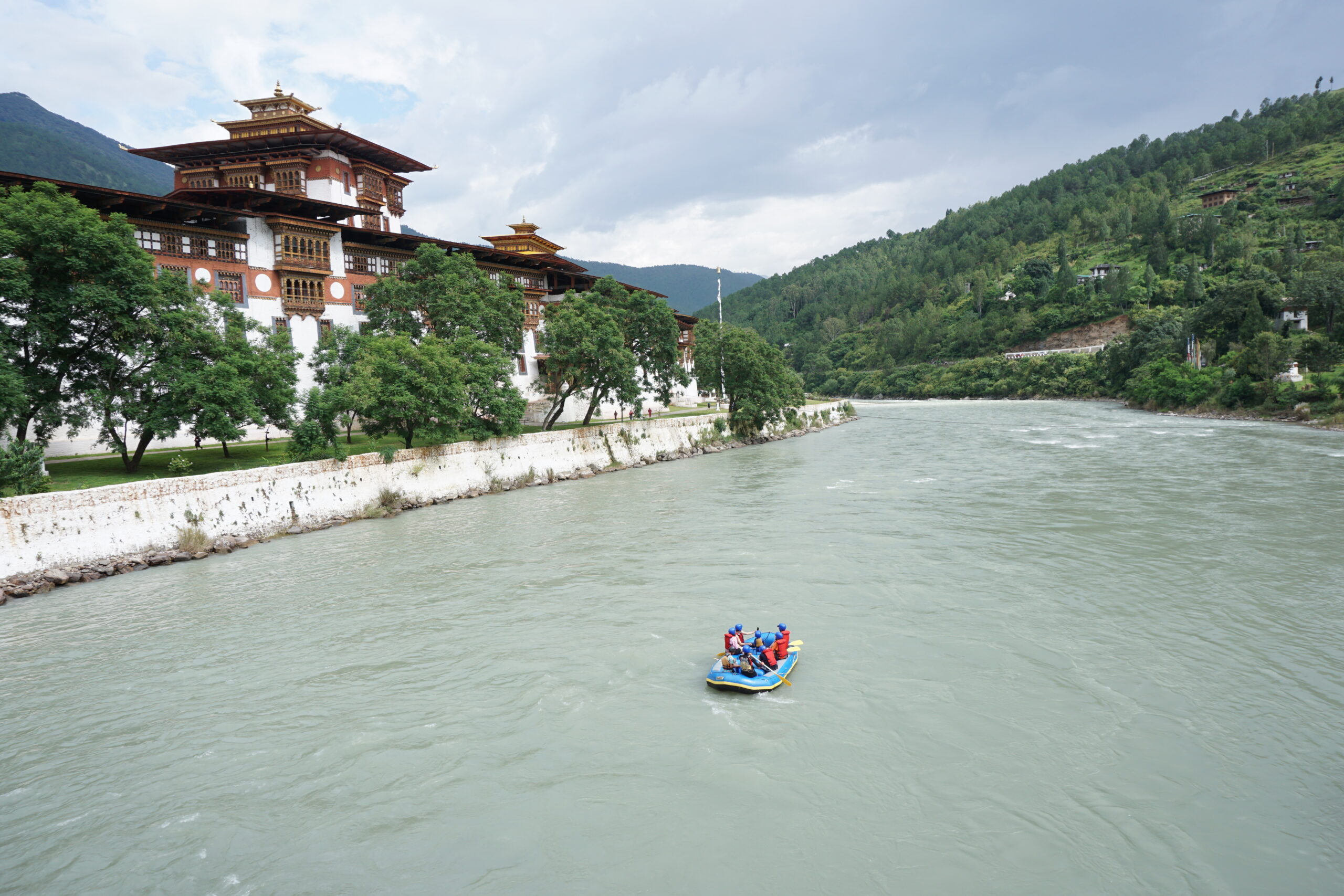
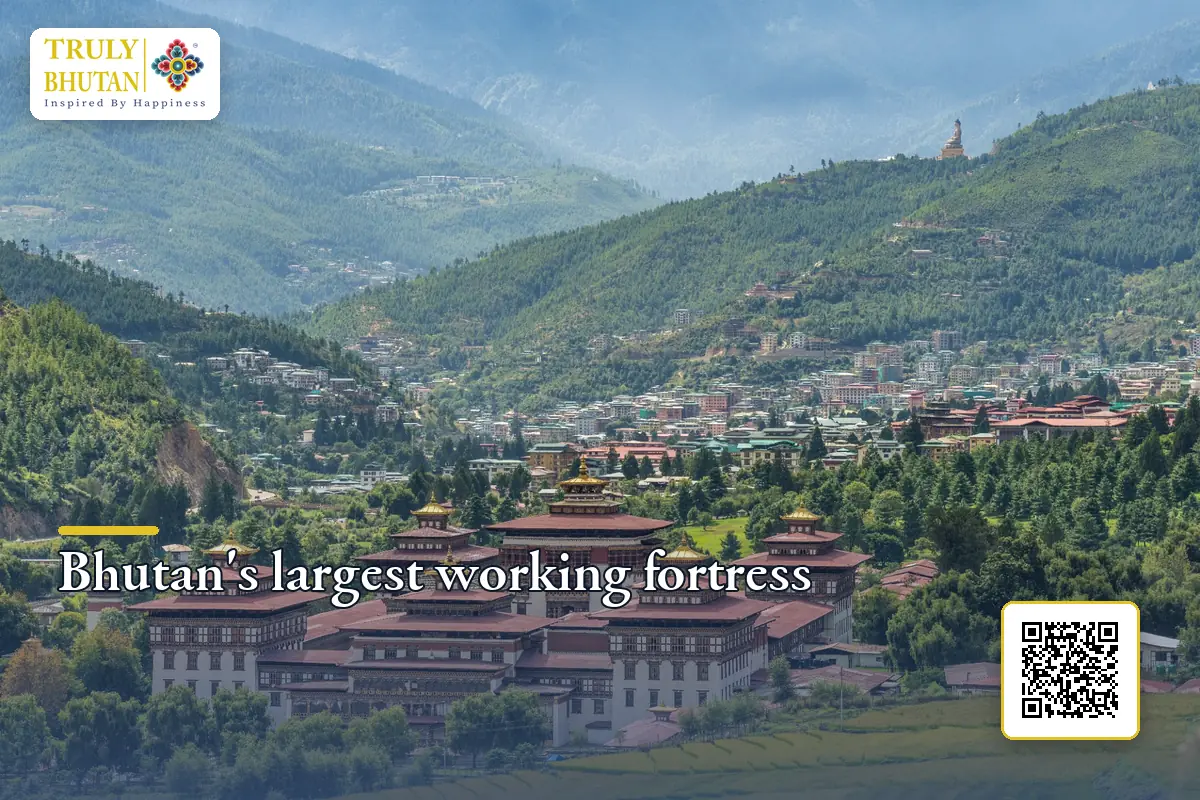
- Tashichho Dzong: The fortress of the auspicious religion houses the throne room, government offices, and the summer residence of the Je Khenpo. Evening entry after office hours suits most visitors best.
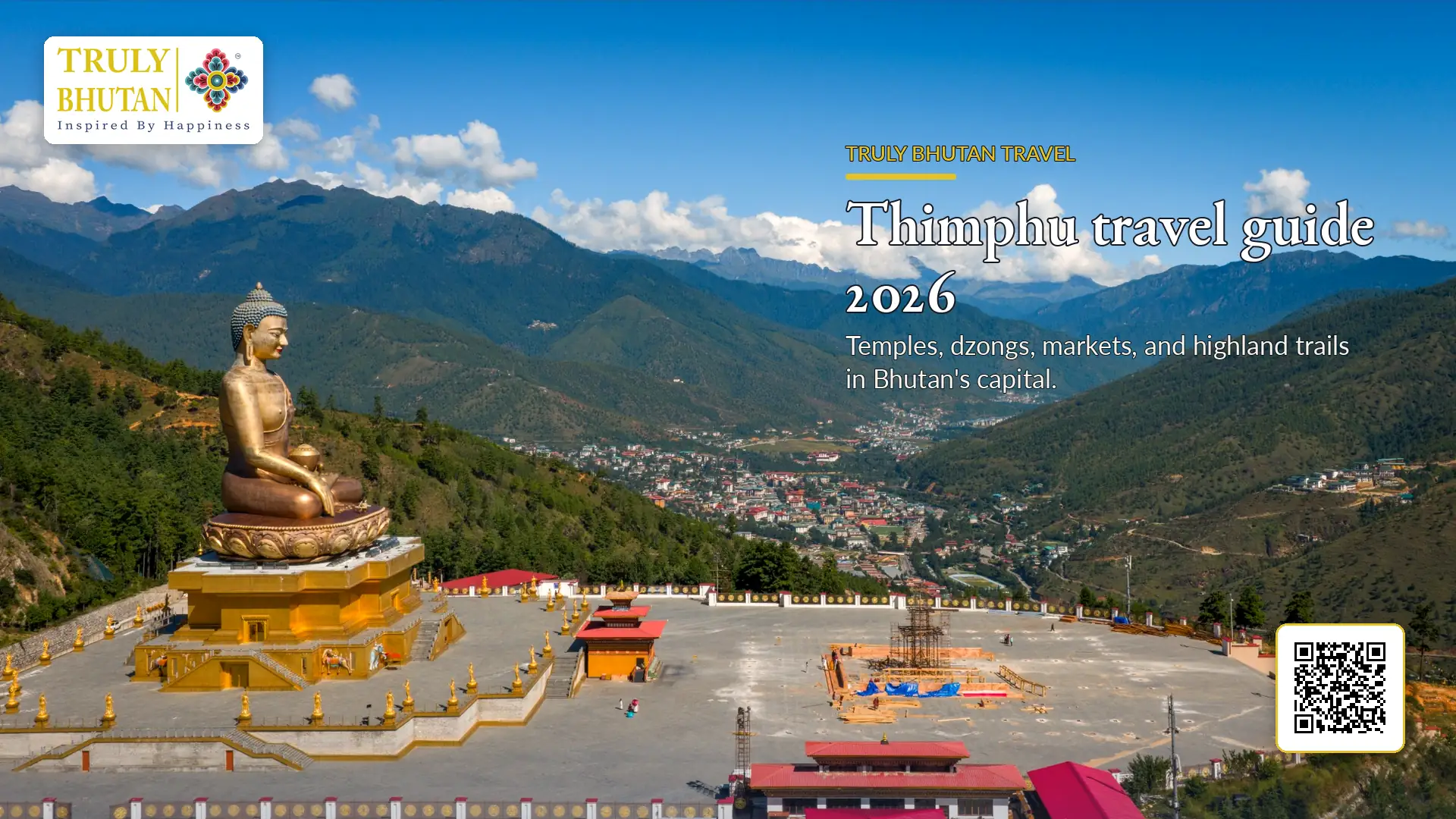
- Buddha Dordenma: A gilded bronze Shakyamuni Buddha on Kuenselphodrang hill, holding 125,000 smaller statues inside. Consecrated in 2015. The terrace gives the widest view over southern Thimphu.
- Simtokha Dzong: Built in 1629 by Zhabdrung Ngawang Namgyal, 5 km south of the city. The oldest dzong in Bhutan surviving in original form.
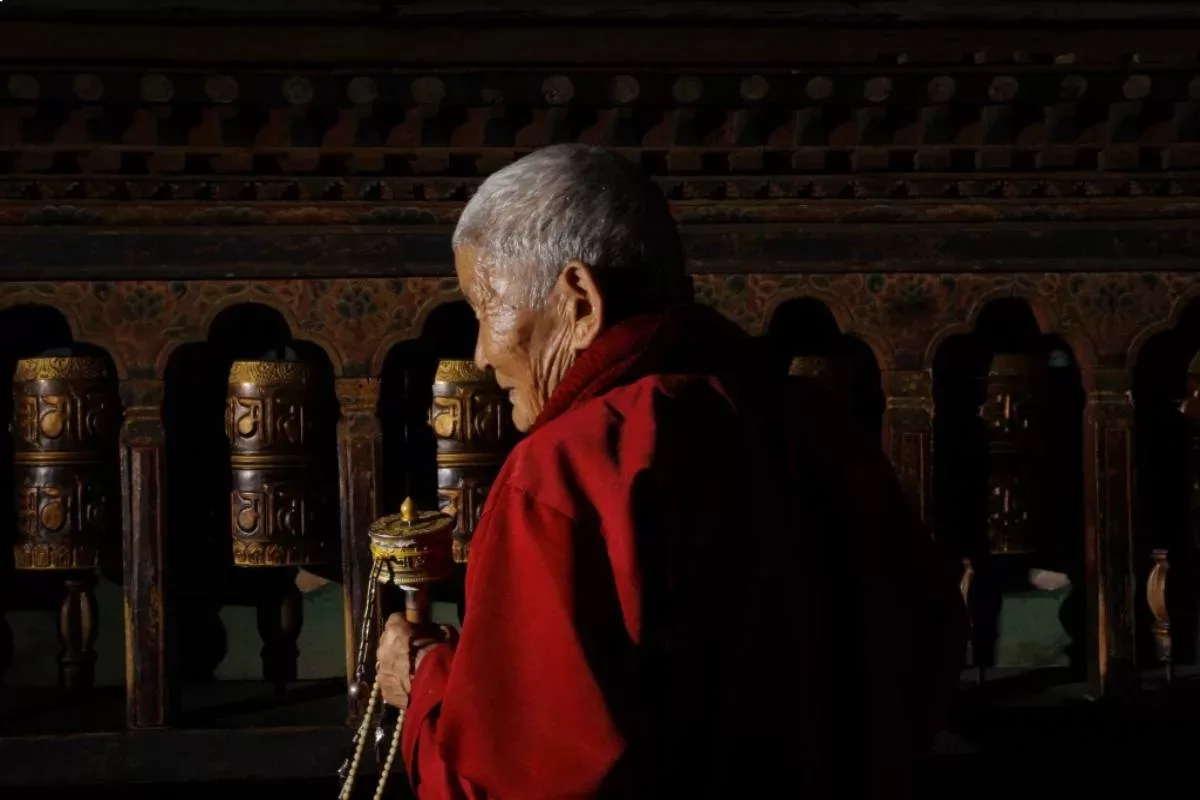
- National Memorial Chorten: Built in 1974 for the third king, Jigme Dorji Wangchuck. Thimphu residents circumambulate the stupa from dawn onward. The best place in the city to watch daily practice.
- Changangkha Lhakhang: A 12th-century hilltop temple founded by Phajo Drugom Zhigpo. Families bring newborns here for names and blessings. The terrace looks straight down the valley.
- Tango and Cheri monasteries: Two hillside monasteries in the northern valley. Cheri Monastery was founded in 1620 by Zhabdrung Ngawang Namgyal. Each climb takes about one hour each way.
- Dochula Pass: A 3,100 m pass on the Thimphu to Punakha road, about one hour east. The 108 Druk Wangyal Chortens stand here with Himalayan views on clear days.
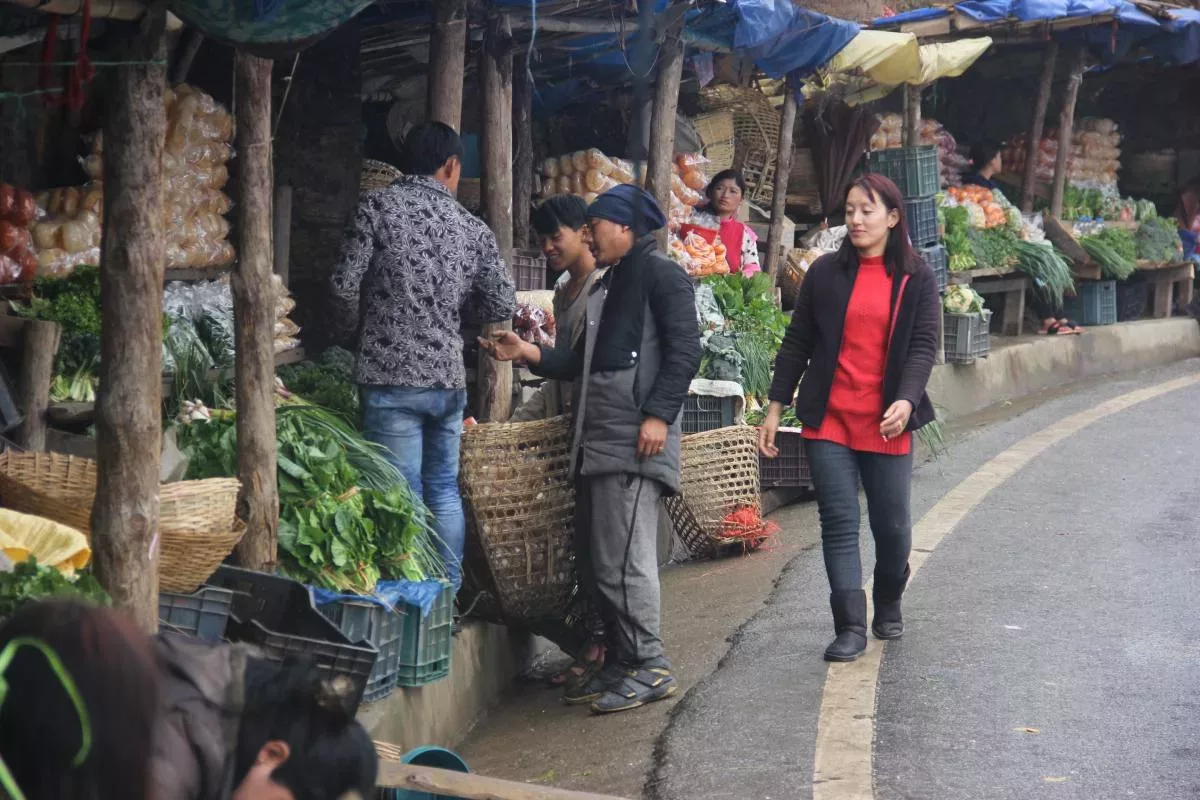
- Centenary Farmers’ Market: Bhutan’s largest produce market, beside Changlimithang stadium. Farmers arrive from across the country. The upper handicrafts bridge sells textiles, masks, and wooden bowls.
Three of these sites carry most of the weight, so the sections below go deeper.
Comparing the Top Thimphu Attractions
This table compares the city’s principal attractions by experience and time required.
| Thimphu attraction | Main experience | Suggested time | Best for | Verdict |
| Tashichho Dzong | Governance and architecture | 60–90 minutes | First-time visitors | Essential |
| Memorial Chorten | Living Buddhist practice | 30–45 minutes | Cultural immersion | Essential |
| Buddha Dordenma | Statue and valley views | 60 minutes | Photography | Essential |
| Simtokha Dzong | Early fortress history | 45–60 minutes | History enthusiasts | Recommended |
| Textile Museum | Weaving and material culture | 60–90 minutes | Art lovers | Recommended |
| Tango or Cheri | Monastery forest hike | Half day | Active travellers | Best extension |
Opening hours, entrance fees and access to interior rooms can change during ceremonies or official events. Confirm the day’s arrangements through a licensed guide, hotel or the relevant attraction before travelling.

The Three Anchor Sites Explained
Tashichho Dzong
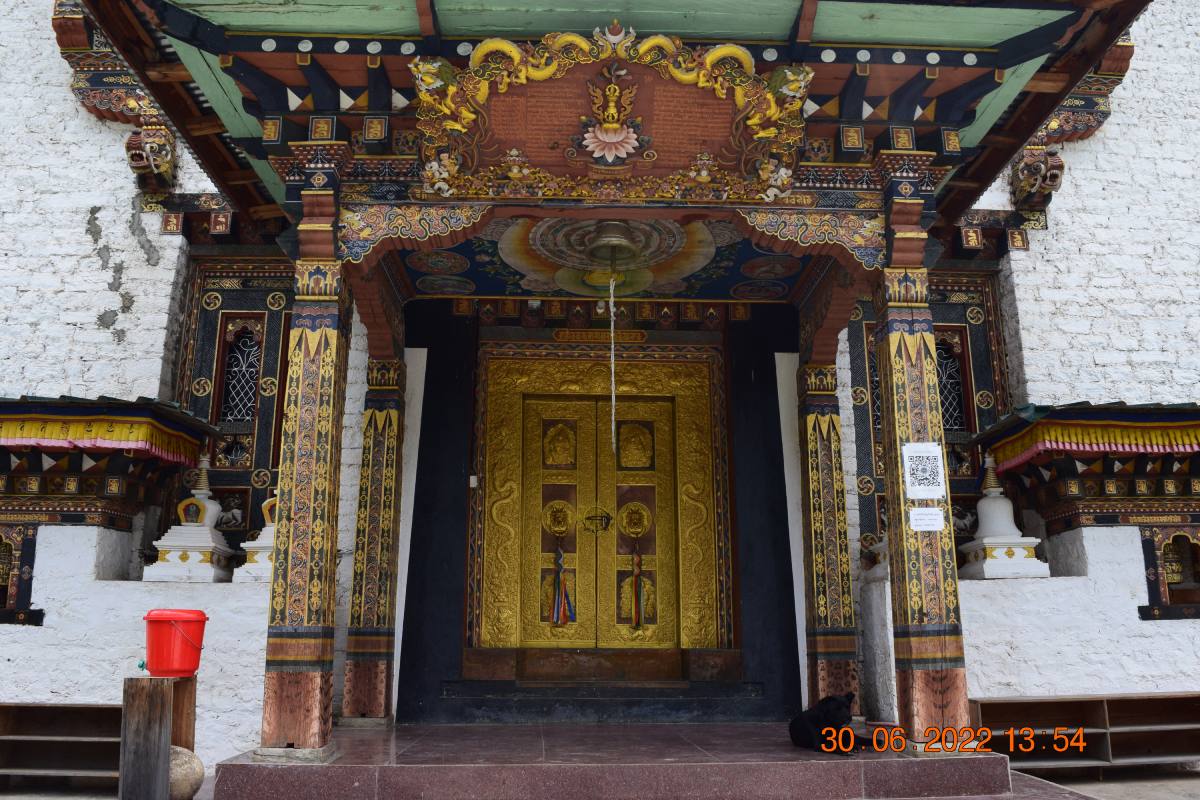
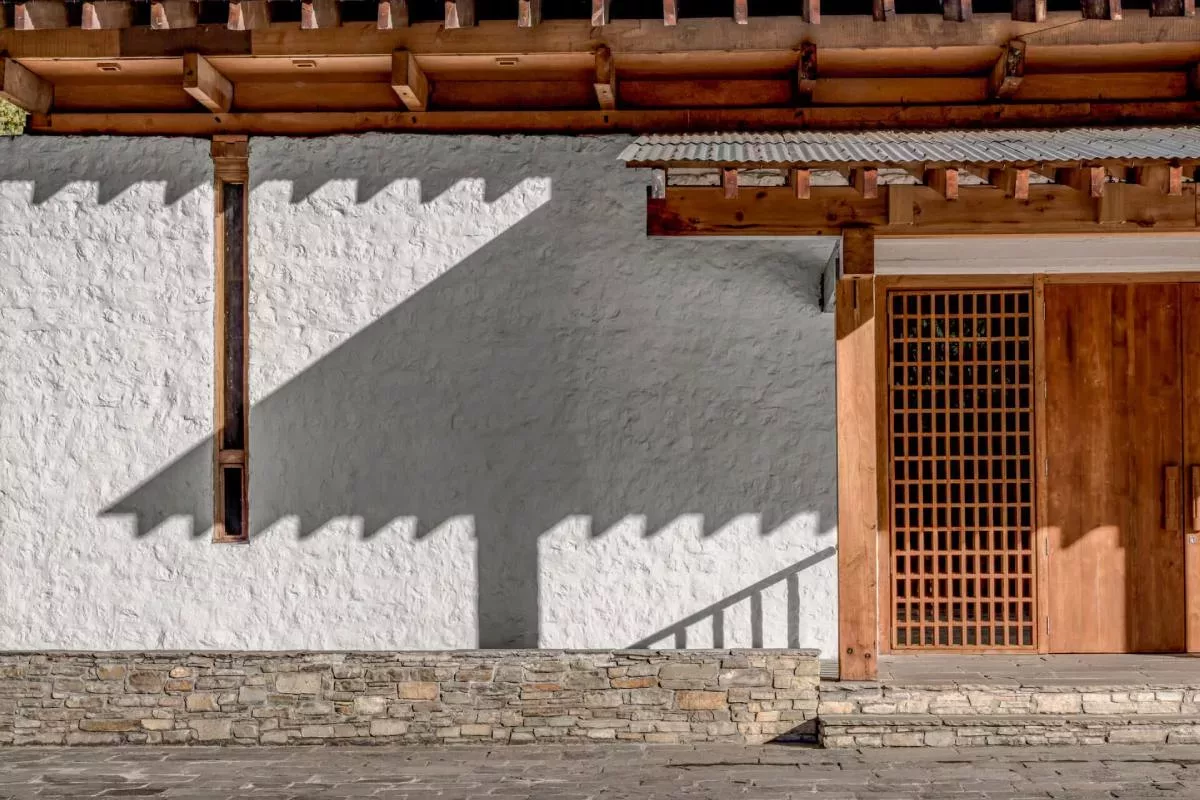
Tashichho Dzong holds the seat of the Bhutanese government and the summer home of the central monk body. The dzong was rebuilt in the 1960s under the third king. The central utse tower survives from the earlier structure. The monk body moves to Punakha for winter, when Thimphu freezes and Punakha stays mild. Tourist entry opens after government office hours on weekdays and for longer periods at weekends.
Buddha Dordenma
The Buddha Dordenma statue was consecrated in 2015 after nine years of construction. The throne beneath the figure works as a meditation hall across three storeys. The 125,000 gilded bronze Buddhas inside split into 100,000 eight-inch and 25,000 twelve-inch figures. Kuenselphodrang Nature Park surrounds the site with walking trails, parking, and picnic ground. Late afternoon light suits photography from the southern terrace.
Simtokha Dzong
Simtokha Dzong carries a founding date of 1629 and the formal name Sangak Zabdhon Phodrang. Zhabdrung Ngawang Namgyal built the structure to hold the junction of the Thimphu, Paro, and Wangdue Phodrang routes. The design combined monastic and administrative functions for the first time in Bhutan, setting the template every later dzong followed. More than 300 slate carvings line the courtyard behind the prayer wheels.
The Living City
Thimphu supports working crafts alongside government offices. The National Institute for Zorig Chusum trains students in painting, sculpture, woodcarving, and mask making. The National Library, founded in 1969, holds Bhutanese and Tibetan manuscripts, xylographs, and foreign works on the Himalaya.
Traditional medicine runs as a parallel public health system. The national institute opened in 1978 and blends Bhutanese, Indian, and Chinese herbal practice. Government policy supports the discipline alongside allopathic care.
The Royal Botanical Garden at Serbithang forms part of the National Biodiversity Centre. The site opened to the public in 2005. Orchids and glasshouse collections hold interest year round.
The Thimphu Highlands
Thimphu district reaches far beyond the city. Lingzhi, Soe, Naro, and Dagala sit above the road network and open only to walkers. Herding families in these valleys keep yaks, gather medicinal and aromatic plants, and harvest matsutake mushrooms for sale.
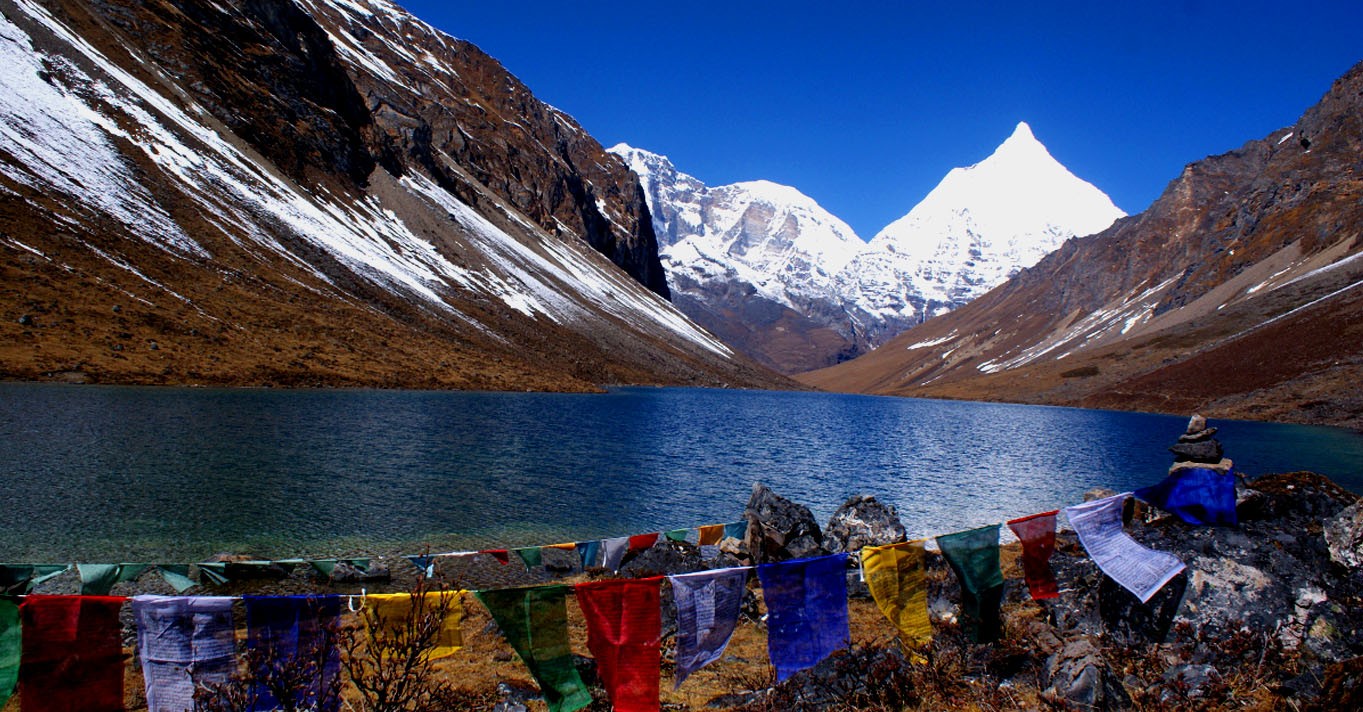
The Jigme Dorji Wangchuck National Park borders northern Thimphu. The Jomolhari Trek and Dagala Thousand Lakes trekking routes both cross district territory. These trips require separate permits, guides, and a minimum of five days.
What Thimphu Costs in 2026
Bhutan charges every international visitor a Sustainable Development Fee of USD 100 per person per night. The rate holds until 31 August 2027. Tour costs, hotels, guides, and transport sit on top of the fee.
Current government charges for a Thimphu visit are set out below.
| Charge | 2026 Rate | Applies To |
|---|---|---|
| Sustainable Development Fee | USD 100 per night | International visitors aged 13 and over |
| Sustainable Development Fee | USD 50 per night | Children aged 6 to 12 |
| Sustainable Development Fee | Exempt | Children aged 5 and under |
| Regional rate | INR 1,200 per night | Indian, Bangladeshi, Maldivian nationals |
| Visa fee | USD 40 one-time | All international visitors |
| Goods and Services Tax | 5 percent | Tour services from 1 January 2026 |
The government reviews the fee before the August 2027 expiry. No replacement rate has been announced.
Best Time to Visit Thimphu
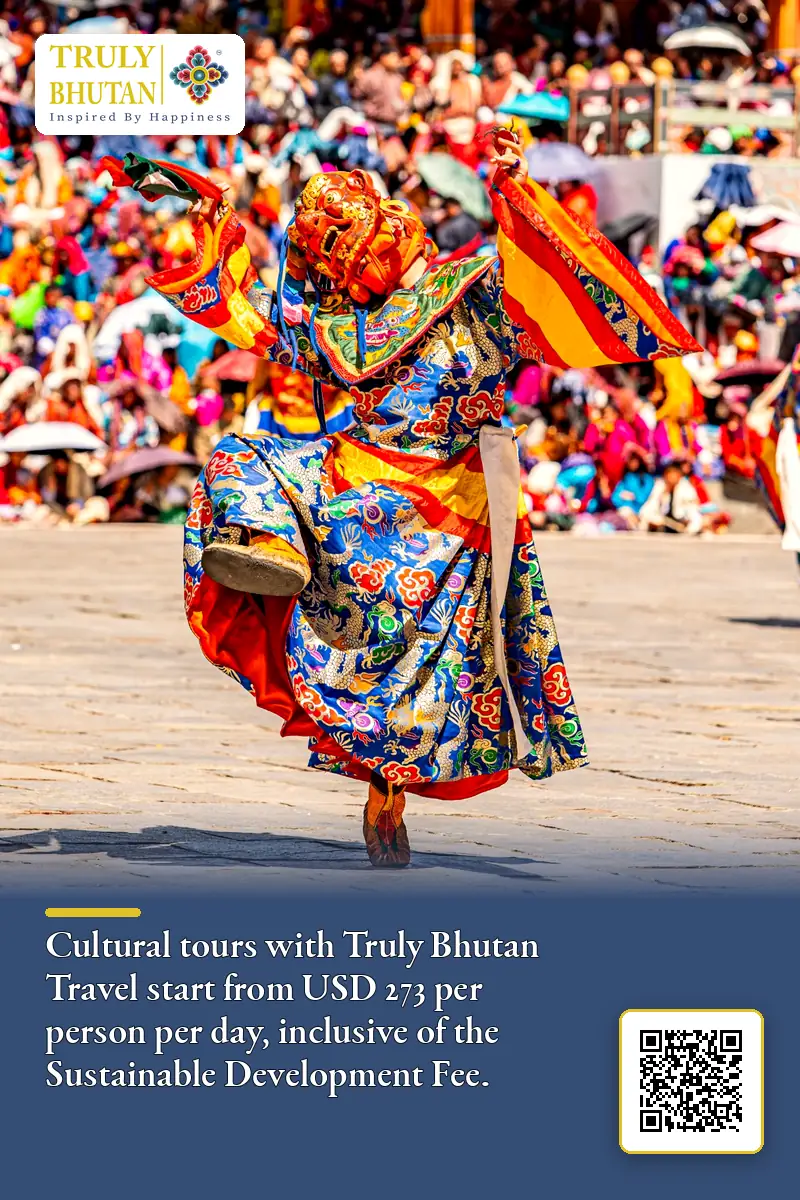
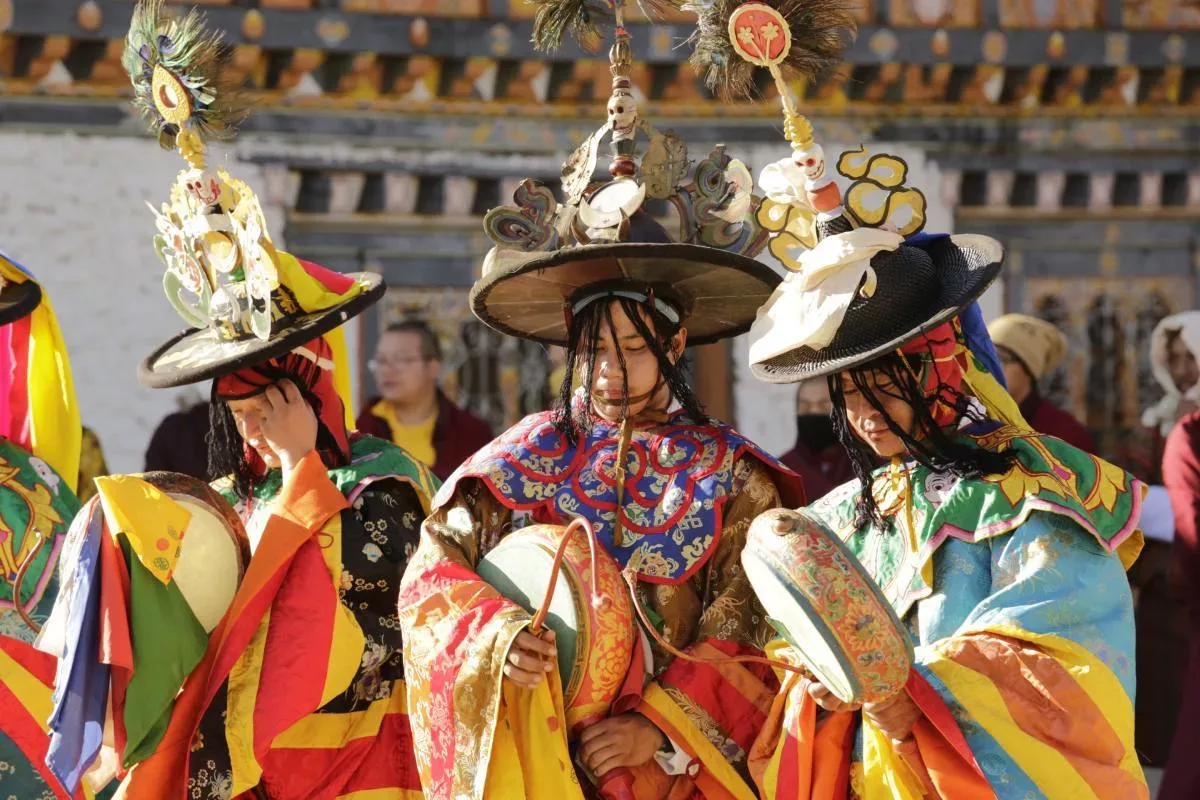
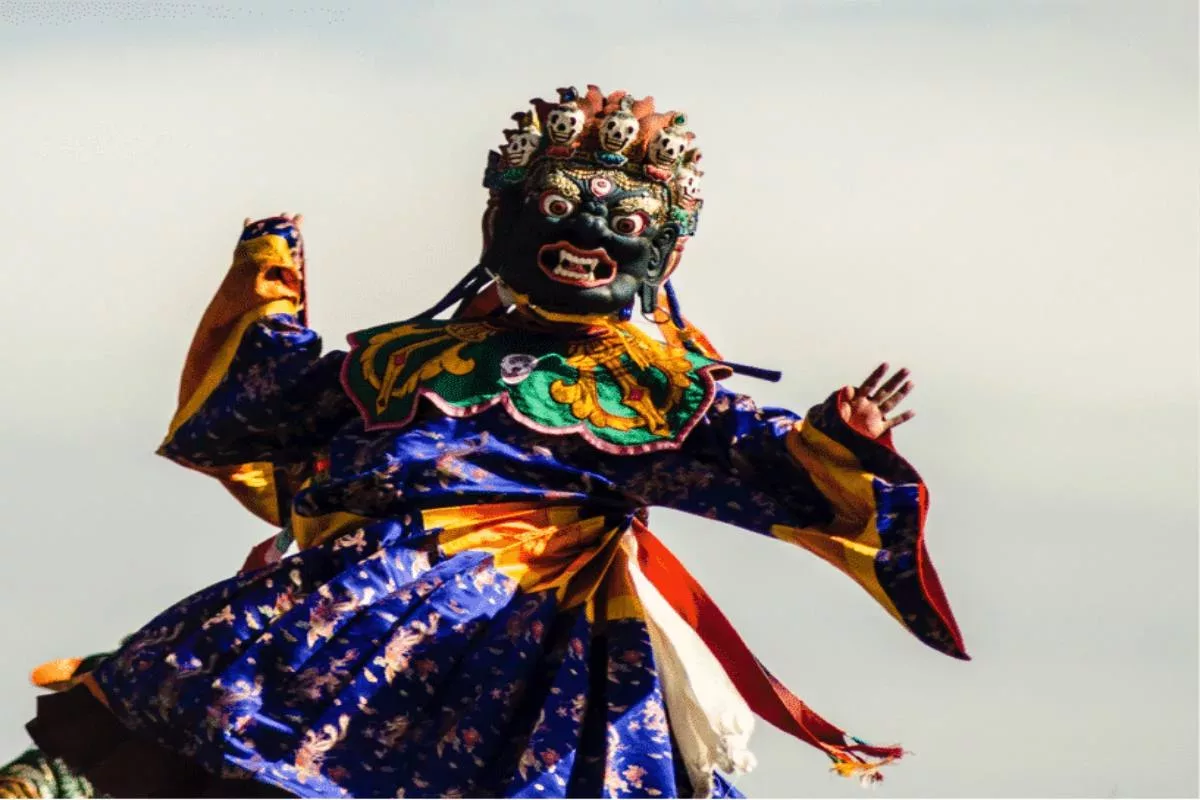
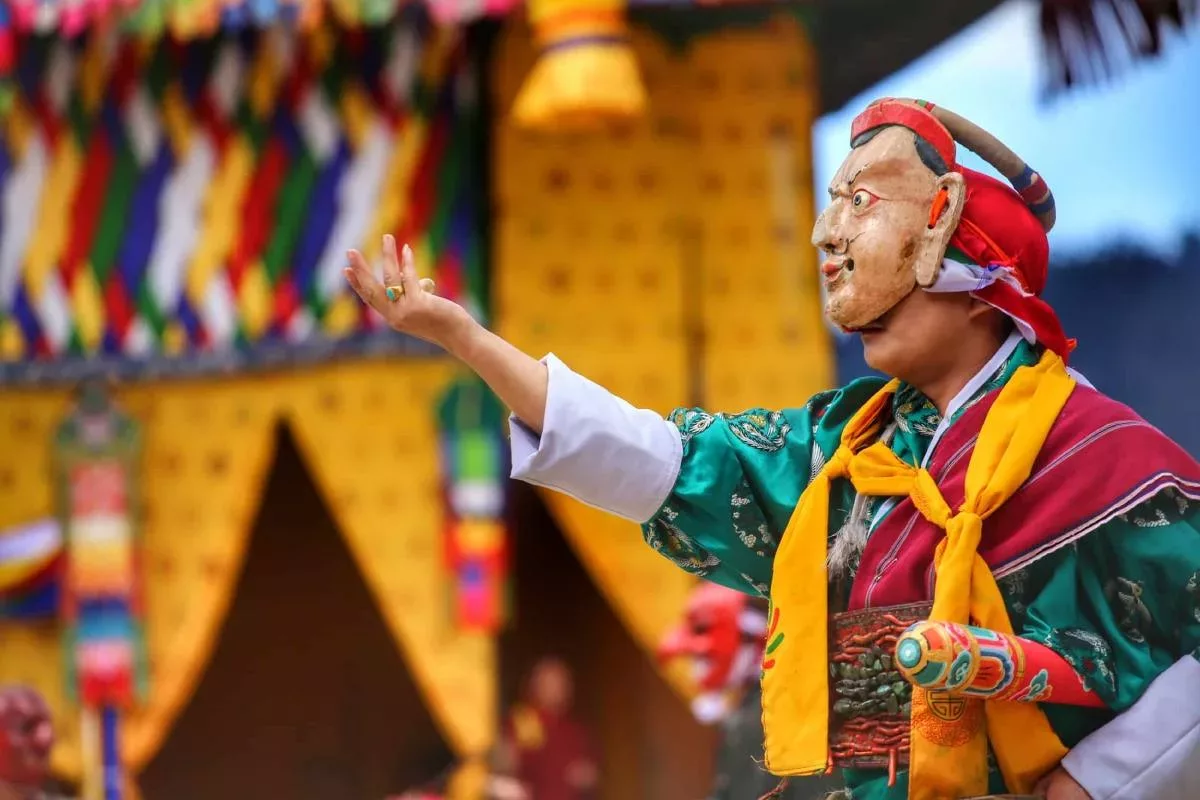
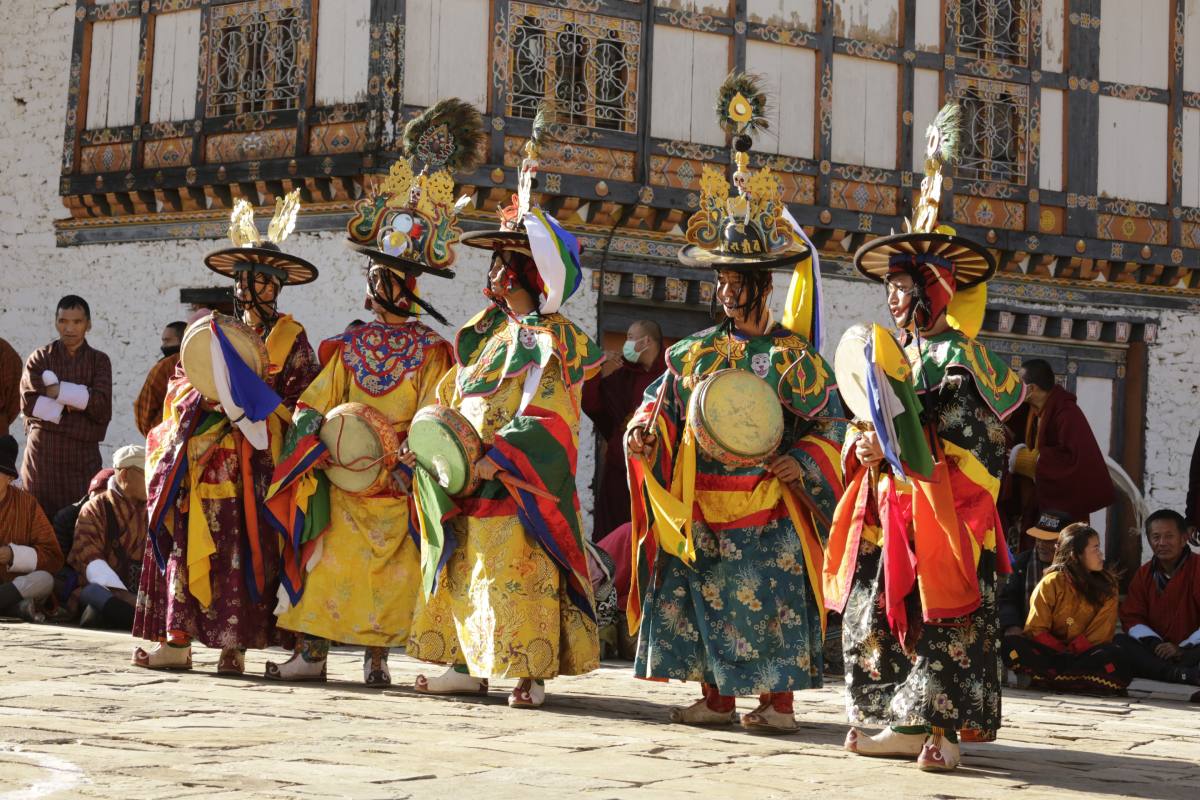
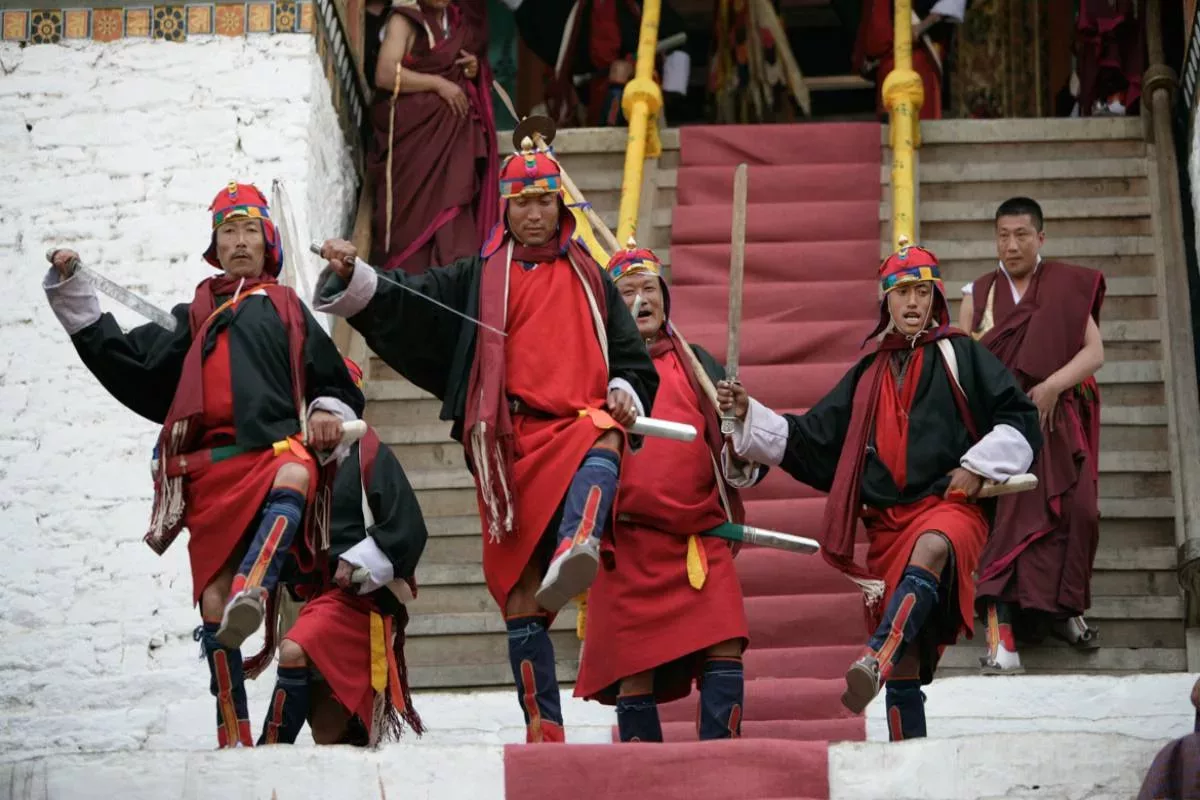
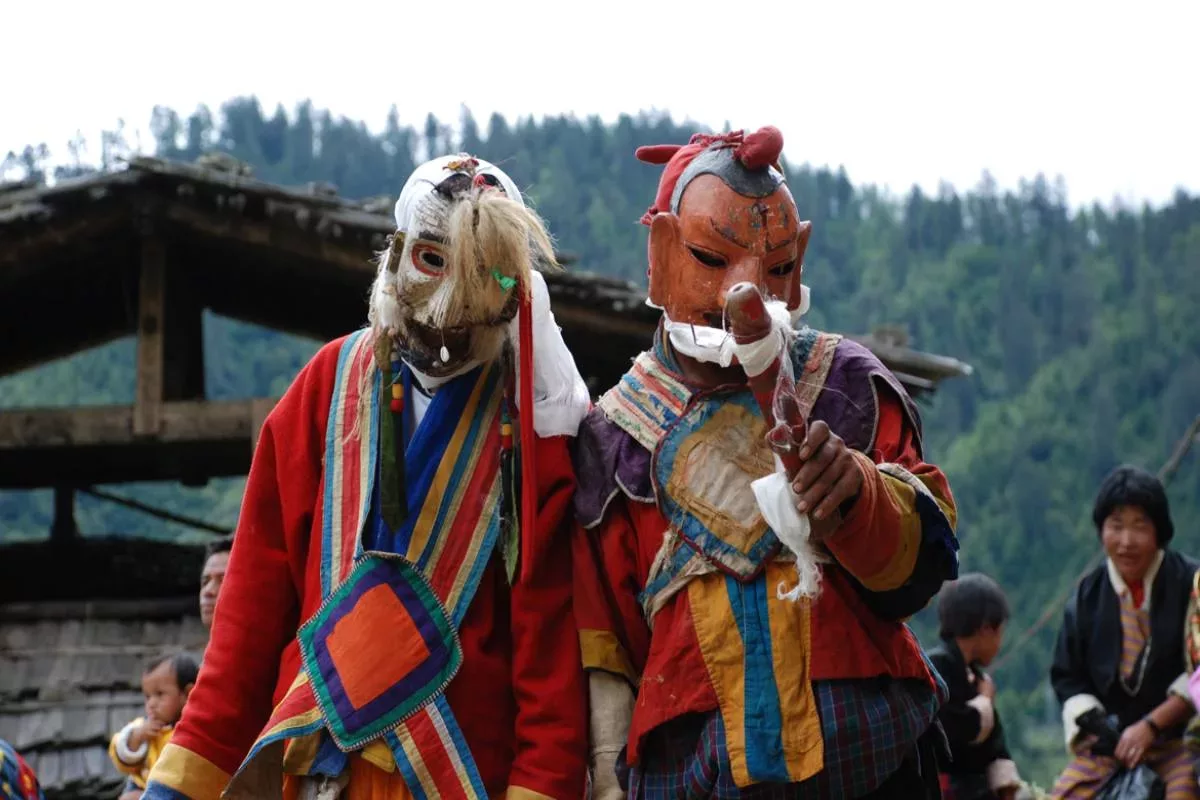
Autumn and spring give the clearest skies and the strongest festival calendar. Thimphu Tshechu runs 21 to 23 September 2026 in the courtyard of Tashichho Dzong, preceded by the Thimphu Drubchen on 17 September. The 2027 festival falls tentatively in mid-October.
Winter brings cold nights and the sharpest Himalayan visibility from Dochula. Summer monsoon closes those views for weeks at a time. Book festival-week hotels six months ahead.
Limits and Exceptions Worth Knowing
Four practical constraints shape a Thimphu itinerary.
- Dzong access follows office hours: Tashichho Dzong admits tourists after 5pm on weekdays. Weekend and public holiday hours run longer.
- Temple interiors are restricted: Several lhakhangs, including Changangkha, limit interior access. Your guide arranges permission where permitted.
- Dochula sits outside the city: The pass falls on the Punakha road, roughly 30 km east. Pair the stop with a Punakha transfer rather than a separate excursion.
- Monsoon reduces mountain views: June to August cloud hides the eastern Himalaya from Dochula and Sangaygang for long stretches.
Plan around these four points and a two-night Thimphu stay works comfortably.

Frequently Asked Questions
How many days should you spend in Thimphu?
Two nights suit most first visits. Day one covers Tashichho Dzong, the National Memorial Chorten, and Buddha Dordenma. Day two covers Simtokha Dzong, Changangkha Lhakhang, and the Centenary Farmers’ Market. Add a third night for the Tango and Cheri hike, or during Thimphu Tshechu week.
Will you feel the altitude in Thimphu?
Thimphu sits at 2,320 metres, low enough for most travellers to arrive without acclimatisation. Mild headaches and shortness of breath appear occasionally on day one. Drink water, walk slowly on the temple climbs, and rest on arrival afternoon. Dochula Pass at 3,100 m feels stronger.
Is Thimphu worth visiting compared with Paro and Punakha?
Thimphu answers a different question from Paro and Punakha. Paro gives you Tiger’s Nest Temple and the airport. Punakha gives you the dzong and warm winter weather. Thimphu shows you modern Bhutan working, alongside the oldest dzong in the country and the largest festival.
When is Thimphu Tshechu 2026?
Thimphu Tshechu runs 21 to 23 September 2026 at Tashichho Dzong. The Thimphu Drubchen precedes the festival on 17 September. Dates follow the Bhutanese lunar calendar and shift each year. The 2027 festival falls tentatively in mid-October. Confirm final dates with your operator before booking flights.
Can tourists enter temples and dzongs in Thimphu?
Foreign visitors can enter many monuments when they are open to the public, but access may be limited during official functions, religious ceremonies or restoration work. Visitors must follow dress, footwear and photography rules. Bhutan’s tourism FAQ notes that monument access for foreign visitors was broadened in June 2023.
What is Thimphu best known for?
Thimphu is best known as Bhutan’s capital and the location of Tashichho Dzong, the National Memorial Chorten and Buddha Dordenma. It is also the country’s leading centre for government, museums, textile culture, traditional arts and urban life, surrounded by forested hills containing monasteries and hiking trails.
What does a Thimphu day cost in 2026?
Government charges alone come to USD 100 per person per night in Sustainable Development Fee, plus a one-time USD 40 visa fee. A 5 percent Goods and Services Tax applies to tour services from January 2026. Guided cultural tour rates start from USD 211 per person per day at larger group sizes.
The Bottom Line
Thimphu holds more depth than the standard one-night stopover allows. The district spans 6,000 vertical metres, contains Bhutan’s oldest dzong at Simtokha and the country’s largest festival at Tashichho, and shows the modern kingdom at work.
Costs are fixed and public. USD 100 per night in Sustainable Development Fee, a USD 40 visa fee, and 5 percent tax on tour services. Arrivals rose 44 percent in 2025, so festival-season rooms sell early.
Give Thimphu two nights minimum. Three during Tshechu week. Truly Bhutan Travel builds every Bhutan itinerary around the capital rather than through the capital.