Trip Summary
- Trip Grade: Easy to Moderate
- Duration: 19 Days, 18 Nights
- Activity: Bhutan Photography, Cultural Immersion, Festival Attendance, Village Stays
- Route: Paro, Thimphu (Thimphu Tshechu), Punakha, Trongsa, Bumthang (Tangbi Mani Festival), Minjey Village, Lhuentse, Bumthang, Phobjikha, Thimphu, Paro
- Departure: Paro International Airport
- Return: Paro International Airport
- Trip Cost: $8,930 per person
- Festival Dates 2026: Thimphu Tshechu, September 21 to 23, Tashichho Dzong, Thimphu; Tangbi Mani Festival, September 26 to 27, Thangbi Lhakhang, Bumthang
- Festival Dates 2027: Thimphu Tshechu, October 16 to 18, Tashichho Dzong, Thimphu
- Best Season: Autumn (September to November) for festivals; Spring (March to May) for landscapes
- Last Updated: March 2026
About the Bhutan Photography Tour
The Bhutan Photography Tour is a 19-day private guided photography journey through western and central Bhutan. Our Travel Specialist designs this itinerary for photographers at all levels, from first-time visitors to working professionals. The tour attends two major festivals and visits remote weaving villages in Lhuentse. The schedule also covers an archery tournament and the full range of Bhutan’s photographic subjects: Dzongs, temples, festivals, rural communities, and mountain landscapes.
This tour follows a seasonal itinerary aligned to autumn departures. The Thimphu Tshechu Festival and Jambay Lhakhang Drup Festival fall within the same two-week window each year. All key shot locations are visited at the right time of day. Early mornings at Paro and Punakha, golden hour in Phobjikha, and dawn at festival grounds are all built into the schedule.
Experience Snapshot
I have photographed the Thimphu Tshechu from the upper gallery of Tashichho Dzong at dawn, before the crowds arrived. The mask dancers move through smoke and low light. The courtyard holds a quality of color and shadow unlike any festival I have attended elsewhere. In Minjey village, I sat in a farmhouse while a weaver worked a Kishuthara loom by natural window light. Both moments exist in the same country, three days apart, and both belong on the same memory card.
What Is the Bhutan Photography Tour?
The Bhutan Photography Tour is a 19-day private itinerary structured around Bhutan’s most photogenic subjects and seasonal events. The tour attends the Thimphu Tshechu at Tashichho Dzong in late September. The Thimphu Tshechu is one of the largest annual festivals in Bhutan. The tour then travels east to Bumthang for the Tangbi Mani Festival at Thangbi Lhakhang. This is a smaller, intimate community festival held on the 14th to 17th day of the 8th Bhutanese lunar month. After Bumthang, the itinerary continues to the Kishuthara weaving villages of Minjey and Khoma in Lhuentse District. An archery tournament with local village teams follows. The tour returns west through Phobjikha Valley before the final Paro days, including the Tiger’s Nest Temple hike.
What Is the Best Season for the Bhutan Photography Tour?
Autumn from September to November is the primary season for this itinerary. The Thimphu Tshechu runs in late September and the Tangbi Mani Festival follows within days. Skies clear after the monsoon and the light is sharp across mountain and valley alike. Spring from March to May offers rhododendron blooms and the Paro Tshechu, which is an equally strong festival photography opportunity. Our Team can adjusts the itinerary to match the preferred departure season and festival calendar for each group.



The flight to Paro is one of the most spectacular mountain flights in the world, with a constantly changing panorama of some of the highest mountains on earth. Our representative will meet you at Paro airport exit doors following customs formalities.
After lunch enjoy afternoon sightseeing around Paro, including a visit to the Ta Dzong Museum housing many religious relics, works of art and handicrafts offering a great orientation into Bhutan’s historical, cultural, and religious past. Next, visit the Rimpung Dzong to see the painting of the great saint Milarepa, considered as the master of meditation by the Bhutanese and believed to have attained enlightenment in a lifetime. Dzong’s are large monasteries and district administrative centres, which were once strategic forts. Afterwards, drive to the capital, Thimphu (1.5 hours) following the Pachu River. Before dinner at the hotel there will be an orientation on Bhutanese etiquette by your guide. Overnight at your hotel in Thimphu.
After breakfast, drive to Tashichho dzong to attend the Thimphu festival. You will see locals dressed in their finest clothes who have walked from miles around to attend the festivities. They come to watch masked dances, to pray, and to feast. While the underlying purpose of the festival is spiritual, dances are more often like plays, telling stories where good triumphs over evil, or depicting significant historical events, especially surrounding the life of Bhutan’s patron saint, Padmasambhava (also known as Guru Rinpoche). There is inevitably a great deal of socializing as well. Tashichhodzong, ‘the fortress of the glorious religion’. Initially erected in 1641 by Zhabdrung Ngawang Namgyal, it was rebuilt in the 1960s during the reign of Bhutan’s third king in the traditional style, without plans or nails. Tashichhodzong houses some ministries, His Majesty’s secretariat, and the central monk body. Overnight at your hotel in Thimphu.
Enjoy a morning of sightseeing, including a visit to 12th century Changangkha Temple, the Zulikha Nunnery and the National Memorial Chorten depicting the Buddhist faith in the form of paintings and statues. This temple was first initiated by the Third King as a protection from the negative elements of modernization, and as a monument to world peace. The Royal Queen Mother completed it as a memorial stupa for the Third King who passed away in 1972.
In the afternoon return to Tashichhodzong to further experience the colorful events of the Thimphu festival. Overnight at your hotel in Thimphu.
Drive over the Dochu-La pass (3,100 meters), which on a clear day offers an incredible view of Himalayan peaks before descending into balmy Punakha valley (about 3 hrs total driving time). The drive through the countryside affords a glimpse of everyday life in this most remote of Himalayan kingdoms. In the Dochu-La area there are vast Rhododendron forests that grow to tree size and bloom in late April/early May covering the mountains in a riot of glorious spring color.
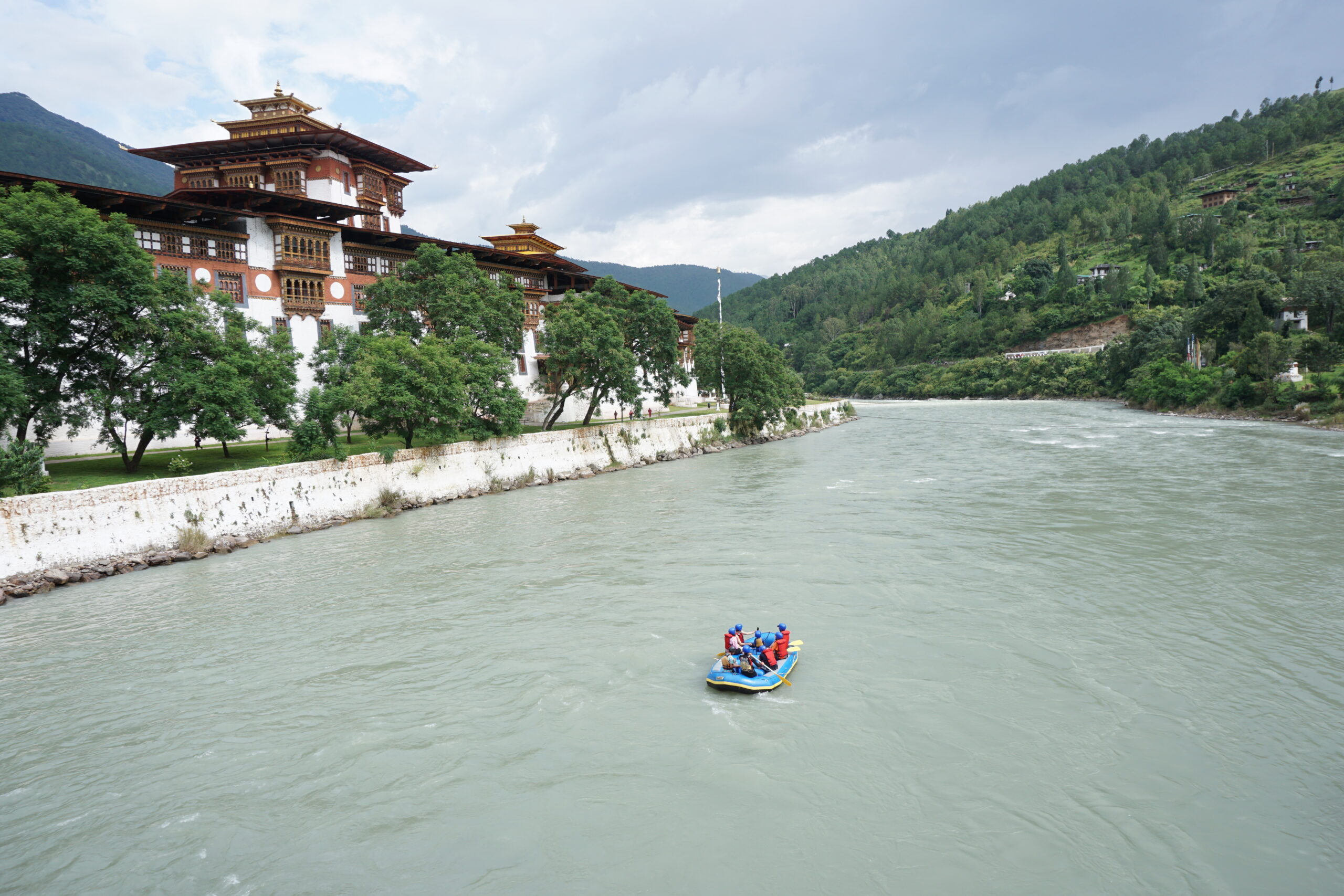
Punakha was the ancient capital of Bhutan. On arrival, visit Punakha Dzong, the “Palace of Great Happiness” built in 1637 by the Zhabdrung, the ‘Unifier of Bhutan’. It is situated at the confluence of the Mo Chu and Pho Chu (Mother and Father Rivers) and is the winter headquarters of the Je Khenpo and hundreds of monks who move en masse from Thimphu to this warmer location. The three story main temple of the Punakha Dzong is a breathtaking example of traditional architecture with four intricately embossed entrance pillars crafted from cypress and decorated in gold and silver. The insides walls are covered with elaborate murals depicting the teaching of the Buddha. It was here in 1907 that Bhutan’s first king was crowned.
After breakfast enjoy a short hike through rice fields up to Khamsum Yulley Namgyal Chorten, built by her majesty the queen Ashi Tshering Yangdon Wangchuk. Perched high on a hill on the bank of the river, the Chorten houses paintings belonging to Nyingmapa Traditions.
Take a picnic lunch on a picturesque riverside before an excursion to visit 15th century Chimi Lhakhang, temple of Drukpa Kuenley who is also known as the Divine Madman. He inherited the Divine Madman title since he revolted against the orthodox Buddhism of his time. He is considered a symbol of fertility and many childless couples go to his temple for blessing. Overnight at your hotel in Punakha/ Wangduephodrang.
Transfer to Trongsa (6 hrs). Drive via the bustling market town of Wangduephodrang. Drive up a winding mountain road through oak and rhododendron forests and over the Pele La pass (3,420m) on the Black Mountain range towards Trongsa. This pass is traditionally considered the boundary between western and central Bhutan. Further down the road stop to visit beautiful Chendebji Chorten. It is built in a style unusual for Bhutan, with painted eyes facing the four directions. The imposing Trongsa Dzong can be viewed across a deep canyon to signal your approach to the town around a curving road.
On arrival, enjoy some relaxation time before visiting Trongsa Dzong, a masterpiece of Bhutanese architecture. Trongsa is the largest Dzong in Bhutan. The foundations of Trongsa Dzong were laid in the 16th Century and there are now 22 temples in the complex. The view from the Dzong is spectacular and one can see across the impressive landscape for many miles. In the old days, it was the vigilance point for both the eastern and western trade routes, thus a strategically important Dzong. Overnight at your hotel in Trongsa.
Following breakfast visit the Ta Dzong museum located on the hill overlooking the Trongsa Dzong. The museums main focus is on the history of the monarchy, and is dedicated to the coronation and centenary celebrations of the Bhutanese monarchy with very rare and precious artifacts on display. These include statues built in the 17th century, to the first King’s Namza (dress), the Raven Crown and Sword of Trongsa Penlop Jigme Namgyal and the 3rd King.
Afterwards, proceed to Bumthang (2.5 hrs), one the most spectacular valleys in Bhutan and also the spiritual and historical heartland of the country. The road winds steeply up to Yutong La Pass (3,400m) before descending down through dense coniferous forest to Chumey valley. From here it is about an hour to Jakar, Bumthang’s main township.
Bumthang is home to some of Bhutan’s oldest Palaces, Buddhist temples and monasteries. The valley’s barley fields, apple groves and meadows lay below huge hills that climb up towards the Himalayan mountain wall separating Bhutan from Tibet. The beautiful architecture unique to Bhutan is evident in the many large farmhouses and temples. Bumthang is associated with Guru Rimpoche (Padmasambhava) and with Terton Pema lingpa.
After lunch, visit Jakar Dzong, also known as ‘Fortress of the White Bird’. The great grandfather of Zhabdrung founded it. The Dzong was initially built as a Monastery in 1549 but was upgraded after Zhabdrung had firmly established his power in 1646. The Dzong is now used as the administration center for Bumthang valley.
Transfer to the remote Tangbi Mani village for the day by vehicle and a 45-minute walk. Spend the day viewing the Tangbi Mani Festival in an enchanting rural atmosphere. You will be captivated by the dances and costumed performances accompanied by clapping cymbals, drums, horn and the unforgettable chanting of Buddhist monks. Watch on as the dancers whirl their array of colorful brocades through the air, play local games and stroll handicraft stalls, explore around the village and visit locals at their homes. In the afternoon transfer back to Jakar. Overnight at your hotel in Bumthang.
Enjoy a day of sightseeing in Bumthang beginning with Jampey Lhakhang, one of 108 temples built by the Tibetan King Songtsen in the 7th Century. It was here that Guru Rimpoche conducted his first sermon on Tantric Buddhism for his host King Sendha, the local ruler, his family and subjects. Continue on to Kurjey Lhakhang, famous for a rock within one of the temples that features a body imprint of the great master Guru Rimpoche. The big cypress tree in the temple grounds is believed to be the walking stick of Guru Rimpoche.
Afterwards visit Tamshing Lhakhang, the seat of Bumthang’s famous son, saint Pema Lingpa. He built it himself in 1501. A skilled tantric master and artist, he sculpted the main statues and painted the frescoes, some of Bhutan’s oldest which can still be seen even today, mostly in their original state. There is also a chain mail made by Pema Lingpa that devotees carry and circumambulate the inner sanctum to cleanse sins. Overnight at your hotel in Bumthang.
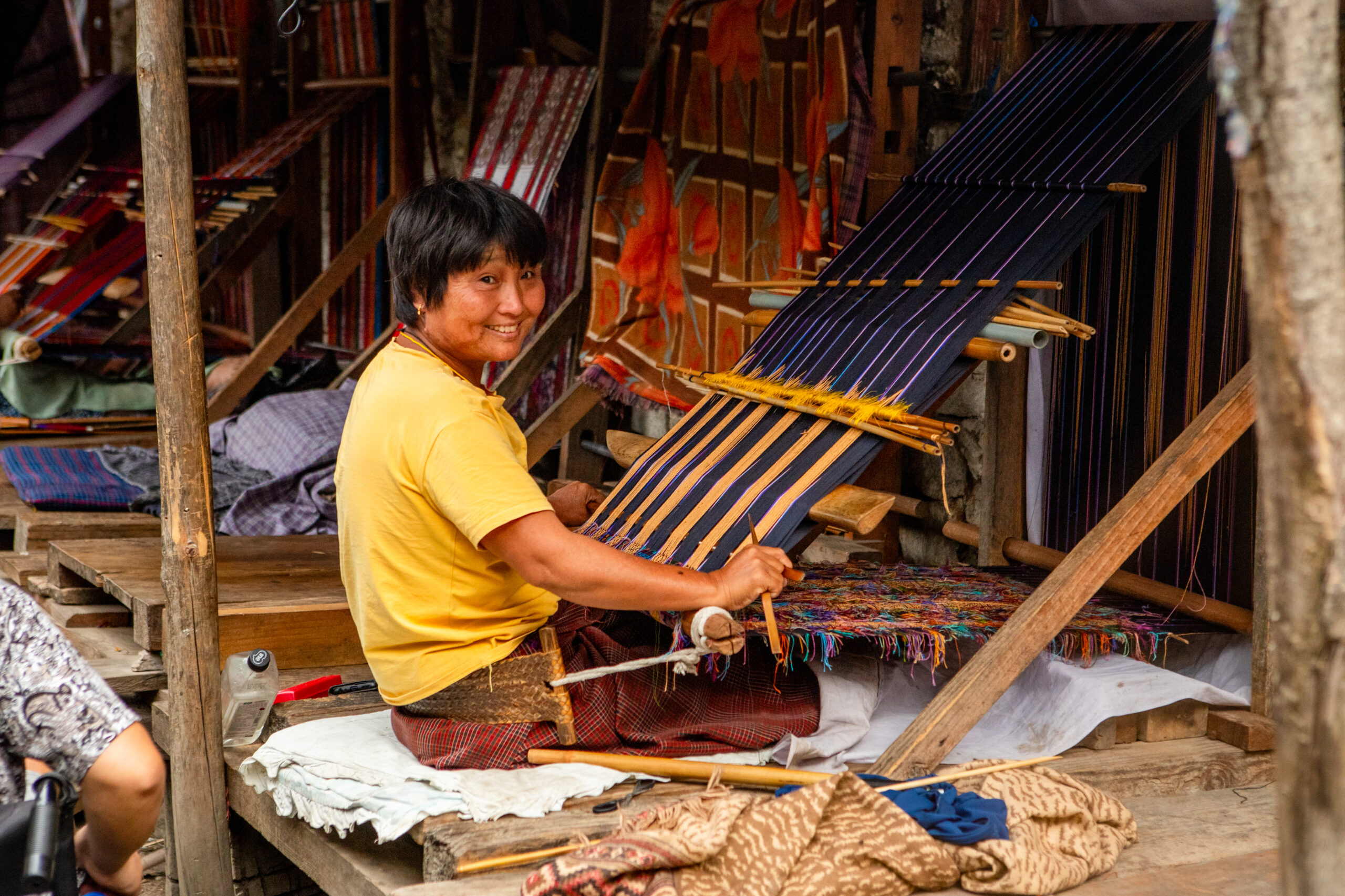
It’s going to be a long day drive today and so you will need to get an early start. Along the way, enjoy the scenery, the beauty of snowcapped mountains, flowers, grazing yaks, and the dense forest. We will stop in Ura valley where we visit the village and its temple. Ura Village has a medieval look with compact houses lined up alongside the cobblestone streets and is known for the women’s typical sheepskin shawls. As we leave the URA Village behind, the climbs to the Thrumshingla pass (3,750m/12,300 ft.) that officially divides central Bhutan with Eastern Bhutan. The road now gradually descends to Sengor and we will see some cascading waterfalls along the way. Once we cross the bridge over the Kurichu, You will set out on the mountainous road alongside cliffs, above the river valley to Lhuentse which is the original home of Bhutan’s royal family in the remote and ancient region of Kurtoe. You stop briefly to visit the Lhuentse Dzong, built in the 1600s and then continue further on to the Khuri bazam Village from where it takes 10-15 mins to drive to Minjey Village. Almost all 30 houses in the village have blackstrap looms for “Kishuthara” or brocaded dress. Four supplementary wefts interworked around the warp elements so that they appear to ride the surface of the cloth-like embroidery create motifs & Later in the evening you can spend your time culture exchange with locals were they will welcome you with Locally brewed alcohol called “Ara”. Overnight at Minjey village in Farm House.
Kishuthara weaving: is the main source of income for the people in this place. Kishuthara is a fabric made by silk on silk weaving with an intricate hand laced patterns. It is a highly regarded and most expensive hand-woven Bhutanese textile in Bhutan. Today is a special day for textile lovers because you see this famous textile in its originating place. You view the weaving technique as well as have the opportunity to interact with the different weavers in the village to better understand and study their weaving techniques, process, and tools. You can try weaving with the weavers.
Later drive to Lhuentse, which is one of the most rural and isolated districts in Bhutan. The landscape is spectacular with stark cliffs and gorges, beautiful conifer and pine forests and remote villages with rice, millet, and cornfields. Kurtoe region of Lhuentse is the ancestral home of Bhutan’s royal family & then drive to Menji village to see the distinct textile weaving and hike to statue of Padmasambhava 148 feet 30-foot high lion throne and 17-foot high lotus seat in the form of Guru Nangsi Zilnoen is being built in Takela, Lhuentse to bring peace and harmony to the world as prophesied by Lord Buddha. This will be the world’s largest statue of Guru Padmasambhava. Evening village visits. Overnight in Farmhouse
Since time immemorial Bhutanese have been passionate about their national sport of Dha (archery). Nearly all villages in the kingdom boast an archery range and each dzong has a space set aside nearby for a BHA Cho (field of target). Competitions are a riot of colors and excitement, with two teams in traditional dress shooting at small wooden targets placed 140m apart (Olympic standard is 50m). The distance is so great that team members gather dangerously close to the target to yell back how good the archer’s aim was. Howls, chanting, encouragement, and jokes often accompany this. Members of the opposing team may shout back how terrible the archer’s aim is and make ribald remarks. When an arrow hits the target, teammates perform a celebratory slow-motion dance and sing the praises of the shooter, who tucks a colored scarf into his belt. For major tournaments, each team brings its own cheerleading section of girls decked out in their finest clothes. They perform dances in between play, and during the shooting; they do brief routines and shout lewd and disparaging comments about the opposing archer’s parentage or sexual prowess. Tradition has it that women are not allowed to touch an archer’s bow, and it is believed to decrease performance if an archer sleeps with a woman the night before a contest. The traditional Bhutanese archery equipment is a long bamboo bow. Most archers nowadays use a state of -the -art carbonate Hoyt brand bow with a complicated-looking pulley system that releases the arrows with tremendous speed. The use of imported equipment hasn’t diluted the rich traditions of the game, although Bhutanese archers are now encouraged to train for the Olympics. International coaches who have trained Bhutan’s Olympic archers have been impressed with the natural talent and think that, with expert coaching, Bhutan could possibly win an Olympic medal one day. Archery matches are among the most picturesque and colorful events you’ll find here and well worth a visit.
After easy breakfast, wave goodbye to village people and drive back to Bumthang for overnight. On the way quick stop at Wangzhing lhakhang to pay respect for your journey towards Bumthang.
Start early today for Gangtey, about 6 hrs from Bumthang. Farmhouses and temples dot the landscape and you will see local farmers wearing the traditional woven bamboo hats of central Bhutan. The wide and picturesque Phobjikha valley is one of Bhutan’s few glacial valleys, and chosen winter home of black necked cranes (November – March) migrating from the Tibetan plateau. Visit Gangtey Goempo (Monastery), the only Nyingmapa monastery in western Bhutan. Overnight at your hotel in Phobjikha.
Morning visit to view the Black-Necked Cranes (winter only) before departing for Thimphu (approx 6 hrs). From Gangtey the road gradually descends into the balmy Punakha valley before climbing up over Dochu La Pass and into Thimphu. Remainder of day at leisure. Overnight at your hotel in Thimphu.
After breakfast enjoy a morning hike to Tango Monastery (approx. 1 hr walk). Tango Monastery is a higher education institute for Buddhist monks built there in the 15th century by Drukpa Kunley (‘The Divine Madman’). Like many Bhutanese monasteries, Tango was built over a cave where meditation and miracles were said to take place. The monastery has no less than twelve corners and, it is said, was built in only two months – including the six temples within. On a clear day, the views of the surrounding valley and hills is amazing.
In the afternoon continue sightseeing in Thimphu. Visit the School for Arts and Crafts, The National Library housing the collection of Bhutanese scriptures dating back to the 8th century, the Traditional Paper Factory and a fascinating replica of a medieval farmhouse at the Folk Heritage Museum. Afterwards transfer to Paro for overnight.
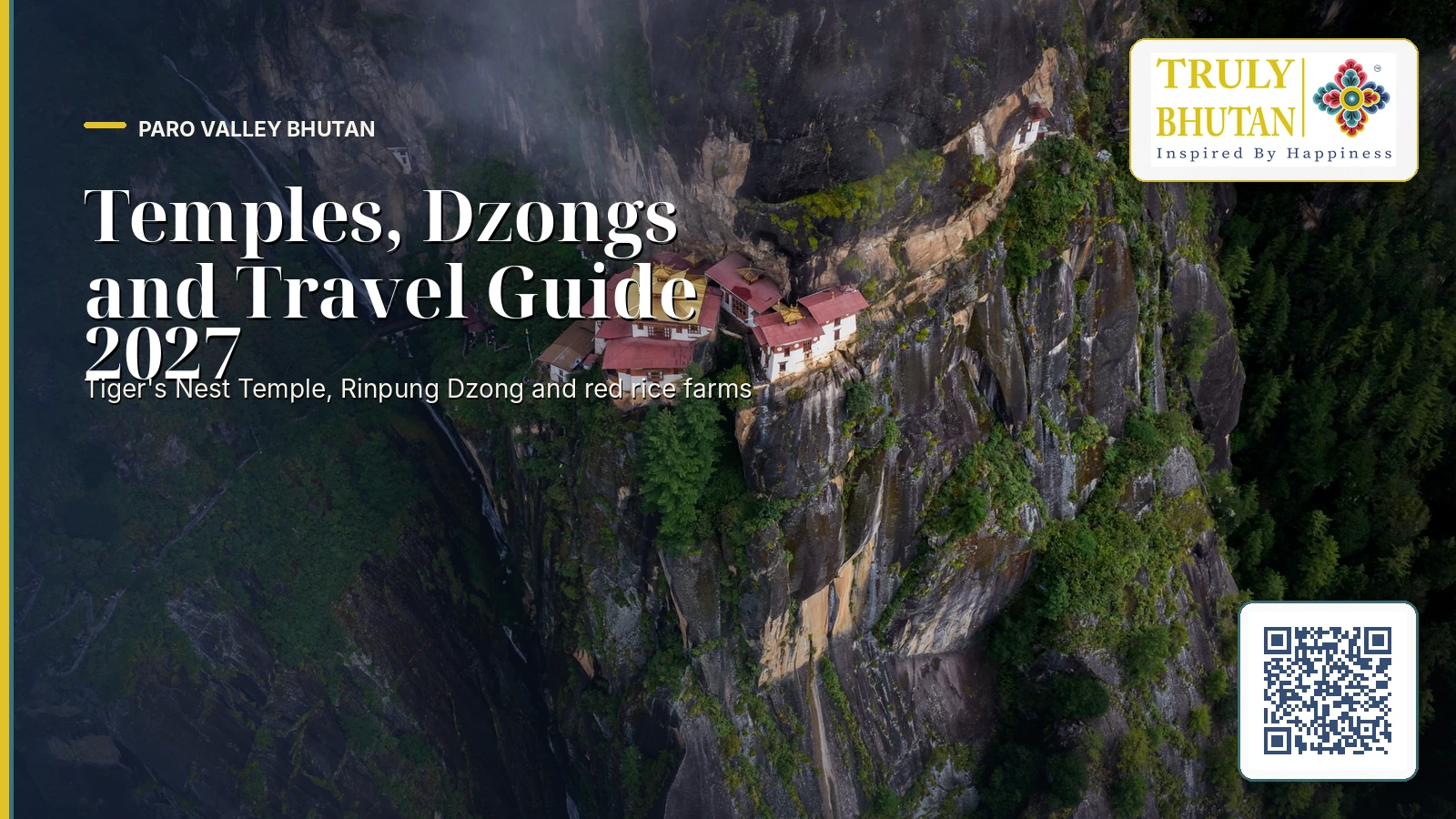
After breakfast hike to Taktsang Temple Hike. The walk of approximately 1.5 to 2 hours uphill takes you almost a kilometer above the Paro valley floor (for those who cannot hike we will arrange a horse for transfer up to cafeteria). The view of Taktsang Monastery built on a sheer cliff face 900 meters above the valley floor is a spectacular sight. The Monastery is also an important pilgrim site for the Buddhists. The great Guru Rimpoche is said to have flown here on the back of a tigress when he brought the teachings of the Buddhist Dharma to Bhutan in the 8th Century. Nearby there is a teahouse where you can stop for refreshments before returning to Paro for lunch.
In the afternoon drive to the ruins of the 17th Century Drukgyel Dzong, built to commemorate a victory against invading Tibetans in 1644. In fine weather the towering peak of the sacred Mount Jomolhari (7314m) appears as a stunning backdrop. On the return drive to Paro, visit 7th Century Kyichu Lhakhang, one of the 108 temples constructed by the Tibetan king Songtsen Gampo.
Alternatively, day 19 could be spent on a day trip to the Haa Valley, one of the most picturesque districts in Bhutan. Reached via the beautiful Chelela Pass, Haa Valley is characterized by its surrounding rugged and mountainous terrain. Overnight at your hotel in Paro.
Breakfast in the hotel, then drive to the airport for flight to your onward destination.
Tashi Delek!
Autumn from September to November is the primary season for this itinerary. The Thimphu Tshechu runs September 21 to 23 in 2026 and October 16 to 18 in 2027. The Tangbi Mani Festival in Bumthang follows within days. Spring from March to May offers the Paro Tshechu, rhododendron blooms, and clear Himalayan views. Our Travel experts can adjusts the full 19-day itinerary to match your preferred departure window and festival calendar.
The tour covers five main subject areas. First, festivals: the Thimphu Tshechu mask dances and Tangbi Mani fire ceremony. Second, architecture: Dzongs in Punakha, Trongsa, Bumthang, and Paro. Third, people: Kishuthara weavers in Lhuentse, archery teams in traditional dress, monks, elders, and rural families. Fourth, landscapes: Himalayan peaks, river valleys, and Phobjikha glacial plain. Fifth, wildlife: black-necked cranes in Phobjikha from November onward.
No. We designs this tour for both amateur and professional photographers. The guide adjusts the pace and location access to the group’s level and equipment. A local professional photographer joins the group for the Lhuentse village and archery sections. The guide also assists with access requests at festivals, temple grounds, and village homes where photography protocol applies.
Email us at trulybhutan@gmail.com or send a WhatsApp message to +975 77111115. Share your preferred travel dates, group size, and festival season. The team responds within 24 hours with a confirmed quotation. Autumn festival departures fill several months in advance. Early booking secures accommodation in Thimphu and access to the best festival photography positions.
The tour costs $8,930 per person, covering all 19 days: the SDF of $100 per day, guide, local photographer for village days, all accommodation including farmhouse stays, all meals, and all in-country transport. Festival and monument entrance fees are paid separately on the day. Contact us at trulybhutan@gmail.com or WhatsApp +975 77111115 for a full breakdown.
our company policies requires a deposit to confirm your booking. The deposit secures your festival dates and holds accommodation across all 19 days. The deposit amount is confirmed at quotation based on group size and departure season. Contact trulybhutan@gmail.com or WhatsApp +975 77111115 for complete booking terms and a deposit schedule.
- Airport pick-up and drop-off by private vehicle.
- 3-star accommodation (4 & 5 stars may require an additional premium update).
- Bhutan visa fee – including all necessary processing
- Route Permit
- Three meals per day during your stay in Bhutan
- A licensed Bhutanese tour guide
- All land transportation by private vehicle
- Camping equipment and haulage for trekking tours
- Sightseeing as per itinerary
- Monuments entrance fees where applicable
- Drinking water
- All internal taxes and charges
- A sustainable development fee of $200. (This sustainable development fee goes towards free education, free healthcare, and poverty alleviation, along with the building of infrastructure.)
- Airfare & Travel Insurance
- Expenses of personal nature, Tips to guides and drivers
- Expenses occurred due to unavoidable events i.e. road wrecks, flight delays etc.
Photography Etiquette in Bhutan
Permission is required before photographing monks, festivals in sacred spaces, and people in private settings. Your Truly Bhutan Travel guide handles all permission requests and advises on protocol at each location. At festivals, photography of the mask dances is permitted from the gallery areas. Photographing the interior of active temples requires specific approval. Photographing people in villages is welcomed when approached respectfully through the guide or local host.
Camera Equipment and Power
Bhutan runs on 230V power with UK-style three-pin sockets and Indian-style round-pin sockets. Bring a universal adapter. Wi-Fi is available at most hotels in Paro, Thimphu, Punakha, and Bumthang. Farmhouse accommodation in Minjey village has limited power access. Bring a portable power bank for the four nights in Lhuentse. Dust and moisture are minimal during the autumn season. A UV filter and lens cloth are recommended for outdoor shooting.
Getting Around
We provides a private vehicle and driver for all 19 days. The longest single drive day is Bumthang to Minjey on Day 10, covering 235 kilometers in seven to eight hours. All other drive days are between two and six hours. Road quality improves across western and central Bhutan and drops to mountain switchbacks in Lhuentse District. Stops for photography are scheduled along all major drive routes.
Altitude on This Tour
The highest point on this tour is Thrumshingla Pass at 3,750 meters on the Bumthang to Minjey drive. Dochula Pass at 3,100 meters and Pelela Pass at 3,420 meters are also crossed during the tour. Most accommodation sits between 1,200 meters (Punakha) and 2,600 meters (Bumthang). Altitude sickness is uncommon on this route. Drink water consistently throughout and rest fully on the first two days in Thimphu.
A Photography Tour Built Around Access
The difference between a photography tour and a sightseeing tour is access. Truly Bhutan Travel builds this itinerary around the moments that require planning to reach. The Thimphu Tshechu gallery position at dawn, the Tangbi Mani fire ceremony, the farmhouse weaving light in Minjey, and the archery ground at full celebration are all specific access points. Each requires the right timing, the right local introduction, and the right guide. This tour delivers all three.
The archery match in Lhuentse is the least-photographed event on the itinerary. As a result, the images from that sequence are among the most unusual you will bring home from Bhutan.
What the Full 19-Day Route Delivers
The 19 days cover four distinct photographic environments in sequence. The festival environment of Thimphu and Bumthang gives you three days of ceremony, color, and crowd. The architectural environment of Punakha, Trongsa, and Paro gives you Dzong light across three different valley settings. The village environment of Lhuentse gives you four days of intimate daily life, craft, and sport. The landscape environment of Phobjikha gives you the valley plain at dawn. Together, the route produces a complete body of work on Bhutan. Truly Bhutan Travel handles every logistical element so the camera stays up.
Book Your 2026 or 2027 Bhutan Photography Tour
The 2026 autumn departure aligns with the Thimphu Tshechu from September 21 to 23. The Tangbi Mani Festival follows on September 26 to 27. The 2027 autumn departure aligns with the Thimphu Tshechu from October 16 to 18. Both years are open for booking. Festival season departures fill ahead of schedule. Contact Truly Bhutan Travel at trulybhutan@gmail.com or WhatsApp +975 77111115 to confirm your dates. The team sends a full quotation within 24 hours.
Alternative Tours with Truly Bhutan Travel
Bhutan Travel Info
Travel Essentials
- Travel/Medical Insurance: Ensure a worry-free journey with Bhutan's dedicated travel and medical insurance plans offered by the Royal Insurance Corporation of Bhutan. Visit RICB for more information.
- Banking: Modern banking facilities are available in urban areas of Bhutan, with banks like Bank of Bhutan Limited, Druk PNB, and Bhutan National Bank. ATMs are common in Thimphu and Phuentsholing, but scarce in rural areas. Complete your banking in major cities.
- Money Matters: Bhutan's currency is the Ngultrum (Nu), which is equivalent in value to the Indian Rupee. Foreign travelers should bring traveler’s cheques or cash, especially USD. Credit cards like Visa and American Express are accepted in most areas.
- Communication: Bhutan's telecommunications are well-developed with internet cafes, mobile phone coverage, and international roaming available in most towns.
- Electricity: Bhutan operates on 230 volts and 50 Hertz. Ensure your devices are compatible with the three types of plugs commonly used.
- Time Zone: Bhutan's time is six hours ahead of GMT.
Health, Safety, and Customs
- Health and Inoculations: Recommended vaccinations include tetanus, typhoid, and hepatitis A. Avoid untreated water and ice cubes; instead, opt for bottled water, which is readily available.
- Safety Precautions: Bhutan is generally safe, but avoid walking alone or staying out late, especially after 9 PM. Secure your belongings, particularly in the capital, Thimphu.
- Customs Regulations: Personal belongings, 1 liter of alcohol, 200 cigarettes, and professional equipment are exempt from customs duty. Importing restricted items, such as wildlife products, antiques, and drugs, is prohibited.
Accommodation, Food, and Shopping
- Accommodation: Bhutan offers a range of accommodations, from quality 3-star to luxury 5-star hotels in places like Thimphu, Paro, and Punakha. Travelers can also opt for camping when venturing beyond urban areas.
- Food: Bhutanese cuisine is rich and spicy, featuring dishes like ema datshi. International cuisine such as Indian, Continental, and Chinese is available in most restaurants, with both vegetarian and non-vegetarian options.
- Shopping: Bhutan offers unique handicrafts, including hand-woven textiles, wooden bowls (Dapas), silver statues, Thangkas, and local postage stamps. Note that the buying and selling of antiques is strictly prohibited.
Travel Kits and Clothing
- Clothing and Essentials: Bhutan's climate is diverse, so dress in layers and pack accordingly. Respectful clothing is required when visiting monasteries and religious sites, and hats should be removed in sacred areas.
- Travel Kits: Pack items like sunscreen, sunglasses, insect repellent, antihistamine cream, anti-diarrhea pills, a flashlight, warm clothes, and a hat. The diverse climate means temperatures range from 20-25°C in summer to below 15°C in winter.
Experiences and Activities
- Photography: Capture Bhutan's stunning landscapes, rural life, and architecture. Indoor photography in sacred sites requires special permission.
- Guides and Interpreters: Bhutan offers certified guides fluent in various languages, ensuring you get the best experience when visiting sacred sites and cultural landmarks.
- Festivals and Holidays: Each district in Bhutan celebrates its unique annual tshechu. Check local schedules to plan your visit around these vibrant festivals.
- Weights and Measures: Bhutan uses metric measurements for weight, with advanced electronic scales commonly found in major cities.


- Best Price Guaranteed
- Book Now, Pay Later
- Local Expertise
- Hand-Picked Hotels
- Value for money
- Quality Service
- Responsible Tourism
- Tailor-Made Holidays
- No Booking Fee
- 100% Visa Approval
- 24/7 Customer Service
- No Hidden Costs