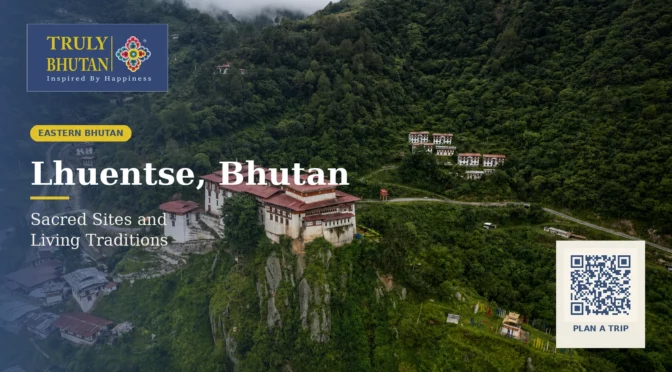
Lhuentse, Bhutan: Sacred Sites and Living Traditions
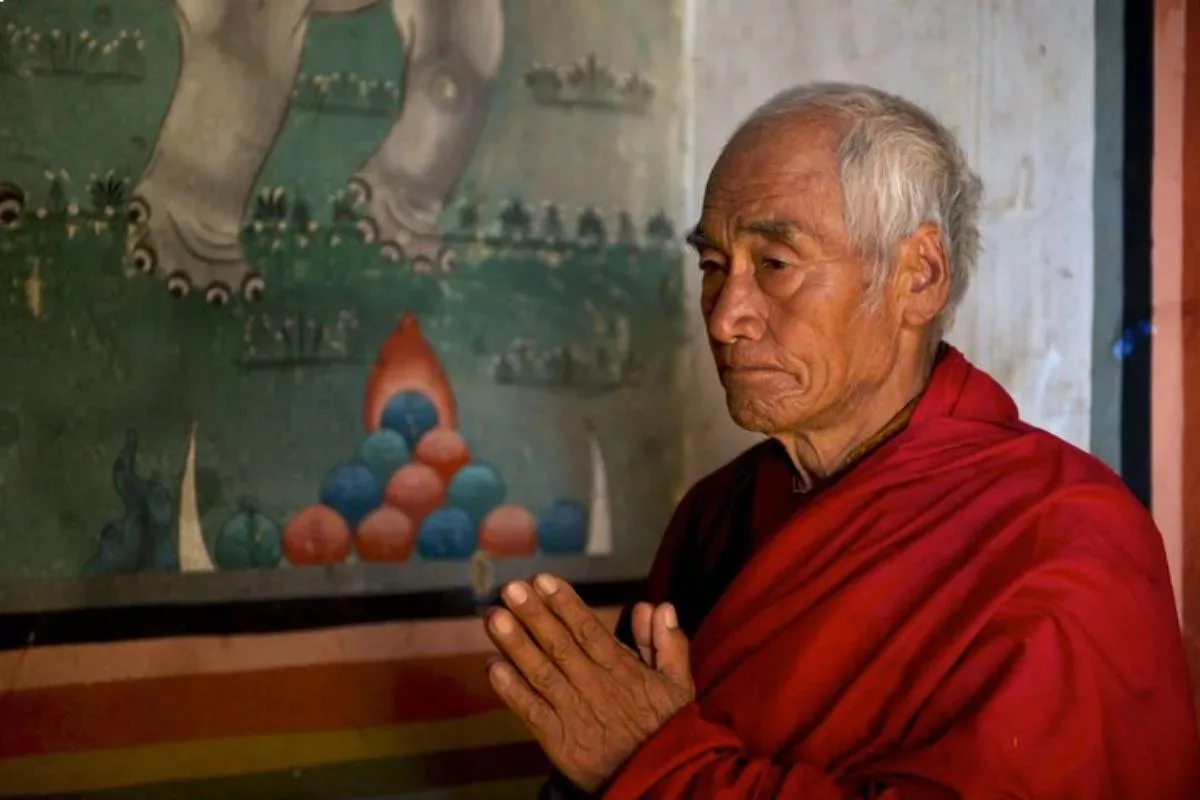
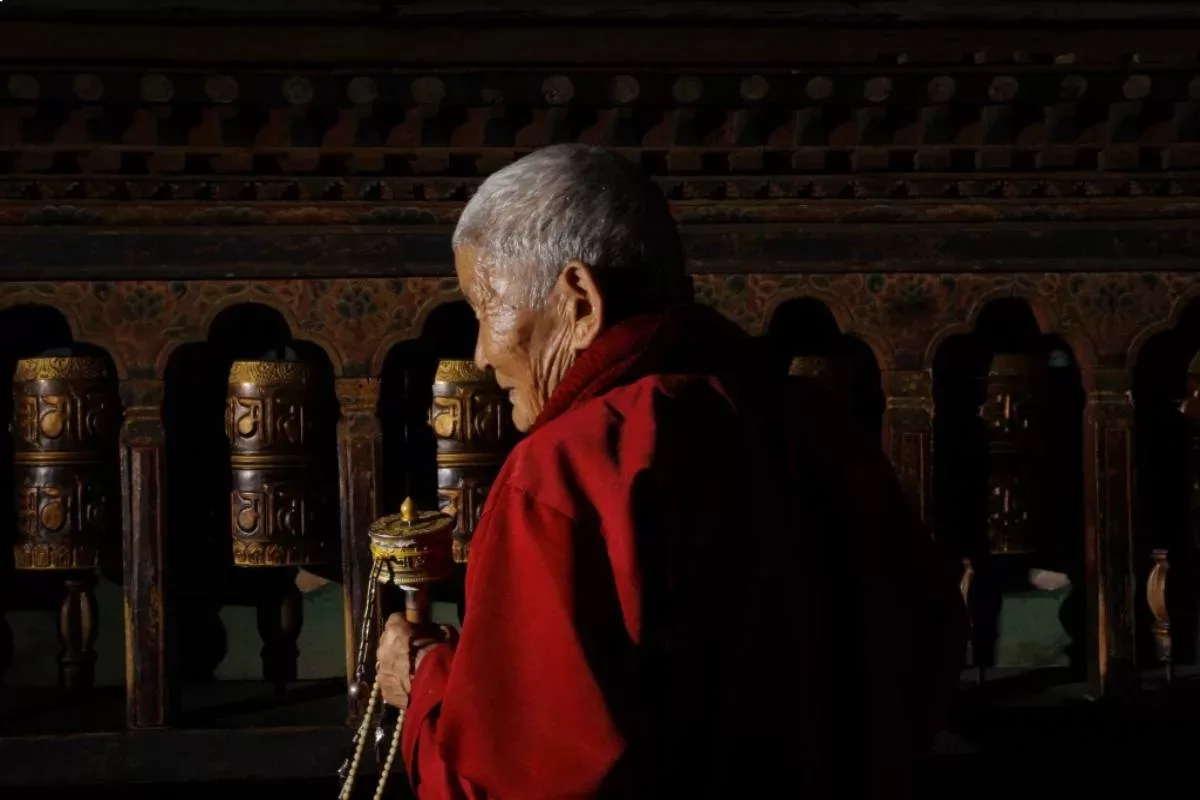
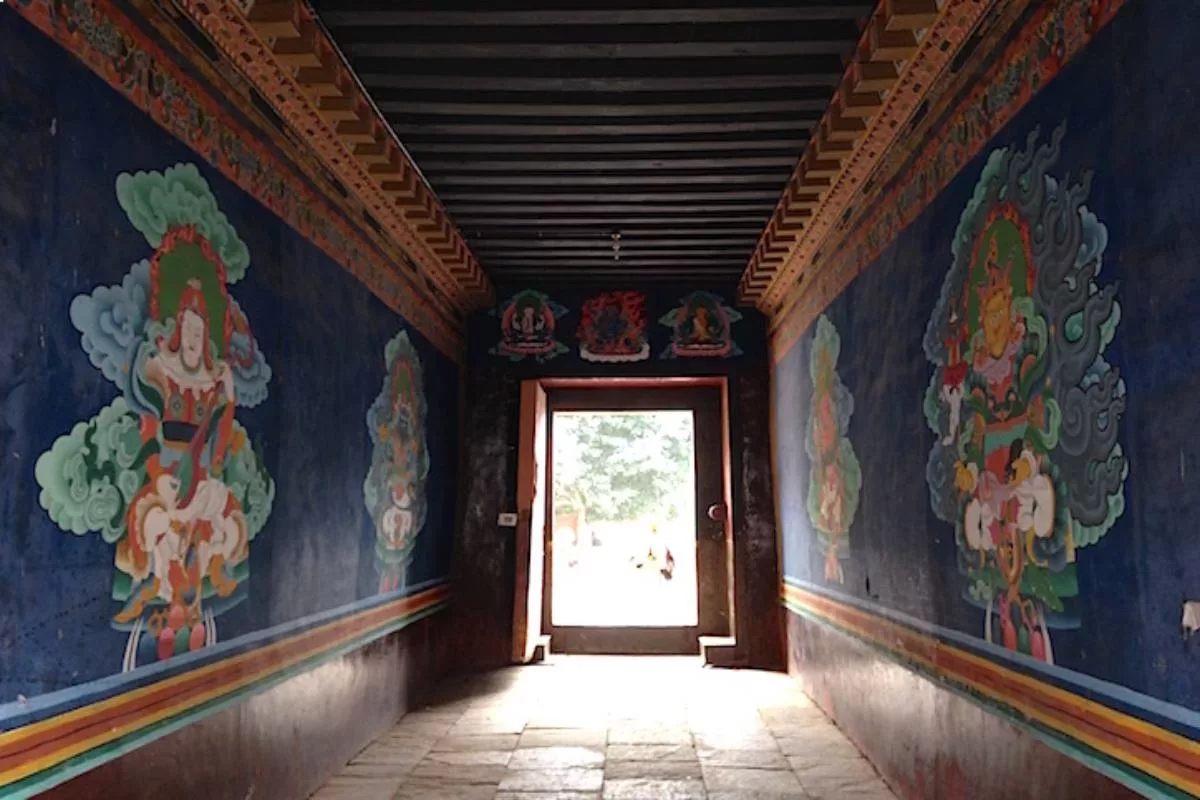
Remote, culturally distinctive and deeply sacred, Lhuentse offers a view of Bhutan shaped by royal history, pilgrimage traditions and living craftsmanship. This northeastern district is best understood not as a checklist destination, but as a landscape where monasteries, ancestral homes, weaving villages and oral traditions remain closely connected to everyday life.
Lhuentse is a remote district in northeastern Bhutan known as an ancestral homeland of Bhutan’s Wangchuck royal dynasty. Its main attractions include Lhuentse Dzong, Khoma’s Kishuthara weaving tradition, Dungkar village, the Takila Guru statue and the pilgrimage route to Singye Dzong.
Why Is Lhuentse Important?
Lhuentse, historically associated with the region of Kurtoe, holds two important places in Bhutanese identity. It is closely connected with the ancestry of Bhutan’s hereditary monarchy, and it contains some of the country’s most revered Buddhist pilgrimage sites.
The district lies between Bumthang, Mongar, Trashiyangtse and Bhutan’s northern border. Its terrain ranges from deep river valleys to high mountain landscapes, creating isolated settlements, varied farming conditions and demanding travel routes. Official district information describes Lhuentse as covering approximately 2,854 square kilometres and consisting of eight gewogs, or local administrative blocks.
Lhuentse should appeal particularly to travellers interested in:
- Bhutanese royal history
- Buddhist pilgrimage and sacred geography
- Traditional textile production
- Rural communities and village crafts
- Slow, culturally focused travel in eastern Bhutan
Travellers planning a longer journey through the east can combine the district with eastern Bhutan itineraries covering Mongar, Trashigang and Trashiyangtse.

Lhuentse Attractions at a Glance
| Place or experience | Why it matters | Planning consideration |
|---|---|---|
| Lhuentse Dzong | Historic fortress, religious centre and district landmark | Accessible by road, although journey times can change |
| Khoma village | Centre of intricate Kishuthara weaving | Allow time to meet weavers respectfully |
| Dungkar village | Associated with the ancestry of the Wangchuck dynasty | Best visited with historical context from a local guide |
| Takila Guru statue | Monumental image of Guru Padmasambhava | Approximately 15 kilometres from Thinleypang |
| Singye Dzong | One of Bhutan’s most sacred pilgrimage landscapes | Remote and physically demanding |
| Gangzur village | Known for traditional earthen pottery | Craft remains practised by only a small number of artisans |
| Jangchubling Monastery | Important religious institution with royal associations | Confirm visitor access before arrival |
Lhuentse Dzong: The District’s Historic Landmark
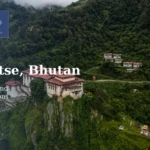
Lhuentse Dzong stands on a commanding ridge above the Kurichhu River. Its elevated position, whitewashed walls and traditional architectural proportions make it one of the most striking structures in eastern Bhutan.
The dzong began as a smaller religious structure associated with Yongzin Ngagi Wangchuk during the mid-16th century. Official accounts differ slightly on the exact chronology: one district source gives 1552 for the original small dzong, while another gives 1554 for the establishment of a meditation centre. Accounts also vary on the date of the later enlargement. It is therefore more accurate to describe Lhuentse Dzong as having a mid-16th-century origin and a substantially developed 17th-century structure rather than asserting one uncontested date.
Today, the dzong accommodates both district administrative offices and the monastic body. It also serves as a venue for important religious observances and contains sacred objects connected with local traditions.

Why Lhuentse Dzong Matters
The dzong represents more than political or defensive architecture. Its location connects territorial administration with sacred landscape, while its history reflects the gradual incorporation of the Kurtoe region into Bhutan’s central system of governance.
Visitors should dress respectfully, follow photography restrictions and avoid entering private religious or administrative areas without permission.
Dungkar: Ancestral Home of Bhutan’s Royal Dynasty
Dungkar village is one of the most historically important settlements in Lhuentse. The surrounding land is traditionally said to resemble a conch shell, an auspicious symbol in Buddhism.
Dungkar Choeje Lhakhang is closely associated with the lineage from which the Wangchuck dynasty emerged. The area was home to Jigme Namgyal, the influential Trongsa Penlop and father of Ugyen Wangchuck, who became Bhutan’s first hereditary king in 1907.
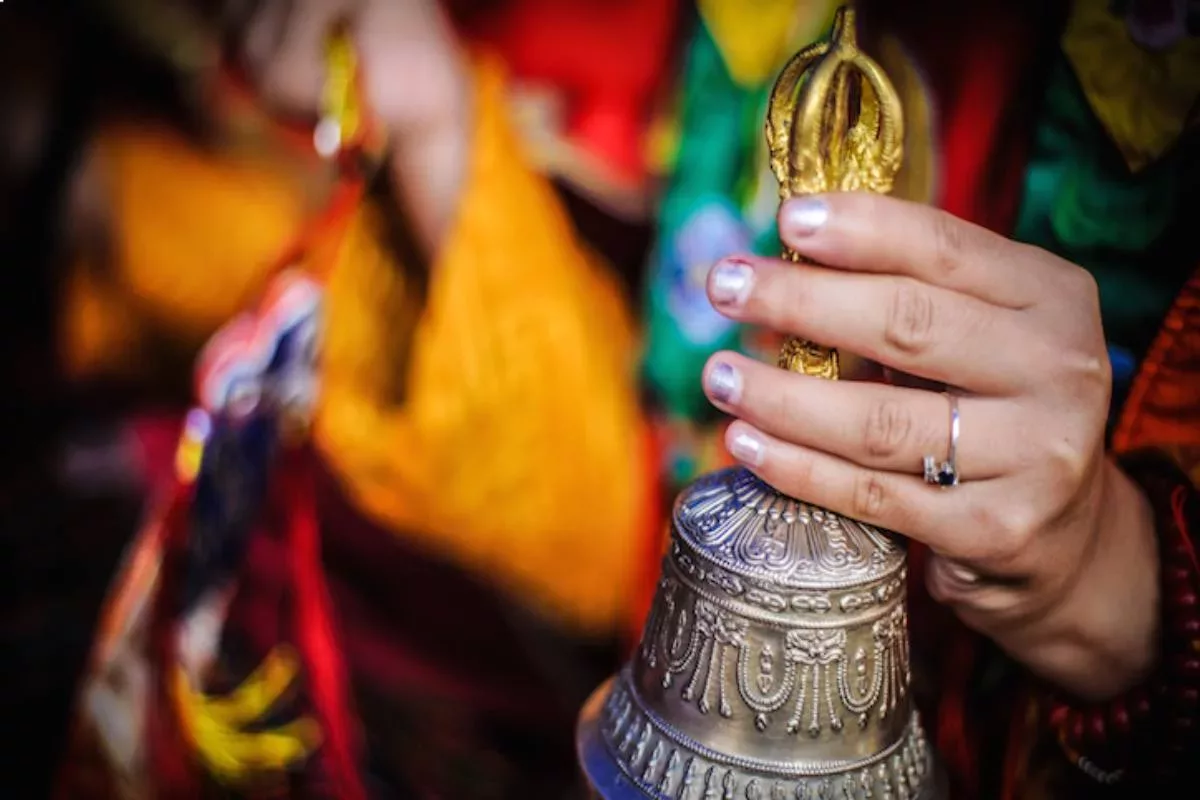
The lhakhang contains religious objects and termas—sacred teachings or objects believed to have been concealed and later revealed by Buddhist treasure discoverers. Local festivals continue to follow the Bhutanese lunar calendar, so their Gregorian dates change each year.
The nearby Dungkar Naktshang and other ancestral buildings help visitors understand how regional religious families, political leadership and Bhutan’s royal history became intertwined.

Khoma Village and the Art of Kishuthara Weaving
Khoma is widely regarded as the centre of Kishuthara, one of Bhutan’s most elaborate and highly valued silk textiles. Kishuthara is most commonly used to create kira, the traditional full-length dress worn by Bhutanese women.
Its visual richness comes from complex supplementary-weft patterns, carefully arranged motifs and vibrant combinations of silk thread. Completing an especially intricate piece can take many months, with some requiring up to a year of work. The value of a finished textile reflects the quality of the silk, complexity of the pattern and labour invested by the weaver.
Weaving traditionally becomes more intensive during winter, when agricultural work slows. Skills are passed between generations, with young girls learning simpler patterns before progressing to more demanding designs.
Kishuthara is not merely a souvenir. It is worn during festivals, religious ceremonies and important family occasions. Weaving also provides supplementary household income and allows local women to maintain control over specialised cultural knowledge.
Some contemporary weavers are reviving the use of plant- and mineral-based natural dyes. These processes require additional time and knowledge but connect modern production with older methods of preparing coloured thread.
Travellers interested in Bhutanese craftsmanship can continue with Bhutan textile traditions.
How to Visit Khoma Responsibly
- Ask before entering a weaving space or photographing artisans.
- Avoid interrupting detailed work merely to stage photographs.
- Ask about the materials, weaving time and meaning of individual motifs.
- Purchase directly from weavers or recognised community outlets where possible.
- Do not treat handwoven textiles as interchangeable with factory-made products.

Singye Dzong: A Remote Sacred Landscape
Singye Dzong is one of Lhuentse’s most important pilgrimage destinations. The sacred complex lies in a high and remote landscape associated with Guru Padmasambhava, also known as Guru Rinpoche, who is believed to have meditated in the area during the eighth century.
The name is often translated as “Lion Fortress”. Rather than referring only to one conventional fortress, Singye Dzong forms part of a wider sacred landscape containing meditation sites, rock formations, caves and associated pilgrimage locations.
The journey is physically demanding and should not be treated as an ordinary sightseeing excursion. Khomagang and Denchung are among the last settlements before the sacred area, and facilities beyond the villages are limited.
Access conditions, required permissions, accommodation arrangements and route safety should be confirmed through an accredited Bhutanese tour operator or guide. Bhutan’s official visitor guidance advises travellers not to enter remote wilderness without an accredited guide.
The site’s religious importance also requires appropriate behaviour. Pilgrims and visitors should avoid loud activity, alcohol, littering, damage to natural formations and photography where restrictions apply.
For broader cultural context, see Bhutan pilgrimage travel guide.
The Takila Guru Nangsa Zilnen Statue
Takila, in Maenbi Gewog, is home to a monumental statue of Guru Padmasambhava known as Guru Nangsa Zilnen. The statue stands approximately 154 feet high and is surrounded by eight large chortens and 108 smaller chortens.
Construction began in 2008, and the site was consecrated in 2015. It was envisioned as a place of religious learning, contemplation and community benefit, rather than simply as a roadside monument.
Takila is considerably easier to reach than Singye Dzong and can be included in a road-based cultural itinerary through Lhuentse.

Temples and Monasteries Beyond the Main Route
Lhuentse’s religious landscape extends far beyond its best-known attractions.
Jangchubling Monastery
Jangchubling Monastery was founded by Choeje Pekar Jamtsho and became an important centre of religious practice. Its later history is associated with the Sixteenth Karmapa, Rangjung Rigpe Dorje, and Ashi Wangmo, a daughter of Bhutan’s first king who spent the later part of her life as a nun at the monastery.
Kilung Lhakhang
Kilung Lhakhang stands on a ridge overlooking the Kurichhu River. Local tradition connects the site with an ancient regional ruler and a sacred chain mail said to have been used in the recovery of a statue that miraculously flew from Lhuentse Dzong.
Such stories should be understood as sacred oral history rather than assessed only as literal historical records. They show how communities connect religious objects, landscapes and moral meaning.
Khinyel Lhakhang
Khinyel Lhakhang is traditionally associated with the eighth century and is said to have been renovated by the treasure revealer Pema Lingpa in the 15th century.
Visitors should confirm current access to smaller monasteries, as some may open only during rituals, festivals or by prior arrangement.
Gangzur Pottery and Other Traditional Crafts
Gangzur village was historically known for earthen pottery. The tradition declined as metal, plastic and mass-produced household containers became widely available, but local efforts have helped sustain the craft.
The official district tourism information notes that only a small number of potters continue practising in Gangzur. This makes pottery demonstrations culturally valuable, but it also means visitors should avoid expecting performances without prior arrangement.
The district also preserves nettle-fibre weaving in communities such as Ney village. Together with Kishuthara, these crafts demonstrate how Lhuentse households adapted locally available materials to produce clothing, containers and domestic goods.
Languages, Songs and Cultural Identity
Lhuentse is not culturally uniform. Its valleys are home to communities commonly identified as Kurtoep, Kurmed, Khomapa and Tshangla, each with distinct linguistic and cultural traditions.
Local speech includes varieties related to eastern and central Bhutanese languages. These linguistic differences reflect historical migration, geographic isolation and long-standing connections between Lhuentse, Bumthang, Mongar, Pemagatshel and neighbouring regions.
Song remains an important form of cultural expression. Kurtoepai Alo, for example, is traditionally associated with farewells and long journeys. Its wistful character reflects a landscape in which travel once meant extended separation across difficult mountain routes.
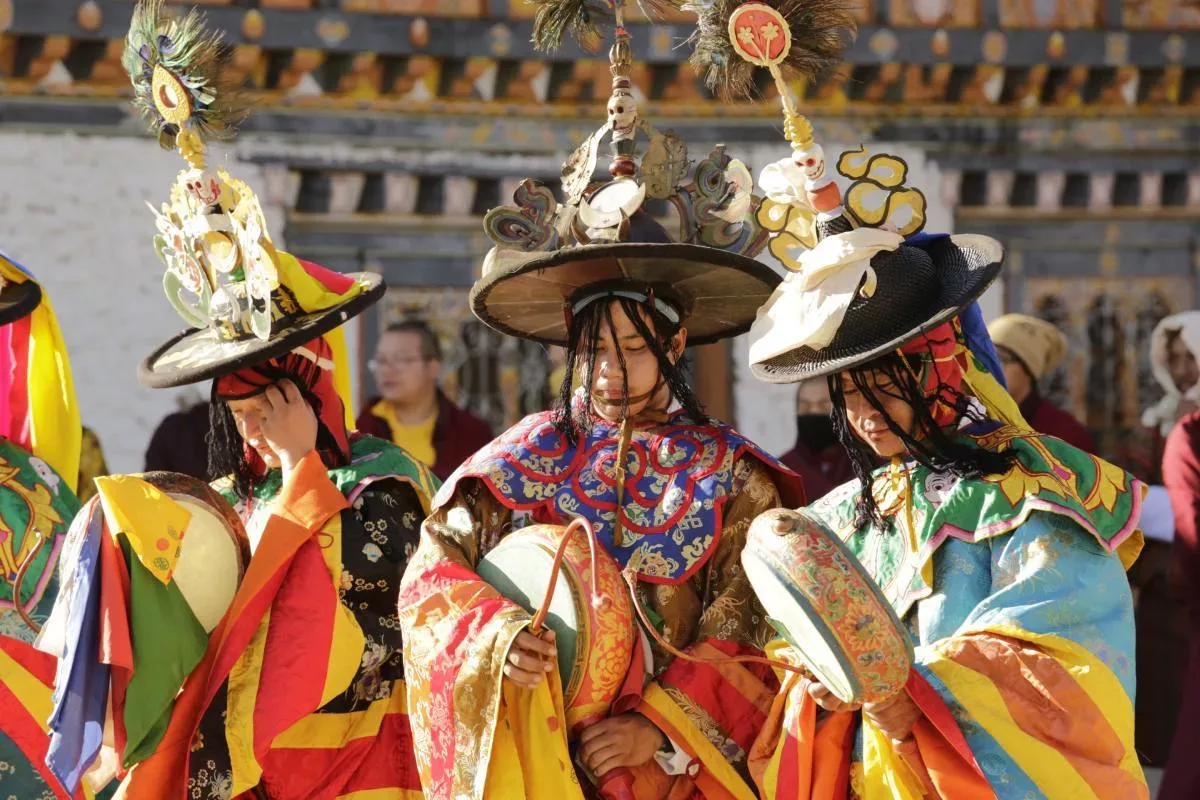
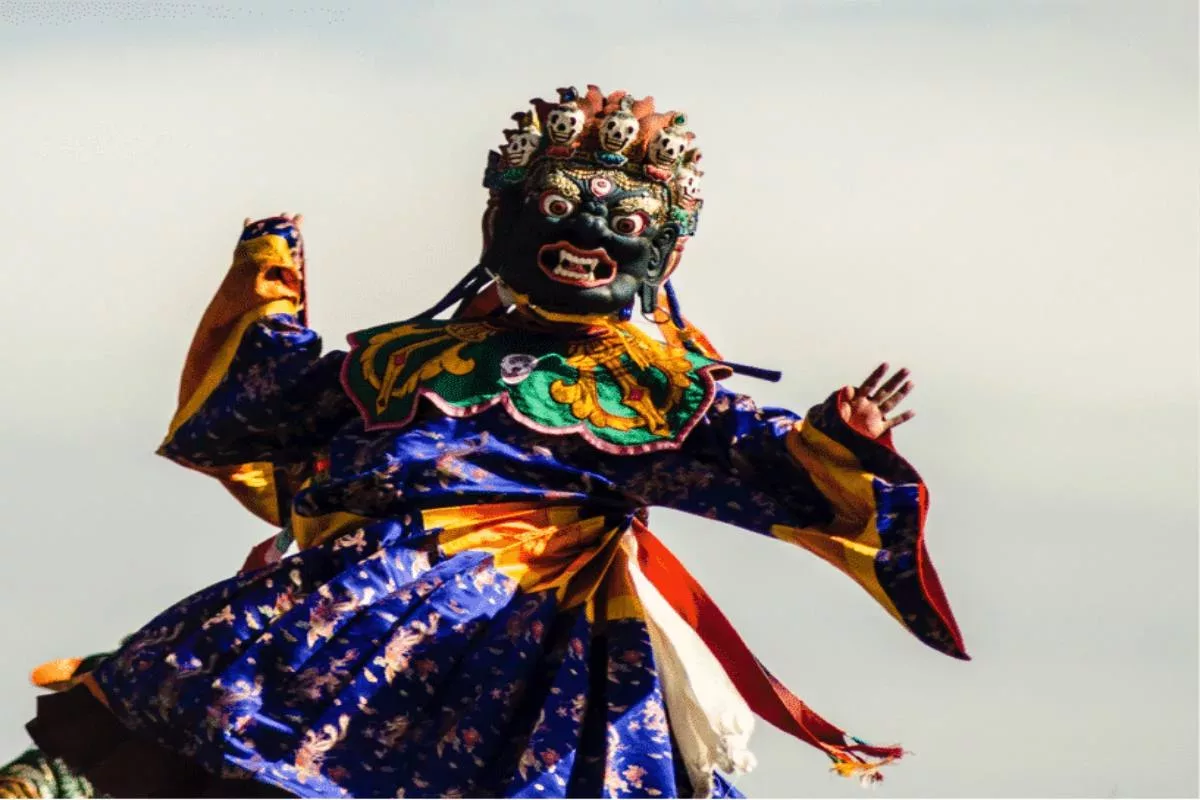
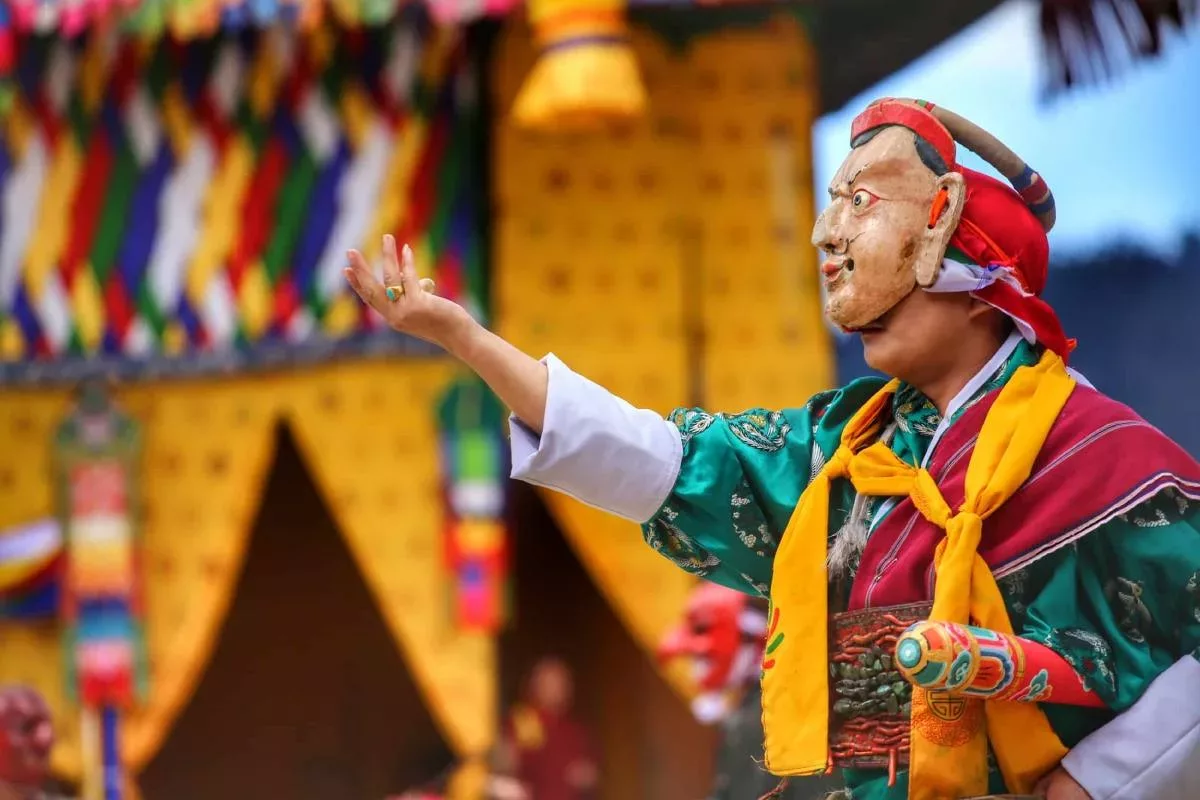
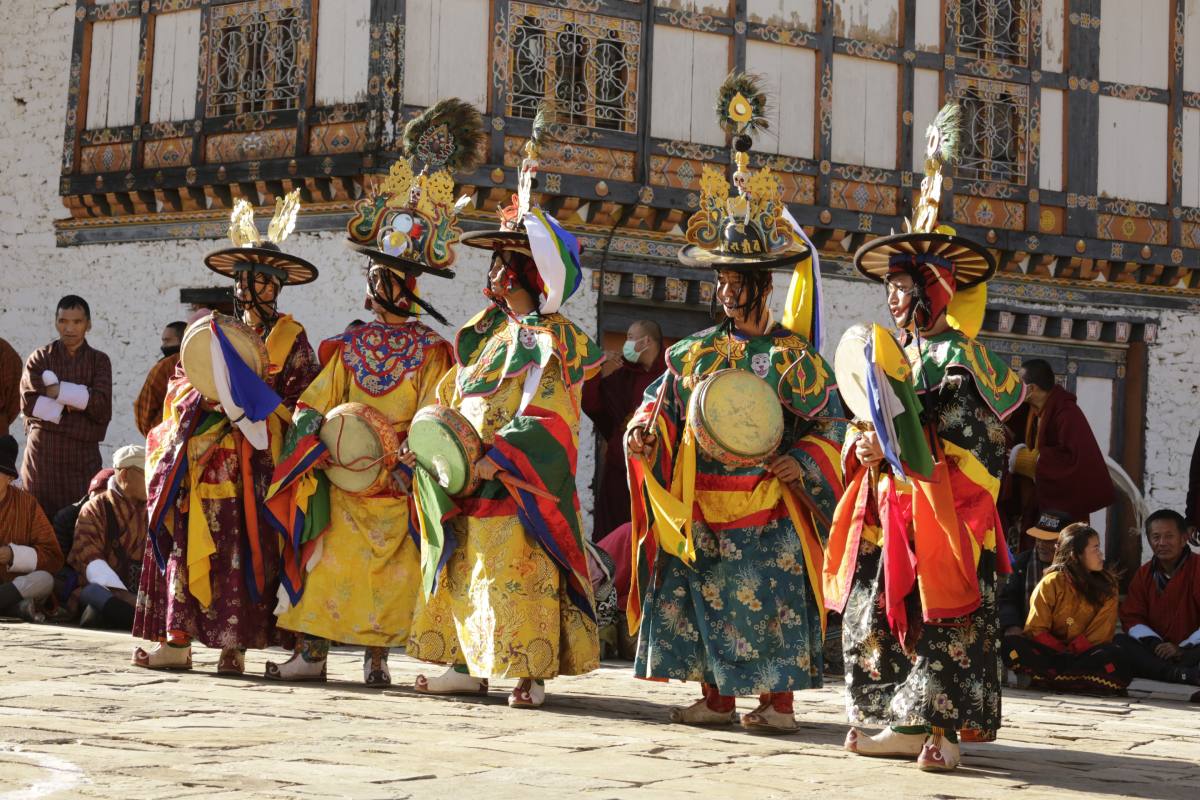
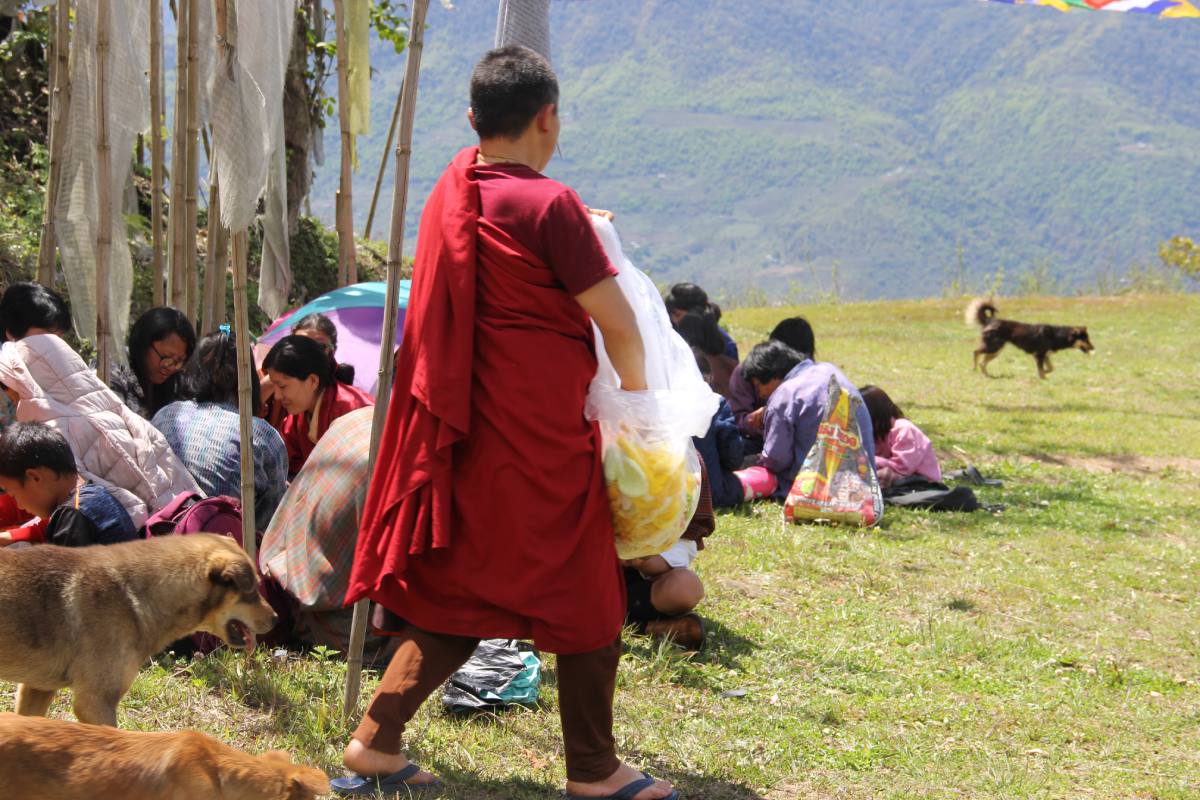
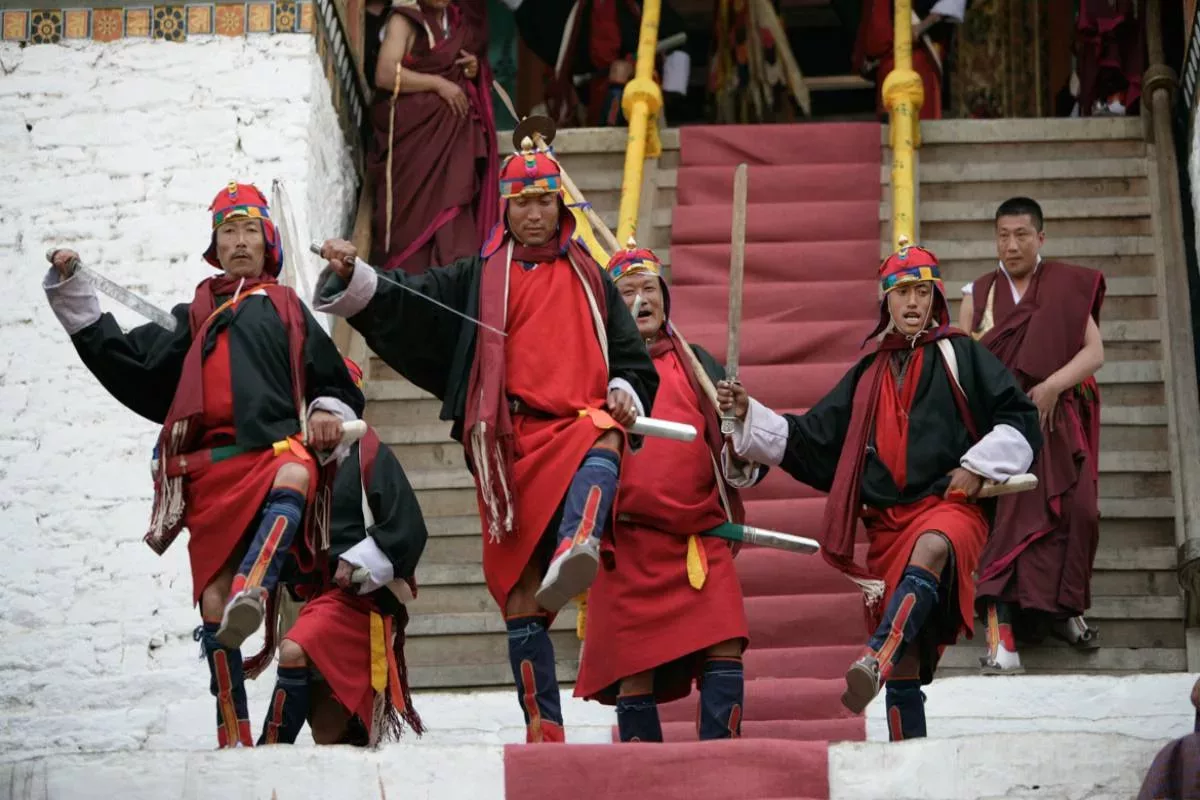
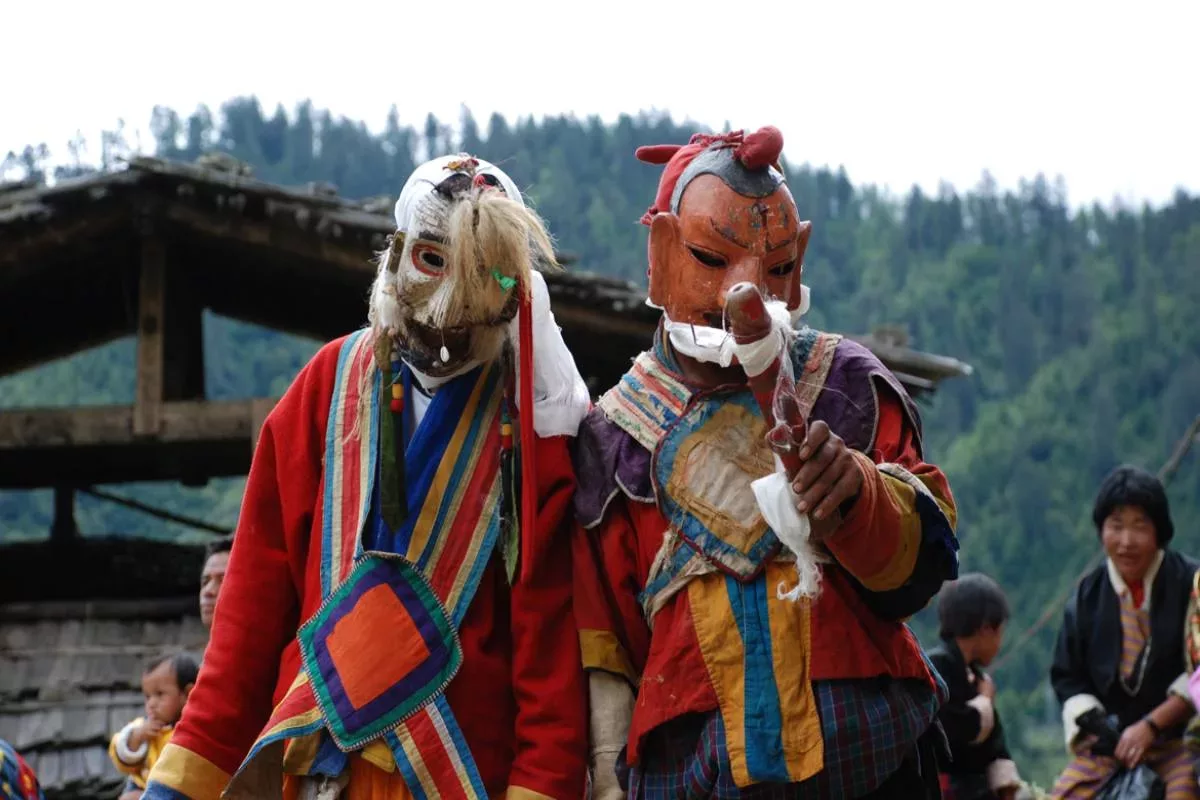
Religious festivals may also include masked dances, community rituals and practices influenced by both Buddhism and older local belief systems. These traditions should not be reduced to entertainment: they often serve protective, agricultural, ancestral or spiritual purposes.
Farming and Everyday Life in Lhuentse
Agriculture remains central to life in many Lhuentse communities. Depending on altitude and local conditions, households cultivate rice, maize, millet, wheat, barley, buckwheat, potatoes and chillies.
Farming, weaving and craft production often follow complementary seasonal cycles. When winter reduces agricultural work, households can devote more time to textile production. This explains why weaving functions both as cultural preservation and as a practical source of income.
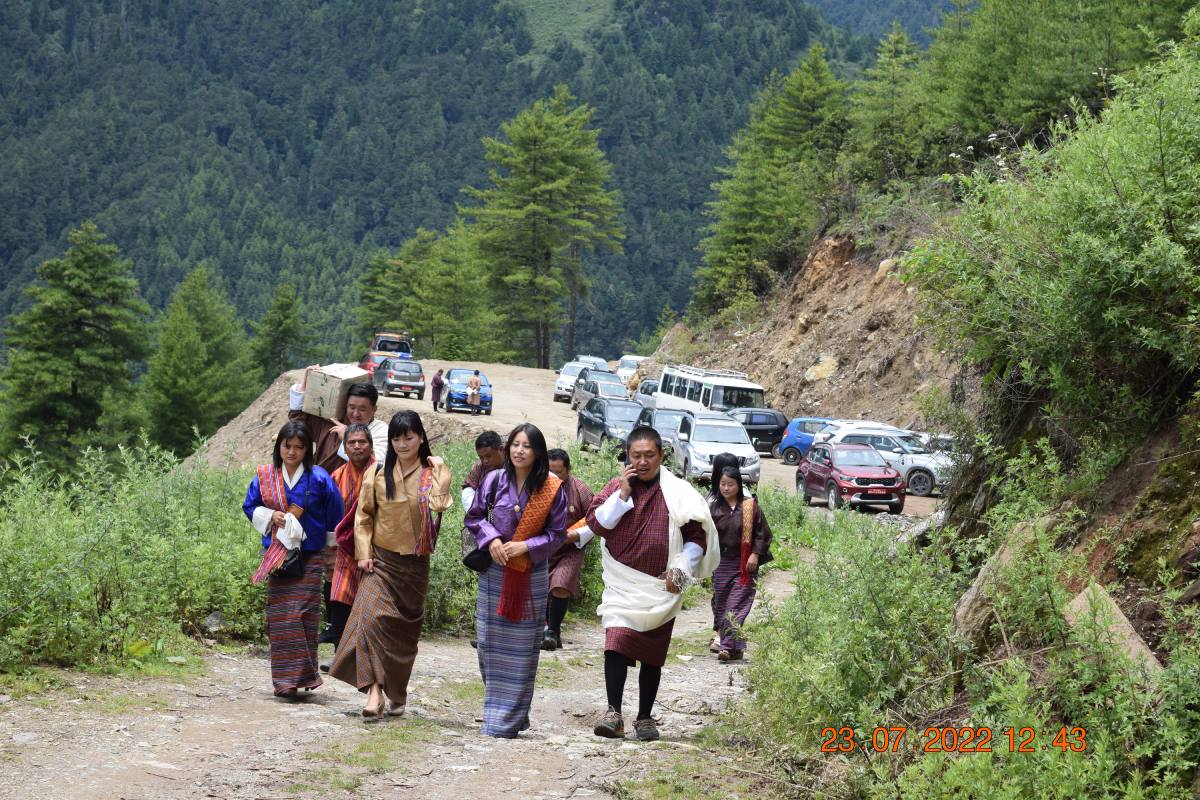
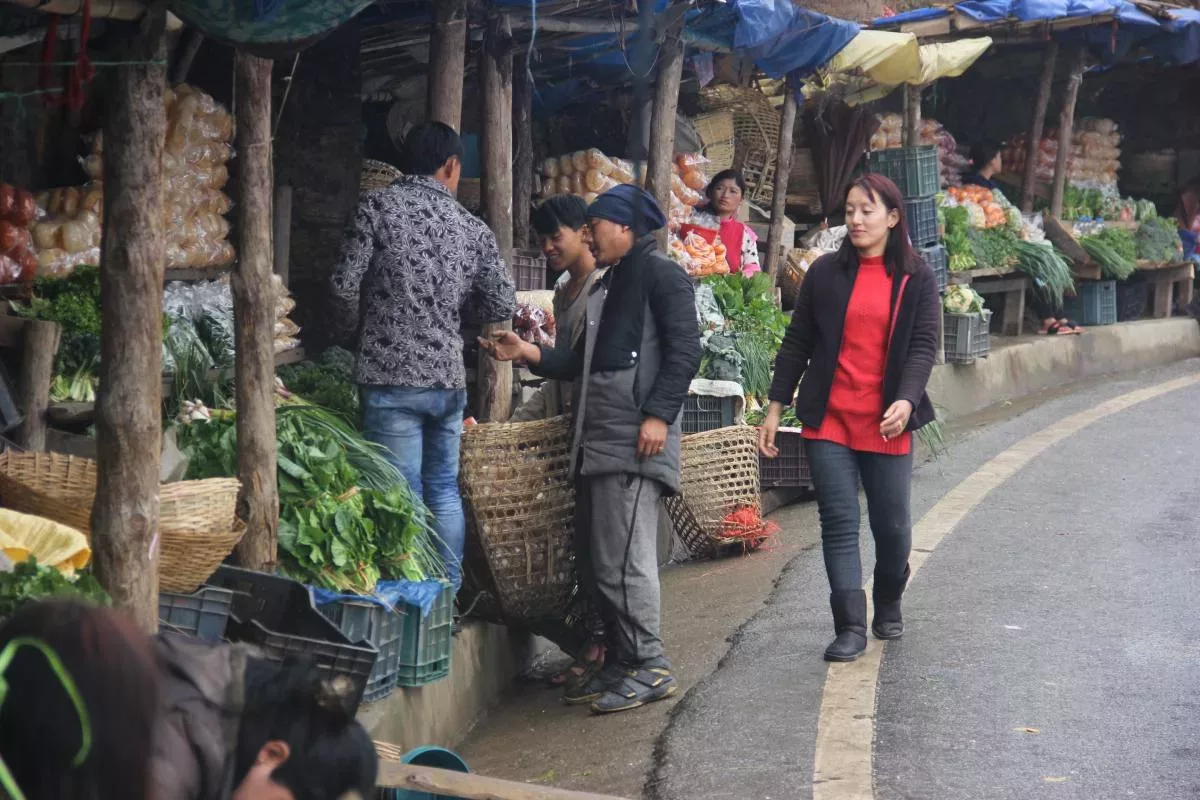
Road development has improved access to the district’s eight gewog centres, but settlements remain scattered across steep terrain. Distances that appear short on a map can therefore require slow travel.
How to Plan a Trip to Lhuentse
Most road itineraries approach Lhuentse through Mongar. Older tourism material places the distance between Mongar and Lhuentse at approximately 76–77 kilometres, but driving times should be treated as estimates because weather, roadworks and mountain conditions can affect the journey.
A practical visit should allow at least two or three nights for road-accessible attractions. A Singye Dzong pilgrimage requires a separate plan, appropriate physical preparation and considerably more time.
Before travelling:
- Confirm road and weather conditions.
- Use an accredited guide or tourism service provider.
- Check whether religious sites are open to visitors.
- Carry sufficient cash for village purchases.
- Ask permission before photographing people or ceremonies.
- Allow extra time rather than planning a rushed schedule.
Lhuentse works best for travellers willing to accept slow journeys, limited facilities and changes in schedule. Those seeking nightlife, luxury shopping or a tightly packed list of attractions may find other parts of Bhutan more suitable.
Frequently Asked Questions
What is Lhuentse famous for?
Lhuentse is famous for its connection to Bhutan’s Wangchuck royal dynasty, the historic Lhuentse Dzong and the highly intricate Kishuthara textiles woven in Khoma. It is also an important Buddhist pilgrimage district containing sacred destinations such as Singye Dzong, Takila and several monasteries associated with prominent religious masters.
Is Lhuentse worth visiting?
Lhuentse is worth visiting for travellers interested in Bhutanese history, traditional weaving, rural life and sacred landscapes. It receives fewer visitors than Paro, Thimphu or Punakha, offering a quieter experience. However, the long road journey and limited tourism infrastructure require flexibility, additional time and realistic expectations.
Can tourists visit Singye Dzong?
A visit may be possible, but Singye Dzong is a remote pilgrimage rather than a casual day trip. Access conditions and requirements can change. Travellers should arrange the journey through an accredited Bhutanese operator, confirm permissions and seasonal conditions, prepare for strenuous walking and respect the site’s religious importance.
How do you get to Lhuentse from Mongar?
Lhuentse is reached by mountain road from Mongar, with older sources placing the distance at roughly 76–77 kilometres. Actual travel time varies according to road conditions, stops and weather. Private transport arranged through a guide, hotel or tour operator is generally more practical than relying on a rigid timetable.
When is the best time to visit Lhuentse?
The best period depends on the purpose of the trip. Clearer, drier conditions generally suit road travel, village visits and hiking, while festival dates follow Bhutan’s lunar calendar and change annually. Pilgrims planning Singye Dzong should obtain current local advice because rain, snow or damaged trails can affect access.
What This Means
Lhuentse is one of Bhutan’s most meaningful destinations because its royal history, sacred geography and traditional crafts remain connected rather than displayed as separate attractions.
The district rewards patience. Its value lies in listening to a weaver describe months of work, understanding why an ancestral home matters to the nation, approaching a monastery respectfully and recognising that remote pilgrimage landscapes are living places of faith.
For travellers prepared to slow down, Lhuentse offers something increasingly rare: an encounter with cultural traditions that continue to serve the communities that created them.