Samtengang Trek Trip Summary
- Departure: Paro
- Trip Grade: Easy to Moderate
- Duration: 10 Days
- Activity: Trek and Cultural Tour
- Trek Length: 54km
- Altitude Range: 1,100m to 2,200m
- Trip Cost From: $6,209 per person
Trek Overview
The Samtengang Trek is one of Bhutan’s most accessible treks. The altitude stays between 1,100m and 1,900m throughout, and the climate is warm and comfortable for the full four days on trail. The route runs from Punakha to Wangduephodrang district, covering approximately 54km.
What You Walk Through
The trail passes through rhododendron and oak forests, the traditional villages of Sha and Chungsakha, and across the longest suspension footbridge in Bhutan at 180m. Along the way, you pass old monasteries, terraced fields, and remote farmhouses.
Best Time to Go
The trek is open throughout winter. The best months are March to April and September to October. These months bring clear skies, comfortable temperatures, and good trail conditions.
-

-

-

#image_title
After the immigration formalities, Bhutan Holiday representative will meet you at Paro airport. Post lunch, visit Paro town, National Museum (Ta Dzong) and Rimpung Dzong (fortress). Dzong’s are large monasteries and district administrative centers, which were once strategic forts. Afterwards, transfer for Thimphu for overnight halt (1 hour).
Enjoy a full day of sightseeing beginning with a visit to the National Memorial Chorten, 12th Century Changangkha Temple, and Dupthob Monastery housing the Zulikha nunnery, the School for Arts and Crafts, the National Library and a fascinating replica of a medieval farmhouse at the Folk Heritage Museum. If time permits, you may also visit Takin zoo and Tashichhodzong. Overnight in Thimphu.
Drive over the Dochula pass (3,100 meters), which on a clear day offers an incredible view of Himalayan peaks before descending into pleasant Punakha valley (about 3 hrs total driving time). Arrive Punakha and after lunch, enjoy a walk to Chimi Lhakhang (temple) considered as a symbol of fertility. Overnight in Punakha.
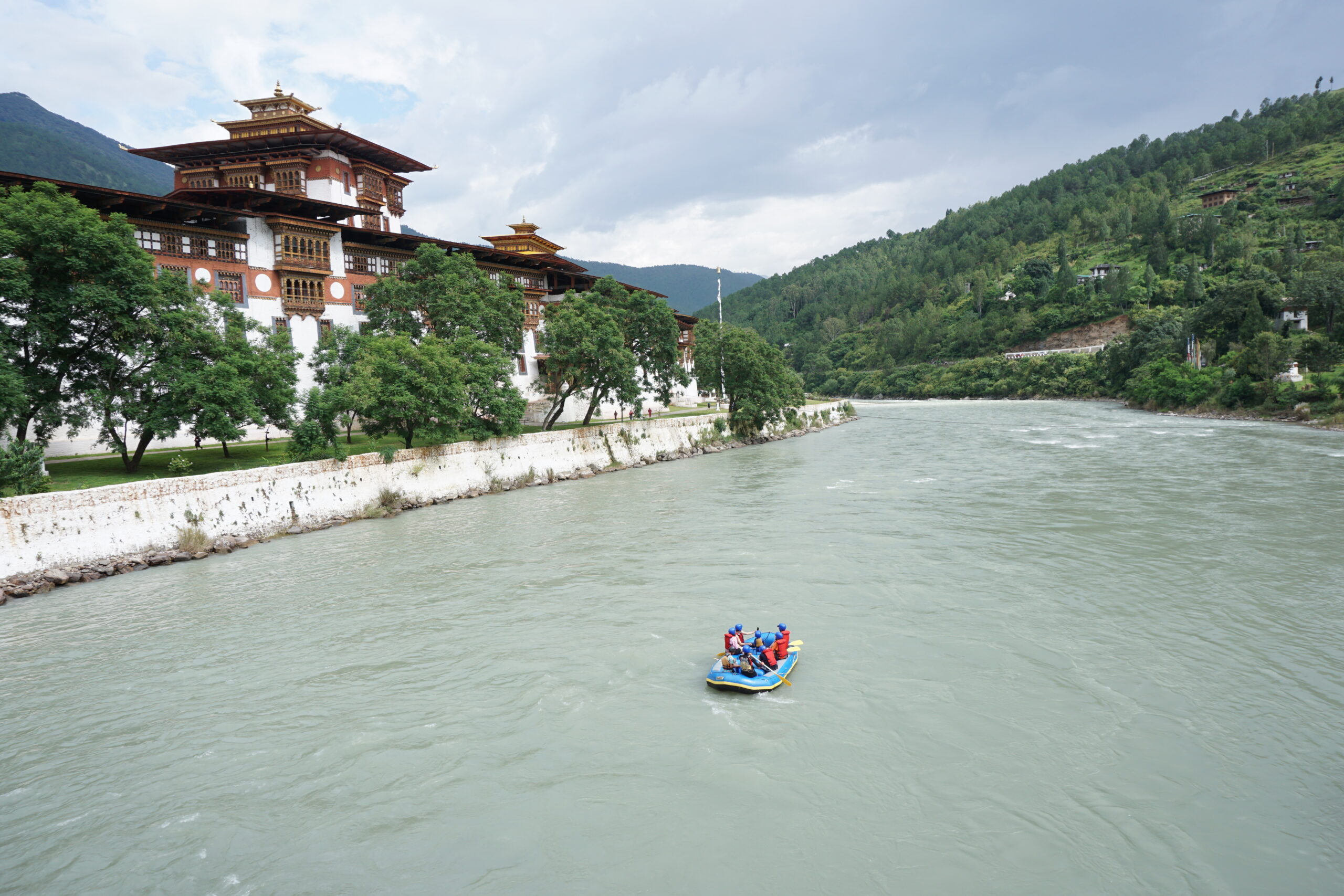
The trek starts upstream from the Punakha Dzong, over the longest suspension bridge in Bhutan (180m) across the Pho Chhu (river). Climb gently on the left side of the Po Chhu through terraced field of mustard and winter wheat.
After about a 2.5 hours hike through pine forest, there is a nice clearing for lunch with a big prayer flag and a beautiful view over the valley. In the far distance, the huge chorten, Khamsum Yulley Namgyal, can be seen. Looking to the west the road to Dochula can be partly traced, and if lucky some snowy peaks maybe visible: Jumolhari, Khang Bum and Tiger mountain. A chorten and some prayer flags on the skyline at 2200m indicate the end of today’s climb. From the chorten you can see towards Wangdi and Limukha where our campsite (2220m) is located just behind the village on a beautiful green area (1.5hr).
The day begins with a steep climb (150m) up to a small ridge (2370m) through a cold dense forest, from which today’s climb is visible. Cross this ridge, and descend steeply into a small side valley where a small stream (2235m) is crossed. Surrounded by beautiful birdsong and oak and rhododendrons forest, follow an unclear trail covered by slippery leaves.
After about 2 hours of climbing, we reach a small pass, Dochen La (82645m) littered with prayer flags and possibly a good view towards Dochu La, Jumolhari, Kang Bum, Tiger Mountain, as well as Talo Lhakhang and Nobgang Lhakhang down in the valley. After the pass a steep steady descent follows along a forest trail. The forest opens up after reaching Dargyel gang with a beautiful big old farmhouse. In the distance a ridge with Samtengang village and Chhuni Gompa can be seen. Walk alongside Dargyel Gompa, an old monastery of Drukpa Kunley, the Divine Mad Madman. On the hillside above the monastery are several small meditations cells. At 1850 m Chungsakha (Chungsakha) lhakhang (temple) is reached. The campsite is in front of the Lhakhang.
Descend to the road (45 min) and find a suspension bridge crossing the Bae Chhu (1500m). The trail from here is clear and moderately steep passing through several villages. The trail goes through small deeply eroded gorges, which will be very slippery in the rain.
The climb completes the hike for the day when you pass Samtengang High School. We walk through a narrow gorge to the other side at 2000 m and look down towards a holy lake, Lutshokha (Tsho Shokha). Afterwards, continue to the campsite, located on the other side of the lake and another 20 minutes walk. It is a beautiful flat campsite (2050m) in the forest below the village of Samtengang. After lunch there will be plenty of time either to visit Samtengang or stay in camp and enjoy the fresh wind blowing through the pines. There is a wonderful trail climbing up to Samtengang village. Samtengang is mentioned again and again in old literature regarding travelling/exploring/plant hunting in Bhutan.
You will see farming system by smallholder farmers in the endless agricultural fields. Starting near camp, the trail today is steep and challenging. It passes through the valley of the Dang Chhu. The road is next to the bridge at Tiki Zam (5100 ft./1555 m). Overnight at a hotel in Wangdue.
We begin yet another exciting day with a morning visit to Wangduephodrang Dzong.
Drive back to Thimphu where you will enjoy lunch and have an opportunity to visit handicraft and souvenir stores. On the way visit Tachogang monastery. Overnight in Paro.
After breakfast hike to Taktsang Monastery or Tiger’s Nest. The hike is 5 hours uphill climb and return. In the afternoon drive to the ruins of the 17th Century Drukgyel Dzong, a historic monument. On the return drive to Paro, visit 7th Century Kyichu Lhakhang. Overnight in Paro.
Drive to the airport for flight to your onward destination. We hope to serve you again with our other exciting tour packages in the future.
The Samtengang Trek stays below 2,200m for the full four days on trail. The warm climate, moderate terrain, and short daily distances make it one of the most accessible treks in Bhutan. At the same time, the route passes through remote villages, old monasteries, and forest trails that most
No prior trekking experience is required. A basic level of fitness is enough. The daily distances range from 4km to 10km, and the trail is well within reach for first-time trekkers.
March to April and September to October give the best conditions. Spring brings clear skies and wildflowers along the trail. Autumn offers dry weather and good visibility across the valleys. The trek runs through winter too, though mornings are cold at higher points on the trail.
Bring comfortable walking shoes, layered clothing for cool mornings and warm afternoons, sunscreen, a hat, and a light rain jacket. A quality sleeping bag is recommended for tented nights on the trail.
Yes. The low altitude, warm climate, and short daily stages make this trek a practical choice for families with older children or older travelers who want a genuine trekking experience without extreme physical demands.
- Airport pick-up and drop-off by private vehicle.
- 3-star accommodation (4 & 5 stars may require an additional premium update).
- Bhutan visa fee – including all necessary processing
- Route Permit
- Three meals per day during your stay in Bhutan
- A licensed Bhutanese tour guide
- All land transportation by private vehicle
- Camping equipment and haulage for trekking tours
- Sightseeing as per itinerary
- Monuments entrance fees where applicable
- Drinking water
- All internal taxes and charges
- A sustainable development fee of $200. (This sustainable development fee goes towards free education, free healthcare, and poverty alleviation, along with the building of infrastructure.)
- Airfare & Travel Insurance
- Expenses of personal nature, Tips to guides and drivers
- Expenses occurred due to unavoidable events i.e. road wrecks, flight delays etc.
Trek Overview
- Duration: 10 days including cultural sightseeing
- Trek days: 4 days on trail
- Total trek distance: 54km
- Altitude range: 1,100m to 2,220m
- Difficulty: Easy to moderate
- Best Months: March, April, September, and October offer the best trail conditions and clearest views.
Health and Permits
- No altitude sickness risk at these elevations.
- Carry a personal first-aid kit, sunscreen, and insect repellent.
- Trekking permits are mandatory and arranged by us.
Alternative Treks
- Druk Path Trek for a higher-altitude route with mountain lake views
- Laya Gasa Trek for a longer, more challenging Himalayan route
A Trek Built for the Real Bhutan
- The Samtengang Trek does not cross high passes or reach extreme altitudes.
- Instead, it takes you through the Bhutan most visitors never see.
- You walk past smallholder farms, sleep near centuries-old monasteries, and cross the longest footbridge in the country above a fast river below.
Culture at Every Step
- Along the trail, you pass sites connected to Drukpa Kunley, the Divine Madman, one of Bhutan’s most celebrated and unconventional religious figures.
- You walk through villages where life runs on farming and faith.
- After the trek ends, the cultural sightseeing in Paro and Thimphu adds further depth to the journey.
Secure Your Place Now
- Fexlible group sizes.
- Departures in March, April, September, and October fill ahead of the season.
- Book your 10-day Samtengang Trek now to secure your spot for 2026-2027.
Bhutan Travel Info
Travel Essentials
- Travel/Medical Insurance: Ensure a worry-free journey with Bhutan's dedicated travel and medical insurance plans offered by the Royal Insurance Corporation of Bhutan. Visit RICB for more information.
- Banking: Modern banking facilities are available in urban areas of Bhutan, with banks like Bank of Bhutan Limited, Druk PNB, and Bhutan National Bank. ATMs are common in Thimphu and Phuentsholing, but scarce in rural areas. Complete your banking in major cities.
- Money Matters: Bhutan's currency is the Ngultrum (Nu), which is equivalent in value to the Indian Rupee. Foreign travelers should bring traveler’s cheques or cash, especially USD. Credit cards like Visa and American Express are accepted in most areas.
- Communication: Bhutan's telecommunications are well-developed with internet cafes, mobile phone coverage, and international roaming available in most towns.
- Electricity: Bhutan operates on 230 volts and 50 Hertz. Ensure your devices are compatible with the three types of plugs commonly used.
- Time Zone: Bhutan's time is six hours ahead of GMT.
Health, Safety, and Customs
- Health and Inoculations: Recommended vaccinations include tetanus, typhoid, and hepatitis A. Avoid untreated water and ice cubes; instead, opt for bottled water, which is readily available.
- Safety Precautions: Bhutan is generally safe, but avoid walking alone or staying out late, especially after 9 PM. Secure your belongings, particularly in the capital, Thimphu.
- Customs Regulations: Personal belongings, 1 liter of alcohol, 200 cigarettes, and professional equipment are exempt from customs duty. Importing restricted items, such as wildlife products, antiques, and drugs, is prohibited.
Accommodation, Food, and Shopping
- Accommodation: Bhutan offers a range of accommodations, from quality 3-star to luxury 5-star hotels in places like Thimphu, Paro, and Punakha. Travelers can also opt for camping when venturing beyond urban areas.
- Food: Bhutanese cuisine is rich and spicy, featuring dishes like ema datshi. International cuisine such as Indian, Continental, and Chinese is available in most restaurants, with both vegetarian and non-vegetarian options.
- Shopping: Bhutan offers unique handicrafts, including hand-woven textiles, wooden bowls (Dapas), silver statues, Thangkas, and local postage stamps. Note that the buying and selling of antiques is strictly prohibited.
Travel Kits and Clothing
- Clothing and Essentials: Bhutan's climate is diverse, so dress in layers and pack accordingly. Respectful clothing is required when visiting monasteries and religious sites, and hats should be removed in sacred areas.
- Travel Kits: Pack items like sunscreen, sunglasses, insect repellent, antihistamine cream, anti-diarrhea pills, a flashlight, warm clothes, and a hat. The diverse climate means temperatures range from 20-25°C in summer to below 15°C in winter.
Experiences and Activities
- Photography: Capture Bhutan's stunning landscapes, rural life, and architecture. Indoor photography in sacred sites requires special permission.
- Guides and Interpreters: Bhutan offers certified guides fluent in various languages, ensuring you get the best experience when visiting sacred sites and cultural landmarks.
- Festivals and Holidays: Each district in Bhutan celebrates its unique annual tshechu. Check local schedules to plan your visit around these vibrant festivals.
- Weights and Measures: Bhutan uses metric measurements for weight, with advanced electronic scales commonly found in major cities.


- Best Price Guaranteed
- Book Now, Pay Later
- Local Expertise
- Hand-Picked Hotels
- Value for money
- Quality Service
- Responsible Tourism
- Tailor-Made Holidays
- No Booking Fee
- 100% Visa Approval
- 24/7 Customer Service
- No Hidden Costs