Trip Summary
- Trip Name: Snowman Trek
- Trip Grade: Challenging
- Duration: 34 Days
- Min Travelers Required: 8
- Activity: Trek
- Maximum Altitude: 5,230m at Gophu La Pass
- Total Passes: 13
- Trip Cost From: $16,994 per person
- Departure: Paro
Snowman Trek Overview
What Is the Snowman Trek?
The 34-day Snowman Trek is Bhutan’s longest and most demanding high-altitude route, running from Paro through the remote northern border with Tibet and ending in Bumthang. The trek covers over 380km, crosses 13 Himalayan passes with several above 5,000m, and reaches its highest point at Gophu La Pass at 5,230m. Far more people summit Mount Everest each year than complete this route. Truly Bhutan Travel, a government-licensed operator based in Thimphu, has guided this route for groups seeking the full Snowman experience with trained local guides and full camp support.
The Snowman Trek Route
The trek starts in Paro with an acclimatization hike to Tiger’s Nest Monastery. From there, the trail heads north through Jigme Dorji National Park, past Jomolhari Base Camp at Jangothang, over Nyele La Pass, through the Laya highland villages, and deep into the Lunana region. The route passes through Woche, Lhedi, and Thanza before climbing to Gophu La and descending to Gangkhar Puensum Base Camp. After the base camp section, the trail crosses Saka La and Juli La before finishing at the natural hot springs at Duer Tsachu and descending to Bumthang. From Bumthang, you drive to Punakha and Thimphu before departing from Paro.
What Makes Snowman Trek Unique
The Snowman Trek passes through terrain that no road reaches and no other Bhutan trek covers. You sleep beside glacial lakes above 5,000m, walk through the Lunana villages where yak herders live in near-complete isolation, and stand at the base of Gangkhar Puensum at 7,570m, the world’s highest unclimbed peak. Along the way, you meet the Layap people in their distinctive pointed bamboo hats, soak in the Duer Tsachu hot springs after weeks on trail, and cross passes with open views of Jomolhari, Jichu Drake, and Tsherimgang. No other trek in the Himalayas combines this range of altitude, culture, remoteness, and duration in a single route.
Who This Trek Is For
This trek suits experienced high-altitude trekkers with strong cardiovascular fitness and prior experience above 4,000m. You need to sustain 6 to 9 hours of walking per day for multiple consecutive days at altitude. Mental endurance matters as much as physical fitness. The itinerary includes rest and acclimatization days at Jangothang, Laya, Thanza, and Duer Tsachu to help manage altitude and recovery.
Best Time to Go
The Snowman Trek runs from late September to mid-October. This window gives the clearest skies, the most stable snow conditions on the high passes, and the best chance of completing the full route without weather delays.


Arriving at Paro International Airport is an unforgettable experience, marking the commencement of your Bhutanese adventure. As your aircraft traverses the Himalayan peaks, the breathtaking panorama unfolds, revealing the majestic presence of Everest, Kanchenjunga, and the snow-capped summits of Jomolhari and Jichu Drake. The aircraft navigates through narrow valleys, where verdant forests seem to touch the ground—a descent that only the most accomplished pilots can master, ensuring a smooth arrival in the heart of Bhutan.
Upon touching down, the invigorating mountain air and crisp blue skies greet you.
A representative from Truly Bhutan Travel will be present at the airport to escort you to Resort, a charming retreat situated just beyond Paro town. Your spacious room, adorned with vaulted ceilings and grand windows, offers serene views of Paro’s rural landscape, with the imposing Paro Dzong visible in the distance. Following a nourishing and traditional Bhutanese lunch, you will have ample time to embark on your explorations.
Paro’s allure lies in its harmonious blend of history and contemporary life. After lunch, venture into the town for a leisurely afternoon, immersing yourself in its vibrant streets and quaint shops, each brimming with unique treasures such as betel nuts and handwoven textiles—a testament to Bhutanese culture and craftsmanship. A visit to Rinpung Dzong, or Paro Dzong, aptly referred to as the “Fortress on a Heap of Jewels,” is highly recommended. Constructed in 1644 by Zhabdrung Ngawang Namgyal, this imposing structure once served as a defensive fortification for the Paro valley and now houses the monastic community, government offices, and courts. If time permits, a visit to the National Museum will provide an insight into Bhutan’s rich cultural heritage.
As evening descends, the rhythmic clang of arrows and the joyous cheers emanate from the archery grounds—Bhutan’s national sport, which seamlessly blends into a vibrant social gathering. Your dinner at the Resort will commence with the delectable ema datsi, Bhutan’s cherished chili and cheese dish, accompanied by other hearty local specialties. Under the celestial glow of the stars, surrounded by the tranquil hills of Bhutan, your journey into the mystical kingdom commences.
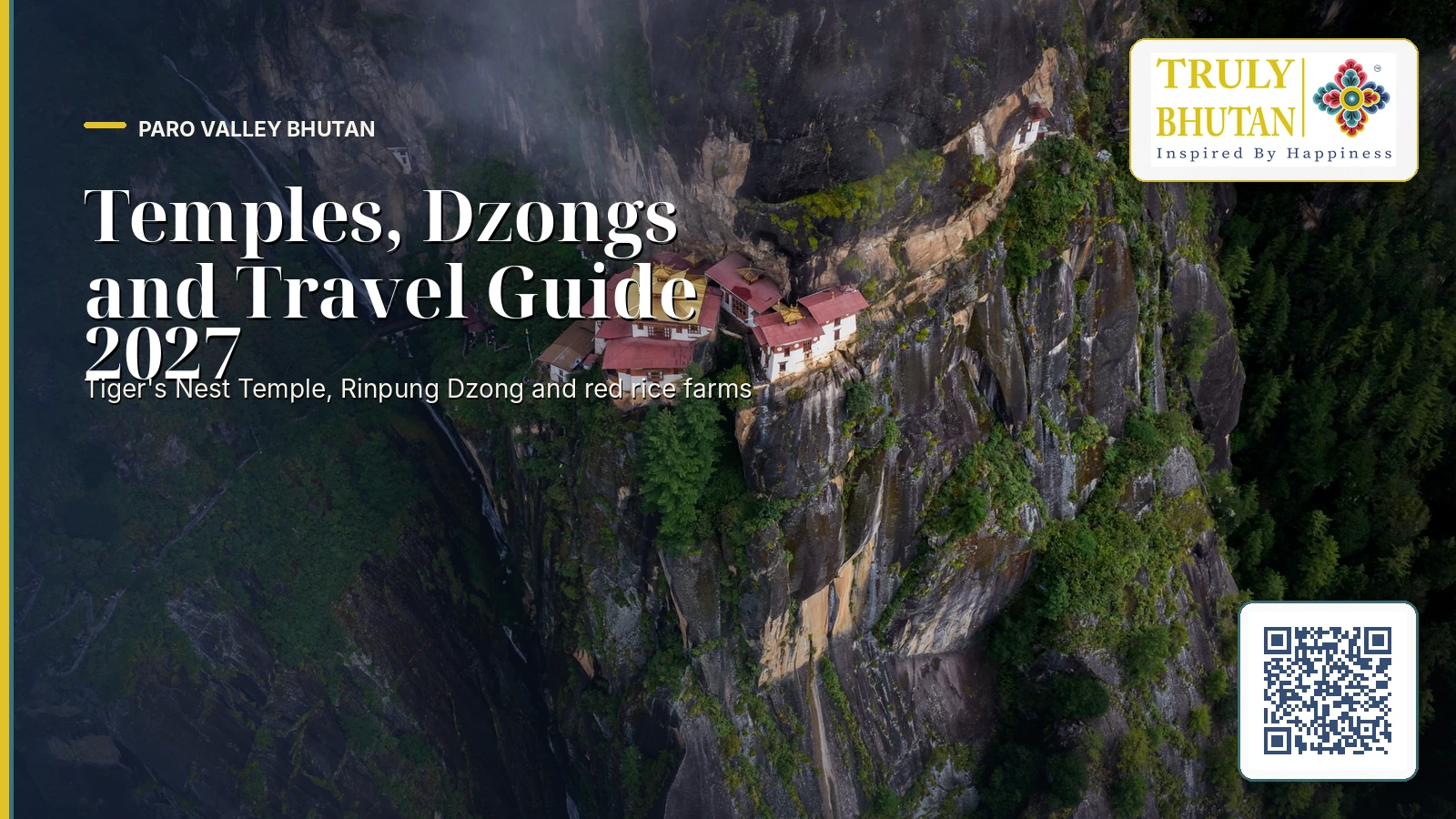
Today, we dedicate ourselves to an iconic Bhutanese experience: a hike to Taktsang Temple, also known as the Tiger’s Nest. Perched precariously on a sheer cliff face, Taktsang Temple is a place of legend and pilgrimage, revered as the site where Guru Rinpoche descended upon the back of a flying tigress in the 8th century. His meditation here transformed the valley into a sacred sanctuary for Buddhism.
The ascent to the monastery embodies both a physical and spiritual journey, traversing fragrant pine forests adorned with fluttering prayer flags that guide the way.
The hike, encompassing time at the monastery and a traditional teahouse lunch, typically takes approximately five hours. As you ascend, each step unveils a new vista of the valley below, with the monastery clinging to the cliffside with remarkable tenacity. Allow yourself ample time to savor the crisp mountain air and permit the journey to unfold at a leisurely pace. Upon reaching the summit, the sight of Taktsang temple, its pristine white walls and golden roofs reflecting against the granite backdrop—is profoundly moving.
Within the Temple’s tranquil embrace, the chambers are filled with statues, murals, and the pervasive aroma of incense, creating an atmosphere of reverence.
After descending, you have the option to return to the Resort or explore further the charms of Paro town. Enjoy a leisurely evening, perhaps sampling more of Bhutan’s delectable traditional cuisine and reflecting on the day’s extraordinary adventure.
Today marks the commencement of your trekking expedition. After a brief vehicular journey along the Paro valley to Drukgyel Dzong, where the road terminates, your footpath journey commences. Drukgyel Dzong, once a formidable fortress defending against Tibetan incursions, now stands in evocative ruins, serving as a poignant reminder of Bhutan’s illustrious past. From this vantage point, the trail traverses the Paro Chhu river, meandering through picturesque meadows and traditional Bhutanese farmhouses, their fields replete with crops of rice, wheat, and barley.
The trek presents a gradual ascent through the valley, affording a serene introduction to the wilderness. The landscape evolves from cultivated fields to dense forests and alpine meadows, the air replete with the aroma of pine and wildflowers. After approximately four hours, you arrive at the Gunitsawa army post, where permits are verified before proceeding to your riverbank campsite. As night descends, the celestial canvas above is adorned with a tapestry of stars, while the soothing melody of the river lulls you into a state of tranquility—an ideal commencement to your odyssey into Bhutan’s untamed wilderness.
The trek continues northward, following the Paro Chhu river deeper into the mountains. Today’s route traverses the verdant forests of Jigme Dorji National Park, Bhutan’s largest protected area. The park is replete with the symphony of nature—birdsong reverberating through the oak, maple, and birch trees, and the rustling of rhododendrons as altitude is gained.
As the valley narrows, the trail ascends precipitously, transforming the landscape into a rugged terrain. Eventually, the valley opens once more, unveiling the campsite nestled amidst a meadow, with the majestic peak of Jhomolhari standing prominently on a clear day. The sight of this revered mountain, resplendent against the azure sky, serves as a gratifying culmination of the day’s exertions.
Today’s excursion ventures further into the highlands, where the alpine landscape becomes more pronounced. The trail follows the Paro Chhu as it traverses a broad valley replete with grazing yaks and seasonal settlements. The air is crisp, and the scenery is awe-inspiring, with snow-capped peaks framing the horizon.
As you traverse through diminutive villages such as Soe, Tarethang, and Dangochang, you gain a glimpse into the traditional lifestyles of the highland communities. Approaching Jangothang, also known as Jhomolhari Base Camp, the landscape transforms into high plateaus carpeted with juniper and dwarf rhododendron. The campsite here stands as one of the most spectacular in the Himalayas, offering unobstructed views of Jhomolhari, its snow-clad summit illuminated in the evening glow. (5-6 hours, 19 km, 480 m ascent)
Today is a rest and acclimatization day, enabling you to adjust to the altitude while immersing yourself in the splendour of Jangothang. Several options for day hikes are available, each promising breathtaking views of Jhomolhari and the surrounding peaks. A hike up the diminutive valley towards Jhomolhari Glacier offers a dramatic perspective of the icefall, while another route leads to Tsopu Lake, a tranquil haven with panoramic mountain vistas.
Keep an eye out for blue sheep, commonly spotted grazing on the rocky slopes surrounding the camp. The day is yours to explore or simply relax, savoring the grandeur of the Himalayas from one of Bhutan’s most captivating locations.
Today’s trek commences with a gradual ascent that rapidly intensifies as you approach Nyele La pass at an elevation of 4,870 meters, one of the highest points on this journey. The vistas from the pass are breathtaking, featuring snow-capped peaks such as Jhomolhari, Jichu Drake, and Tserim Kang rising majestically in the distance. Be on the lookout for blue sheep grazing on the slopes, a common sight in these highland regions.
Following the pass, the trail descends precipitously through rhododendron forests and yak pastures, eventually leading to the Lingshi basin. Here, you will have your first glimpse of Lingshi Dzong, perched atop a hilltop, a sentinel guarding the valley below.
Constructed in the 17th century, the dzong has served both as a fortress and a monastery. After descending into the valley, you will arrive at your campsite in close proximity to Lingshi village, surrounded by the tranquil beauty of the surrounding mountains.
Today’s trekking itinerary is relatively easy, allowing for relaxation and enjoyment of Bhutan’s highland scenery. The trek commences with a visit to Lingshi Dzong, which provides panoramic views of the valley and surrounding mountains. Subsequently, the trail traverses the charming village of Goyul, characterized by its unique architectural style of clustered traditional stone houses.
The journey culminates in Chebisa, a picturesque village adorned with a captivating waterfall. The campsite is situated in close proximity to the village, facilitating ample opportunities for exploration and interaction with the local community. The leisurely pace of today’s trek facilitates recuperation and preparation for the more arduous days ahead.
The trek from Chebisa takes approximately 6-7 hours, covering a distance of 17 kilometers. The ascent involves an elevation gain of 890 meters, followed by a descent of 540 meters.
The trail ascends through picturesque meadows, passing by yak herder camps and offering panoramic views of the surrounding peaks. The gradual ascent to Gombu La pass at an elevation of 4400 meters culminates in a rewarding vista of the Himalayan landscape.
Subsequent to the pass, the trail descends through rhododendron forests, eventually reaching Shakshepasa, a vast, open valley with a helipad. A short ascent from this point leads to the Shomuthang campsite, situated above a tranquil river—an ideal spot for respite after a day’s arduous trek.
Today’s trek is arduous and protracted, spanning approximately six to seven hours. The journey commences with a gradual ascent through alpine meadows, offering panoramic views of Kang Bum (6,526 meters). After two hours of elevation gain, the trekkers will reach Jhare La pass at an elevation of 4,750 meters. From this vantage point, the Sinche La pass will be the first glimpse of tomorrow’s destination.
The descent from Jhare La traverses a picturesque valley, where the presence of herds of takins, Bhutan’s national animal, grazing in the pastures will be a notable encounter. The trek will culminate in the arrival at the campsite in Robluthang, situated amidst a rocky meadow. This idyllic setting provides an ideal respite and recovery for the weary travelers after a demanding day.
Today’s trek presents a formidable yet gratifying experience, as you ascend Sinche La pass at an elevation of 5,000 meters—the culmination of this journey. The ascent commences with a precipitous incline, compounded by the altitude, rendering each step arduous. However, the panoramic vistas from the summit are truly awe-inspiring. From the pass, the snow-capped peaks of Gangchhenta (6,840 meters) and other majestic Himalayan giants come into view.
The descent from Sinche La is protracted and precipitous, traversing rugged terrain replete with glacial streams and precipitous outcrops. Eventually, the trail leads to a picturesque valley, where you will encounter the lush meadows of Limithang, your overnight encampment. The culmination of this challenging day is the breathtaking spectacle of Gangchhenta dominating the skyline above the campsite.
Today’s trek is a pleasant descent, following the river valley down towards the village of Laya. The trail winds through forests of cedar and fir, with occasional clearings offering views of the surrounding peaks. As you approach Laya, the distinctive wooden houses of the Layap people come into view, with their unique architecture and pointed roofs.
Laya is the highest settlement in Bhutan, and its inhabitants are known for their traditional dress and unique culture. Upon arrival, you will have time to explore the village, visit the local school, and interact with the friendly Layap people. The campsite is located just below the village, offering panoramic views of the mountains and the valley.
Today is a well-deserved rest day in Laya, affording you the opportunity to recuperate and explore this captivating village. You can traverse the narrow streets of Laya, visit the local temple, or simply relax at camp and savor the breathtaking vistas. The Layap people are renowned for their distinctive attire—women don black woolen jackets adorned with silver and turquoise jewelry, while men wear conical bamboo hats topped with a single spike.
This day also provides ample time for rest and preparation for the subsequent phase of the trek, which will lead you into the remote expanse of Bhutan.
6-8 hrs, 19 km, 1030m ascent, 750m descent
Departing Laya, the trail descends to an army camp before ascending once more towards the highlands. The path traverses the river for an extended period before traversing rhododendron forests and passing through yak herder camps. As elevation is gained, the landscape becomes increasingly rugged, and the vistas of the surrounding peaks become more pronounced.
The campsite at Rhodophu is situated in a picturesque valley, surrounded by towering mountains on all sides. The tranquility of this secluded location renders it an ideal respite after a protracted day’s journey.
6395m). (5-6 hrs, 17 km, 740m ascent
Today presents a challenging ascent to the high-altitude campsite at Narethang. The trail commences with an ascent through alpine meadows, culminating in the Tsemo La pass at an elevation of 4905 meters. From this vantage point, the panoramic view extends to the distant peaks of Lunana and the Tibetan border.
Following the pass, the trail traverses a high plateau, characterized by barren landscapes and awe-inspiring mountain vistas. The Narethang campsite is situated in an exposed location, offering breathtaking views of the surrounding peaks, including Gangla Karchung.
5-6 hrs, 18 km, 270m ascent, 1200m descent
From Narethang, the trail ascends gradually towards Gangla Karchung La, a high pass situated at an elevation of 5120 meters.
While the ascent may present challenges, the panoramic vistas from the summit render each step an investment. From the pass, one can observe a diverse array of peaks, including Jejekangphu Gang (7100 meters) and Tsenda Kang.
The descent from the pass is protracted and arduous, traversing rocky terrain before culminating in a lush valley. The Tarina campsite is situated in proximity to a river, surrounded by dense rhododendron forests.
6-7 hrs, 17 km, 270m ascent, 330m descent
Today’s excursion traverses some of Bhutan’s most picturesque landscapes, as the trail descends through coniferous forests and traverses several streams. After several hours of trekking, the trail ascends over a ridge before descending into Woche, the inaugural village within the Lunana region.
Woche is a diminutive settlement comprising a few dwellings, and the campsite is situated in proximity. The tranquil ambiance and breathtaking vistas of the surrounding mountains render it an ideal locale for respite and relaxation.
6-7 hrs, 17 km, 980m ascent, 1190m descent
Departing Woche, the trail ascends through juniper and fir forests before reaching the Keche La pass at an elevation of 4,435 meters. From the pass, one is rewarded with panoramic vistas of the surrounding peaks and valleys. The trail subsequently descends precipitously, traversing small villages and providing glimpses of traditional Bhutanese life.
The campsite at Lhedi is situated near a river, and the village comprises a rudimentary health unit, a school, and a wireless telephone connection.
7-8 hrs, 17 km, 450m ascent
Today’s trek follows the river, gradually increasing altitude as you proceed towards Thanza, the largest village in the Lunana region. The trail traverses the village of Chozo, where you can visit a diminutive dzong that continues to serve its purpose.
As you approach Thanza, the landscape expands, presenting you with panoramic views of Table Mountain, an imposing edifice composed of snow and ice that dominates the skyline. The campsite is situated in proximity to the village, providing an opportunity to observe the daily routines of the inhabitants of Lunana.
On a rest day in Thanza, you can explore the village, engage with the local community, and prepare for the subsequent phase of your trek. You can ascend a ridge for panoramic views of the surrounding peaks and glacial lakes. Additionally, this day offers the opportunity to exchange pack animals, as the yaks from Laya are not permitted beyond Thanza.
Make time to unwind and immerse yourself in the distinctive culture of this isolated region.
8-9 hrs, 17 km, 970m ascent
Departing Thanza, the trail ascends gradually through a succession of ridges, offering breathtaking vistas of the surrounding peaks. As elevation is gained, the landscape transforms into a sparse expanse, characterized by low shrubs and alpine grasses.
The Tshorim campsite is situated in proximity to a glacial lake, providing panoramic views of the surrounding mountains. The high altitude and the rugged allure of this secluded location make it an unforgettable destination for an overnight stay.
6-7 hrs, 15 km, 800m ascent, 950m descent
Today’s excursion culminates at the base camp of Gangkhar Puensum, Bhutan’s pinnacle. The ascent commences with a climb to Gophu La, a colossal pass attaining an elevation of 5230 meters. From this lofty vantage point, the majestic Gangkhar Puensum (7540 meters), the world’s unclimbed highest peak, emerges into breathtaking view.
The descent from the pass is precipitous, precipitously descending to the base camp situated near the Sha Chhu river. The panoramic vistas of Gangkhar Puensum and the surrounding peaks are truly awe-inspiring, rendering this a singular highlight of the trek.
An additional day has been incorporated into the itinerary to accommodate potential disruptions caused by adverse weather conditions, illness, or other unforeseen circumstances. This day can be utilized for rest, exploration of the vicinity of the base camp, or as necessary to compensate for any delays.
6-7 hrs, 19 km, 260m ascent, 400m descent
Today’s trail follows the Sha Chhu River, descending gradually through the valley. The trail traverses rugged terrain, featuring numerous stream crossings and occasional glimpses of the surrounding peaks. The campsite at Geshe Woma is situated in a broad valley, surrounded by undulating hills and distant mountains.
8-9 hrs, 19 km, 820m ascent, 1020m descent
The trail proceeds along the Sha Chhu river before commencing a steep ascent to the Saka La pass at an elevation of 4,820 meters. The ascent presents significant challenges, but the panoramic views from the pass are undoubtedly worth the effort. Subsequently, the trail descends to a pair of diminutive lakes before another ascent, culminating in the establishment of the campsite at Warathang.
The campsite is situated within a picturesque valley, surrounded by towering peaks and interspersed with diminutive lakes. The surrounding scenery is breathtaking, characterized by the rugged mountains and pristine lakes that create an idyllic setting.
5-6 hrs, 15 km, 610m ascent, 1220m descent
Today’s trek culminates in crossing the Juli La pass at an elevation of 4,700 meters, followed by a descent through verdant rhododendron and juniper forests. The trail culminates in the arrival at Duer Tsachu, a natural hot spring renowned for its exceptional beauty within the Himalayan region. After several arduous days of trekking, the hot springs provide an ideal respite, offering a tranquil setting for relaxation and rejuvenation.
The campsite is situated in close proximity to the hot springs, ensuring a serene and tranquil conclusion to each day’s journey.
A respite day at Duer Tsachu provides an opportunity for relaxation and rejuvenation amidst the tranquility of its natural hot springs. The day can be dedicated to immersing oneself in the therapeutic waters, exploring the surrounding environment, or simply indulging in rest at the campsite. This well-deserved break serves as a respite after the arduous trek thus far.
8-9 hrs, 17 km, 950m ascent
Departing Duer Tsachu, the trail ascends progressively through a series of ridges, culminating in the high-altitude campsite at Tshochenchen. The trail traverses picturesque alpine landscapes, offering breathtaking vistas of the surrounding peaks and valleys.
The Tshochenchen campsite is situated in an idyllic location, providing panoramic views of the mountains and the valley below. The elevated altitude and the rugged beauty of this secluded location make it an unforgettable destination for an overnight stay.
4 hrs trek, 1 hr drive
Today marks the culmination of your trekking journey, as you descend towards Duer village. The trail traverses the Chamkhar Chhu River, gradually descending with occasional ascents. Upon reaching Duer, you will be transported to Jakar (Bumthang) by a vehicle.
The journey to Jakar is approximately one hour long, and upon arrival, you will be accommodated in a comfortable hotel for the evening—a well-deserved respite after the arduous trek.
Dedicate a day to unwind and immerse yourself in the captivating Bumthang valley, renowned for its unparalleled beauty and profound cultural heritage. Your itinerary will encompass visits to the iconic Jakar Dzong, the Jampey Lhakhang, and the Kurjey Lhakhang—significant cultural and religious landmarks that illuminate Bhutan’s historical tapestry and traditional practices.
As the evening draws near, embark on a journey through the charming town of Jakar, where you will have the opportunity to explore its quaint shops and sample delectable local delicacies, including the renowned cheese and apple brandy. Conclude your day with a comfortable overnight stay at a hotel in Jakar.
The journey from Bumthang to Punakha is protracted but exceptionally picturesque, traversing verdant forests, picturesque valleys, and lofty mountain passes. En route, you will make a stop to visit Trongsa Dzong, one of the most substantial and awe-inspiring dzongs in Bhutan.
Upon arriving in Punakha, you will check into the Resort, situated elevated above the Mo Chu River. The remainder of the day will be dedicated to exploring Punakha Dzong, a magnificent fortress that stands at the confluence of the Mo Chu and Pho Chu Rivers. The dzong is renowned for its grand architecture and picturesque surroundings.
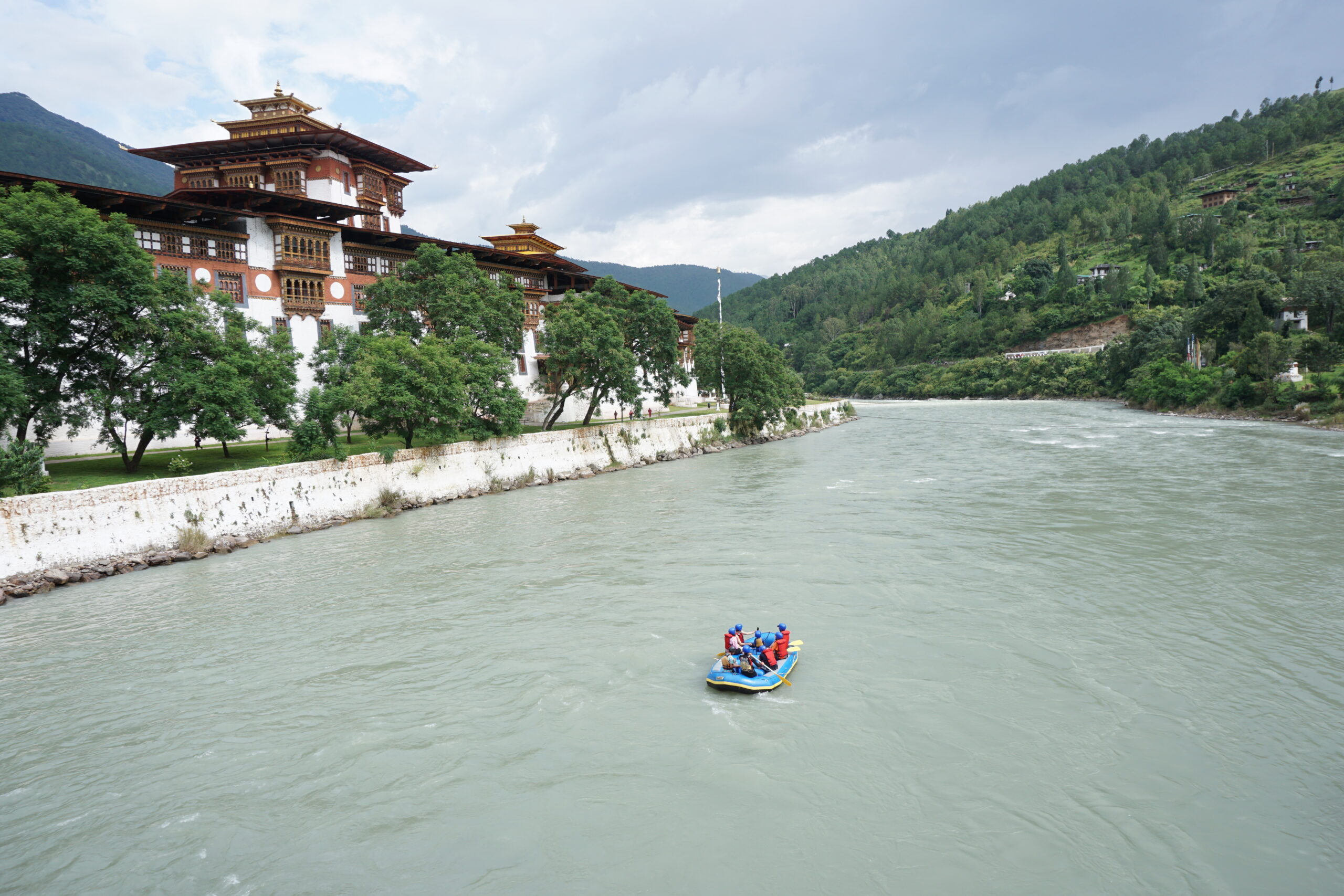
In the morning, you will have ample time to explore Punakha further, with the option to embark on a half-day rafting excursion along the Mo Chu River. Subsequently, you will proceed to Thimphu, the capital of Bhutan.
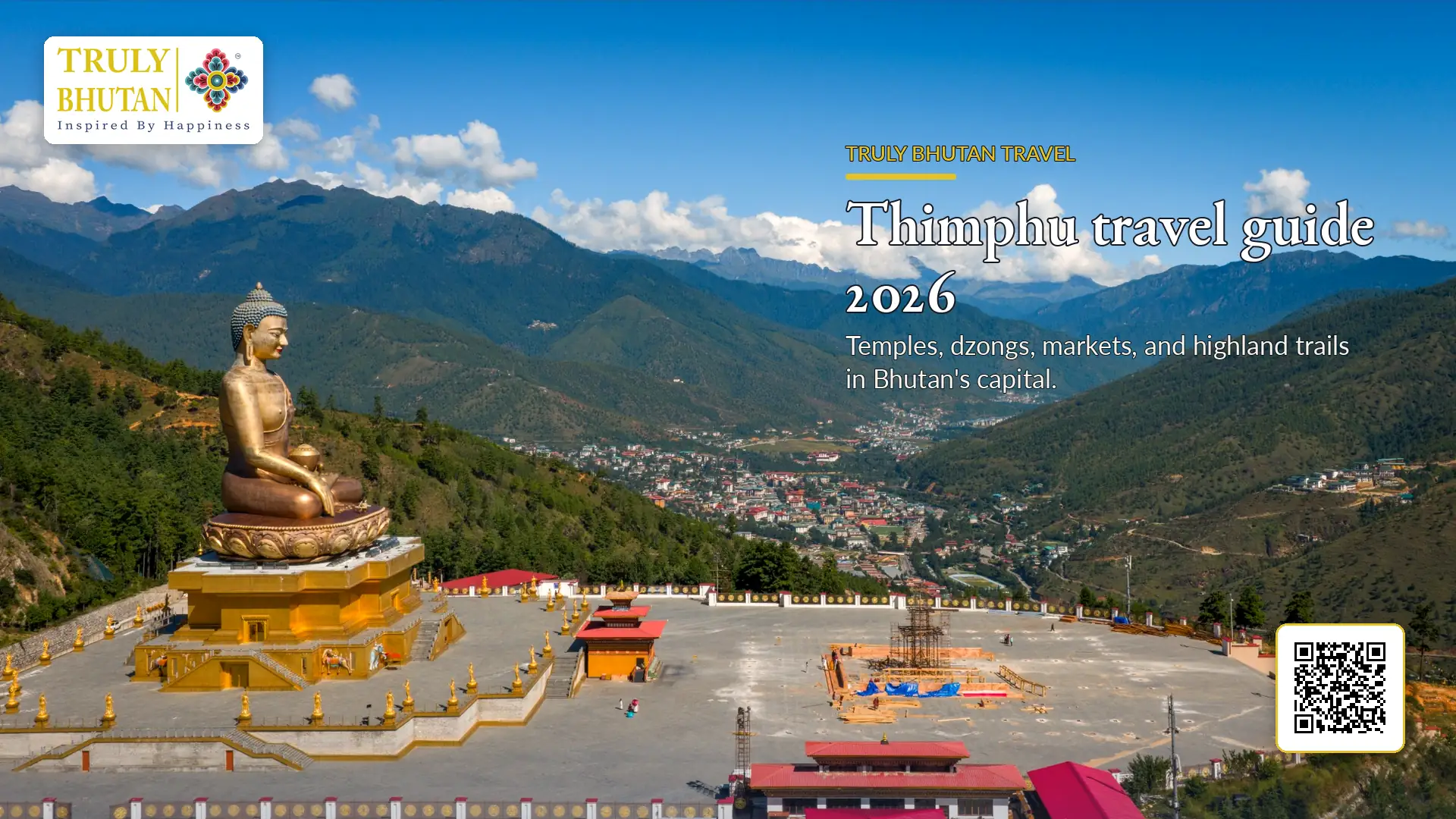
Upon your arrival in Thimphu, you will check into a comfortable hotel and have the opportunity to leisurely explore the city. Notably, sightseeing attractions include Tashichho Dzong, the Memorial Chorten, and the Handicraft Emporium. In the evening, you will savor dinner at a local restaurant and immerse yourself in the vibrant ambiance of the city.
Following breakfast, you will have ample time for additional sightseeing in Thimphu before returning to Paro. The drive is estimated to take approximately one and a half hours, and upon arrival in Paro, you will proceed to check back into the resort.
The remainder of the day is at your disposal to explore Paro, engage in last-minute shopping, or simply unwind at the resort. In the evening, Truly Bhutan Travel has organized a farewell dinner and cultural program to commemorate the successful culmination of your trek.
After an extraordinary journey through the heart of Bhutan, it is time to bid farewell. A representative from Truly Bhutan Travel will facilitate your transfer to Paro Airport, where you will board your international flight home.
Tashi Delek and safe travels!
The 34-day Snowman Trek is a high-altitude route through northern Bhutan that crosses 13 Himalayan passes, several above 5,000m, and reaches a maximum elevation of 5,230m at Gophu La. The combination of extreme altitude, long duration, remote terrain, unpredictable weather, and limited rescue access makes it harder to complete than most Himalayan routes. Far more people summit Everest each year than finish the Snowman Trek. The route covers over 380km and passes through some of the most isolated communities on earth.
The route passes Tiger’s Nest Temple on Day 2, Jomolhari Base Camp at Jangothang, the highland Laya village and its Layap people, the entire Lunana region with its glacial lakes and nomadic herders, Gangkhar Puensum Base Camp beneath the world’s highest unclimbed peak at 7,570m, and the natural hot springs at Duer Tsachu. Cultural sightseeing in Bumthang, Punakha, and Thimphu follows the trek in the final days.
The trek suits experienced high-altitude trekkers who have completed multi-day routes above 4,000m before. You need strong cardiovascular fitness, the ability to walk 6 to 9 hours per day for sustained periods, and mental resilience for remote conditions. Prior experience with altitude sickness symptoms and response is strongly recommended. Truly Bhutan Travel guides are trained in first aid and altitude management throughout the route.
Completion rates are low. Most estimates suggest fewer than half of trekkers who start the Snowman Trek finish the full route, with high passes blocked by early snow and altitude sickness being the most common reasons for early exit. The 2026 & 2027 departure is fixed to the late September to mid-October window, which gives the best conditions for a full completion.
Start cardiovascular and strength training at least three months before departure. Complete at least one multi-day trek above 4,000m in the 12 months before the Snowman. Pack for temperatures ranging from warm afternoons below 3,000m to sub-zero nights above 5,000m. A high-quality sleeping bag rated to minus 20 degrees Celsius is essential. Altitude sickness medication, a personal first-aid kit, blister prevention, and sun protection for high-altitude UV exposure are all required.
Late September to mid-October gives the best conditions. This window follows the monsoon season, which clears trail mud and refreshes the vegetation. Skies are typically clear, snow on the high passes is manageable, and the light on the peaks is at its best. April to June is a secondary window, though spring snow on passes above 5,000m adds risk.
All trekking permits, including the special restricted area permit for the Lunana region, are mandatory and arranged by us as part of the package. You do not need to apply separately.
- Airport pick-up and drop-off by private vehicle.
- 3-star accommodation (4 & 5 stars may require an additional premium update).
- Bhutan visa fee – including all necessary processing
- Route Permit
- Three meals per day during your stay in Bhutan
- A licensed Bhutanese tour guide
- All land transportation by private vehicle
- Camping equipment and haulage for trekking tours
- Sightseeing as per itinerary
- Monuments entrance fees where applicable
- Drinking water
- All internal taxes and charges
- A sustainable development fee of $200. (This sustainable development fee goes towards free education, free healthcare, and poverty alleviation, along with the building of infrastructure.)
- Airfare & Travel Insurance
- Expenses of personal nature, Tips to guides and drivers
- Expenses occurred due to unavoidable events i.e. road wrecks, flight delays etc.
Trek Overview
- Duration: 34 days including cultural sightseeing
- Days on trail: 26
- Total distance: approximately 380km
- Passes: 13 Himalayan passes
- Maximum altitude: 5,230m at Gophu La Pass
- Difficulty: Challenging
- Minimum group size: 8
- Best Time: Late September to mid-October for the best pass conditions and clearest skies.
Health and Safety
Carry personal altitude sickness medication. our guides carry group first-aid equipment and are trained in altitude sickness response. A helipad at Shakshepasa on Day 9 provides emergency evacuation access for the earlier section of the route. Trekking insurance with helicopter evacuation coverage is strongly recommended and not included in the package price.
Permits
All permits including the Lunana restricted area permit are arranged by us. No separate applications are required.
What the Snowman Trek Asks of You
The Snowman Trek demands 34 days of sustained physical and mental effort. Daily distances average 17 to 19km at altitude, passes exceed 5,000m on multiple days, and the Lunana section offers no exit routes or resupply points. The route asks everything from you, and offers the same in return.
What It Gives Back
You walk into terrain that no road reaches. You sleep beside glacial lakes above the clouds, share trail sections with yak herders, and stand at the base of a peak that no human has ever summited. The hot springs at Duer Tsachu after weeks above 4,000m are among the most restorative experiences on any trek in the world. The Bumthang valleys, Punakha Dzong, and the final evening in Paro bring you back to Bhutanese culture in full, rounding out a journey that covers the entire country from north to south.
Secure Your Place for 2026 & 2027
The 2026 & 2027 departure is open now. A minimum of 8 trekkers is required and group sizes are capped. Few treks anywhere in the world fill at this price point with this level of demand. Book your place on the 34-day Snowman Trek Bhutan 2026 & 2027 before this departure closes.
Explore More Treks with Truly Bhutan Travel
If the Snowman Trek is beyond your current experience level, or you want to build toward it with a shorter route first, these itineraries from Truly Bhutan Travel are the most relevant starting points.
- The Laya Gasa Trek covers the first half of the Snowman route, finishing at Gasa instead of continuing into Lunana. It is the best preparation trek for anyone planning the full Snowman in a future season.
- The Jomolhari Trek takes you to Jangothang Base Camp and over Nyele La Pass, covering Days 3 to 7 of the Snowman route. It is the most direct way to experience the Jomolhari section without the full commitment.
- The Druk Path Trek is the best entry-level option for trekkers new to Bhutan, connecting Paro and Thimphu through high-altitude lakes and ridges.
Browse the full list of available treks and cultural tours at trulybhutan.com/itinerary
Bhutan Travel Info
Travel Essentials
- Travel/Medical Insurance: Ensure a worry-free journey with Bhutan's dedicated travel and medical insurance plans offered by the Royal Insurance Corporation of Bhutan. Visit RICB for more information.
- Banking: Modern banking facilities are available in urban areas of Bhutan, with banks like Bank of Bhutan Limited, Druk PNB, and Bhutan National Bank. ATMs are common in Thimphu and Phuentsholing, but scarce in rural areas. Complete your banking in major cities.
- Money Matters: Bhutan's currency is the Ngultrum (Nu), which is equivalent in value to the Indian Rupee. Foreign travelers should bring traveler’s cheques or cash, especially USD. Credit cards like Visa and American Express are accepted in most areas.
- Communication: Bhutan's telecommunications are well-developed with internet cafes, mobile phone coverage, and international roaming available in most towns.
- Electricity: Bhutan operates on 230 volts and 50 Hertz. Ensure your devices are compatible with the three types of plugs commonly used.
- Time Zone: Bhutan's time is six hours ahead of GMT.
Health, Safety, and Customs
- Health and Inoculations: Recommended vaccinations include tetanus, typhoid, and hepatitis A. Avoid untreated water and ice cubes; instead, opt for bottled water, which is readily available.
- Safety Precautions: Bhutan is generally safe, but avoid walking alone or staying out late, especially after 9 PM. Secure your belongings, particularly in the capital, Thimphu.
- Customs Regulations: Personal belongings, 1 liter of alcohol, 200 cigarettes, and professional equipment are exempt from customs duty. Importing restricted items, such as wildlife products, antiques, and drugs, is prohibited.
Accommodation, Food, and Shopping
- Accommodation: Bhutan offers a range of accommodations, from quality 3-star to luxury 5-star hotels in places like Thimphu, Paro, and Punakha. Travelers can also opt for camping when venturing beyond urban areas.
- Food: Bhutanese cuisine is rich and spicy, featuring dishes like ema datshi. International cuisine such as Indian, Continental, and Chinese is available in most restaurants, with both vegetarian and non-vegetarian options.
- Shopping: Bhutan offers unique handicrafts, including hand-woven textiles, wooden bowls (Dapas), silver statues, Thangkas, and local postage stamps. Note that the buying and selling of antiques is strictly prohibited.
Travel Kits and Clothing
- Clothing and Essentials: Bhutan's climate is diverse, so dress in layers and pack accordingly. Respectful clothing is required when visiting monasteries and religious sites, and hats should be removed in sacred areas.
- Travel Kits: Pack items like sunscreen, sunglasses, insect repellent, antihistamine cream, anti-diarrhea pills, a flashlight, warm clothes, and a hat. The diverse climate means temperatures range from 20-25°C in summer to below 15°C in winter.
Experiences and Activities
- Photography: Capture Bhutan's stunning landscapes, rural life, and architecture. Indoor photography in sacred sites requires special permission.
- Guides and Interpreters: Bhutan offers certified guides fluent in various languages, ensuring you get the best experience when visiting sacred sites and cultural landmarks.
- Festivals and Holidays: Each district in Bhutan celebrates its unique annual tshechu. Check local schedules to plan your visit around these vibrant festivals.
- Weights and Measures: Bhutan uses metric measurements for weight, with advanced electronic scales commonly found in major cities.


- Best Price Guaranteed
- Book Now, Pay Later
- Local Expertise
- Hand-Picked Hotels
- Value for money
- Quality Service
- Responsible Tourism
- Tailor-Made Holidays
- No Booking Fee
- 100% Visa Approval
- 24/7 Customer Service
- No Hidden Costs