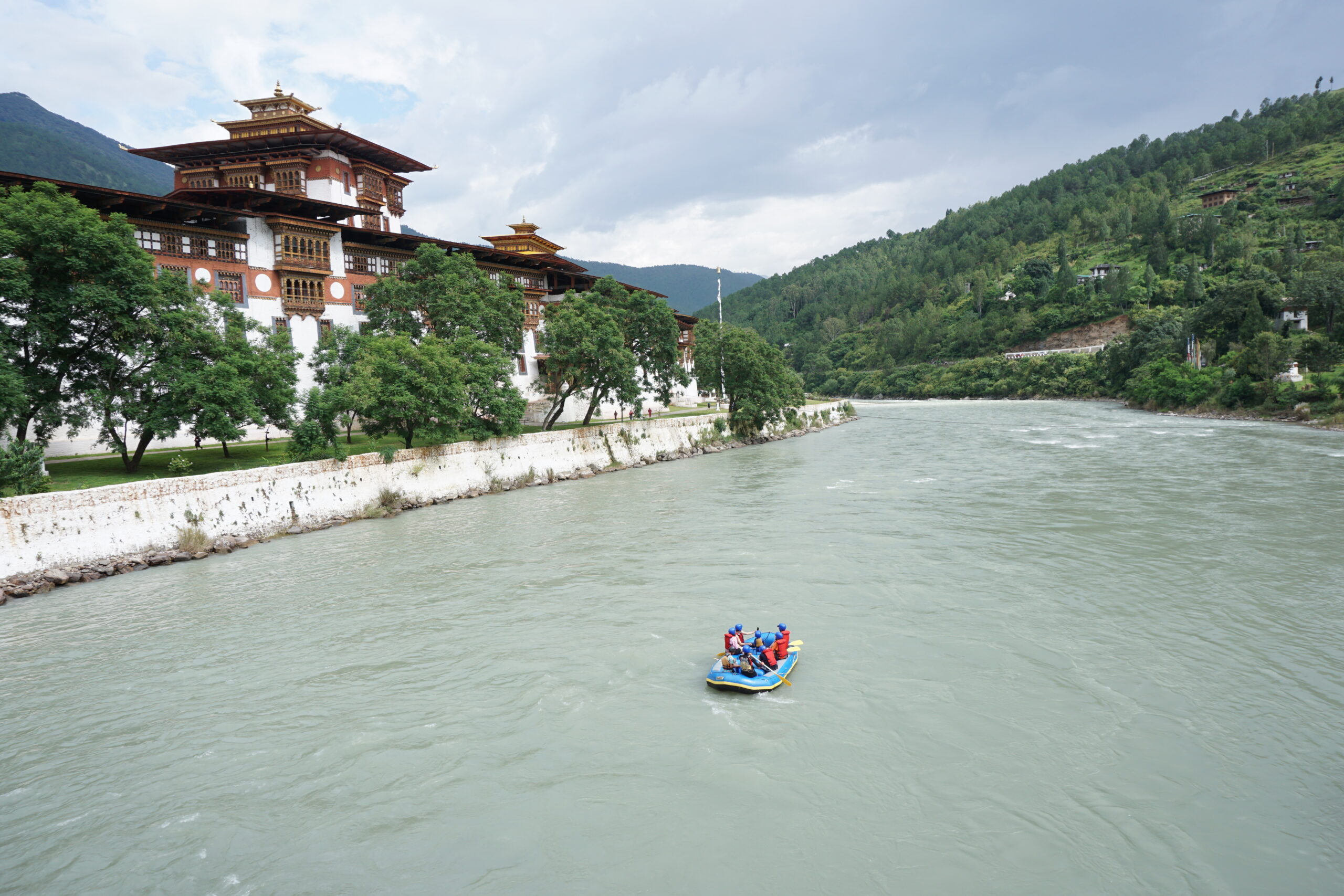
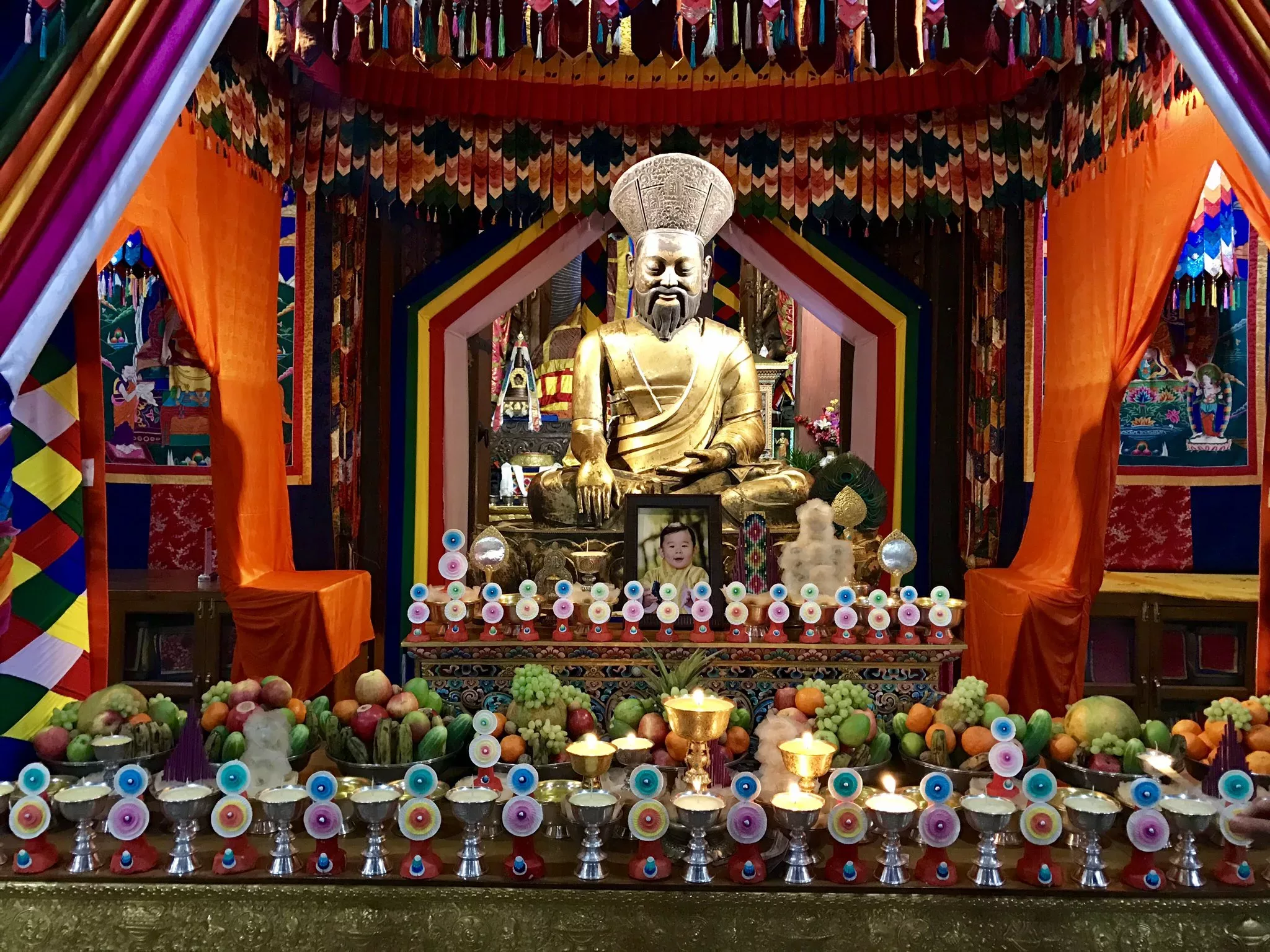
Devoid of modern skyscrapers and sluggish modernization is the wide-awake Jewels Of Bhutan for all time. In lieu, the overpowering middle path developmental philosophy has been a noble gift in a way the lives of Bhutanese are defined relatively in a simple and logical fashion. Unspoiled natural biodiversity, persistent connectivity of the modern era with age-old cultural histories, and fun-loving communities are fundamental on which the happiness of people is purely based.
The “Jewel of the East” trip, therefore, will drive you to all the tourist entry points in west, central, and eastern Bhutan. Although, variation in modern development is apparent, however, the ethnic cultural experiences are awesome highlights of the trip. You will love every bit of your trip.
Visit many cultural attractions including medieval fortresses (Dzongs), markets, and museums. Enjoy 5-star cuisines, including an opportunity to sample some of Bhutan’s fiery Chilli dishes. Spend a night in the beautiful Phobjikha Valley, winter home to the Black-Necked Crane.
Hike up to the famous Taktsang Monastery, perched on a cliff 900 m above the valley floor. Marvel at the elaborate and ancient wall paintings and carvings in Dzongs and temples.
Traverse beautiful landscapes from lush valleys to dense forests. Incorporate a Value-Added Option such as a cooking lesson or meditation session with a monk.
-
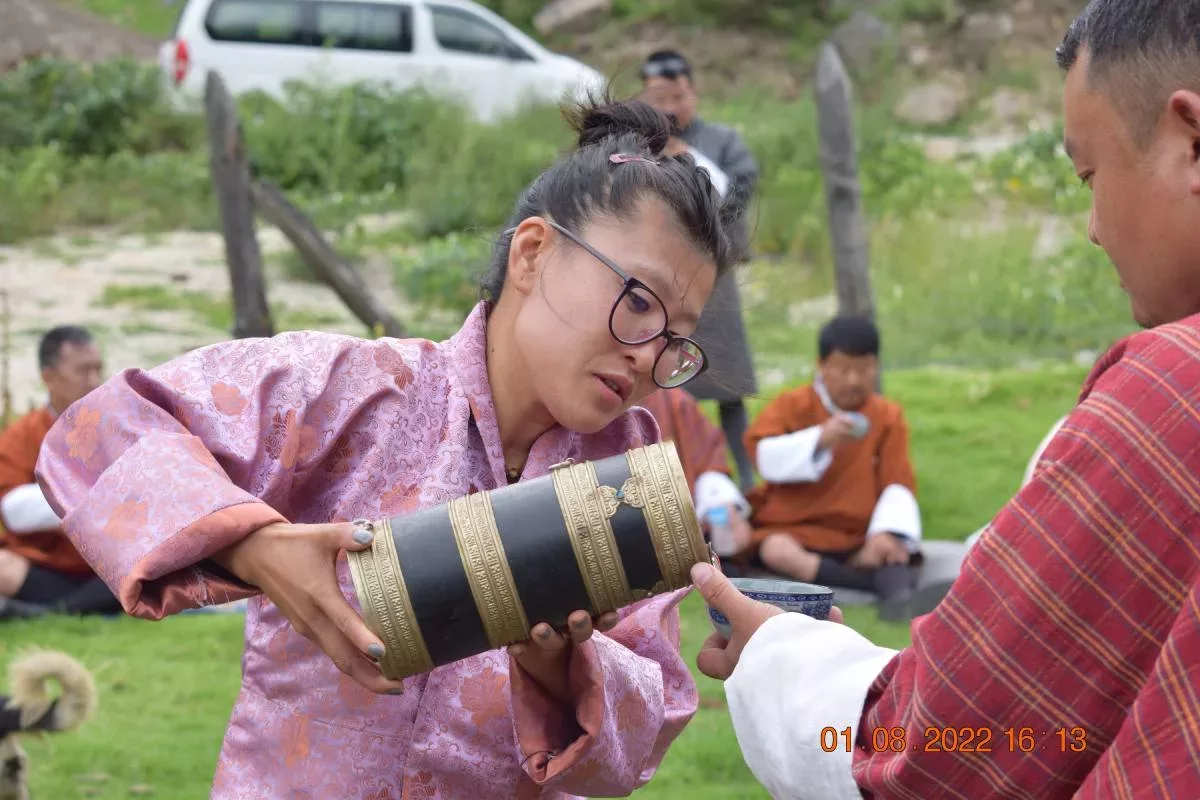
Premium Bhutanese hospitality ritual featuring a luxury handcrafted ceremonial vessel
Distance: 54 km
Estimated driving time: 1 hour
You will be received by the representative of Truly Bhutan who will be your host throughout your entire travel in Bhutan.
Check into the hotel. After the refreshment, visit the National Museum, housed in the Ta Dzong (watchtower). Here an intriguing collection of artifacts provides a wonderful introduction to the rich culture and heritage of the Kingdom.
Walk down to Paro Dzong, a fine example of Bhutanese historic architecture. From the Dzong, walk further down to Nyamai Zampa, a traditional cantilever bridge.
Travel to Thimphu, the capital town of Bhutan. The road runs down through the Paro valley, to Chuzom (Confluence) at the entrance to the valley, where the Paro and Thimphu rivers meet. The road passes along a narrow valley with high, rocky cliffs on the left, and then the valley opens out into farmland on the approach to Thimphu. Simtokha Dzong, “the place of profound tantric teaching”, stands sentinel on a hillock a few kilometers out of town. This dzong now houses the Institute for Language and Culture Studies. Check into the hotel.
Evening free after dinner. Overnight at the hotel in Thimphu.
Places and attractions:
- Tashichho Dzong
- Semthoka Dzong
- Dochu La Pass
- Memorial Chorten
- Changangkha Lhakhang
- Zangdopelri
- The Tallest Buddha Image
- Tango And Cheri Monasteries
- The Handicrafts Emporium
- Traditional Medicine
- Zorig Chusum Institute
- National Library
- Weekend Market
- Botanical Garden
- Thadrak Goemba
- Tashigang Goemba
- Chizhing Samtencholing Lhakhang
Sightseeing in Thimphu includes visits to:
- The National Library,
- The folk heritage museum,
- The School of
- Thangka,
- Painting,
- The Institute of
- Traditional Medicine,
- The Memorial Chorten,
- The Tashichho Dzong, a fortress of the glorious religion Then,
visit the government-run Handicrafts Emporium and local crafts shops, to browse through examples of Bhutan’s fine traditional arts. Here you can buy hand-woven textiles, thangka paintings, masks, ceramics, slate and wood carvings, jewelry, and other interesting items made from local materials.
Overnight at the hotel in Thimphu.
Places and attractions:
- Tashichho Dzong
- Semthoka Dzong
- Dochu La Pass
- Memorial Chorten
- Changangkha Lhakhang
- Zangdopelri
- The Tallest Buddha Image
- Tango And Cheri Monasteries
- The Handicrafts Emporium
- Traditional Medicine
- Zorig Chusum Institute
- National Library
- Weekend Market
- Botanical Garden
- Thadrak Goemba
- Tashigang Goemba
- Chizhing Samtencholing Lhakhang
After breakfast, drive to the base camp of Tango Monastery and hike up to the Monastery. Tango is the center for higher studies for monks. The hike up will take approximately 45 minutes. The view from Tango Monastery is breathtaking. Drive back to Thimphu and evening free to relax /stroll around Thimphu town.
Overnight at a hotel in Thimphu.
Places and attractions:
- Tashichho Dzong
- Semthoka Dzong
- Dochu La Pass
- Memorial Chorten
- Changangkha Lhakhang
- Zangdopelri
- The Tallest Buddha Image
- Tango And Cheri Monasteries
- The Handicrafts Emporium
- Traditional Medicine
- Zorig Chusum Institute
- National Library
- Weekend Market
- Botanical Garden
- Thadrak Goemba
- Tashigang Goemba
- Chizhing Samtencholing Lhakhang
In the morning, travel to Punakha (2 ½ hrs) via the Dochula pass. An hour’s drive from Thimphu will take you to this pass (3140 m) where one can have a superb view of the Eastern Himalayas on a clear day with a powerful binocular telescope. Visit the beautiful 108 chortens built on the hill by Her Majesty Ashi Dorji Wangmo for the security and well-being of His Majesty the King of Bhutan.
Travel onto Punakha, the old capital of Bhutan and presently the winter residence of the central monk body. Visit the Punakha Dzong, located on the island of Pho Chu (male) river and Mochu (female) river. Visit the Dho Jha Gha Lam Temple.
After lunch, walk through the Metshina Village and take a 20-minute walk through the rice fields to the Devine Madman’s Monastery-Chhimi Lhakhang, famously known for its fertility shrine, where one can receive a special fertility blessing. Drive to Wangdue and visit Wangdue Dzong, situated on a ridge overlooking a river junction. In the 17th century, Wangdue played a critical role in unifying the western, central, and southern regions of the country.
Overnight at a hotel in Wangdue.
Places and attractions:
- Punakha Dzong
- Khamsum Yulley
- Talo Goenpa
- Nalanda Buddhist College
- Chorten Nyingpo Lhakhang
- Sangchen Dorji Lhuendrup
- Limukha Village
- Ritsha Village
Drive to Trongsa via Pele la pass at an altitude of 3,150 meters, a wonderful opportunity for photographs. Stop over at Trongsa to visit Trongsa Dzong, which is the most impressive dzong in Bhutan. Built-in 1644 by the Zhabdrung, the dzong is an architectural masterpiece.
Drive to Bumthang, this is one of the most spectacular valleys in Bhutan and also the heartland of Buddhism. Here the great teachers meditated and left in their wake many sacred grounds. The Guru and his lineage of Tertons, treasure finders, have led to the sprouting of many temples in the valley. Visit Yatha Weaving Center, a cooperative of the National Women Association of Bhutan where the women of the region sell their textiles and Yatha specialty.
Check into the hotel and overnight in Bumthang.
Places and attractions:
- Jakar Dzong
- Kurjey Lhakhang
- Jambay Lhakhang
- Ura Valley
- Red Panda Brewery
- Mebartsho
Sightseeing includes visits to the following:
Jambay Lhakhang was built in the 7th century by the King Songtsen Goempo of Tibet. In his effort to propagate Buddhism he had a plan to build a total of 108 temples in Tibet and neighboring kingdoms. Chakhar Lhakhang. Besides the main road, a short distance beyond Jambay Temple is Chakhar (Iron Castle) Lhakhang.
Although it is easy to mistake it for a house and drive right by, this is an interesting temple and is worth a short visit. It is one of the 108 monasteries built by him to subdue evil spirits in the Himalayan region.
Kurjey Lhakhang (Kurjey means, “Body imprint”). The temple to the right is the oldest and was built by Minjur Tempa in 1652. It was built around the cave in which Guru Rimpoche meditated and left his body imprint.
Tamshing Lhakhang. This temple is also known as Tamshing Lhendrup Chholing (Temple of the Good Message).
Jakar Dzong, “castle of the white bird”. According to legend, when the lamas assembled in about 1549 to select a site for a monastery, a big white bird rose suddenly in the air and settled on a spur of a hill. This was interpreted as an important omen, and the hill was chosen as the site for a monastery and Jakar Dzong. The fortress is now used as an administrative center of the valley and summer residence of Trongsa monks.
In the evening stroll around the beautiful landscape of the Bumthang Jakar valley.
Dinner and overnight in Bumthang.
Places and attractions:
- Jakar Dzong
- Kurjey Lhakhang
- Jambay Lhakhang
- Ura Valley
- Red Panda Brewery
- Mebartsho
This Bhutan tour continues eastwards, winding through more rugged terrain. The drive, with spectacular views, will take about 6 hours. Pass through Ura village in Bumthang before climbing sharply to the highest motor road pass in the Kingdom, the Thrumshingla Pass 12,465 ft. Gradually drop down to Sengor. Watch cascading waterfalls along the way.
The descent stops at 2,130 ft. on a bridge over the Kurichu. Climb again through pine forest, maize fields, and eastern hamlets to Mongar town. The Mongar Dzong was built not too long ago, yet maintains the architectural traditions of the old dzongs.
Places and attractions:
- Mongar Dzong
- Yagang Lhakhang
- Drametse Lhakhang
- Zhongar Dzong
- Phunying La
- Aja Nye
After early breakfast, drive about 77 km to Lhuentse with a packed lunch, as there are no good restaurants and hotels in the Lhuentse district. Lhuentse is one of the most isolated districts in Bhutan. The landscape is spectacular with stark cliffs, gorges, and dense coniferous forests. The region is notably famous for its special skills of weavers, and special textiles and fabrics. Textiles from Lhuentse are normally considered to be the best in the country. The Kurtoe region of Lhuentse is also the ancestral home of the Royal dynasty in Bhutan.
After lunch, walk to Khoma village which is famous for textiles in Bhutan. Here you will see women folks weaving different types of textiles with intricate patterns. If you would like, you may also purchase textiles at a little cheaper rate than handicraft shops.
If time permits, Lhuentse Dzong: The approach to this Dzong (fort) is through a flag-stone-paved path over the vertical drops. The Dzong houses a body of 100 monks in the country. In the 16th century, Pema Lingpa’s son Kuenga Wangpo set up this Dzong in the form of a small Gompa. In 1654 the Trongsa Penlop Minjur Tenpa renovated it.
Drive back to Mongar for an overnight stay.
Places and attractions:
- Dungkar Naktshang
- Kishuthara
- Varied Flora And Fauna
- Jangchubling
- Khiney Lhakhang
- Wangzhing Lhakhang
- Shazo In Minjey
- Singye Dzong
The road from Mongar to Trashigang, the easternmost region, begins through lush forests and ferns passing over the Kori La at 8,000 ft. After driving for about an hour, you reach the village of Nagtshang, the site of one of the fiefdoms before the unification of the nation. Descending rapidly through cornfields and banana groves, you reach Yadi village. Follow the Gamri River until the bifurcation to Drametse.
Nun Choden Zangmo founded this temple, perched atop a steep hill, in the 16th century. This is the place from where the famous Drametse Nga Chham, mask dance with drums, originated. About 30 kilometers onwards lies Trashigang; at 3,775 ft. Trashigang is the center of the biggest and most populated district in the nation. View the dzong, built strategically on a spur going out towards the Gamri Chu.
After lunch, visit Khaling, which is the weaving center under the women association of Bhutan, Government of Bhutan. There you can see all the processes and materials involved in weaving. Drive back to Trashigang for an overnight stay and visit Bhutan’s first college, Sherubtse College of Bhutan.
Places and attractions:
- Trashigang Dzong
- Chador Lhakhang
- Rangjung Monastery
- Trashigang Radhi
- Merak & Sakteng
- Muenselling Institute
- Khaling National Handloom
In the morning, visit Trashigang Dzong, which was built by Pekar Chopel in 1659, and the Dzong commands a remarkable view over the surrounding countryside. Then drive to Mongar, which is 3 hours journey and 90 kilometers.
Check into the hotel and overnight in Mongar.
Places and attractions:
- Mongar Dzong
- Yagang Lhakhang
- Drametse Lhakhang
- Zhongar Dzong
- Phunying La
- Aja Nye
After breakfast, visit Mongar Dzong, built not too long ago, yet maintains the architectural traditions of the old dzongs.
Then drive back to Bumthang, which will take about 7 hours, with stops for lunch and tea in nearby villages.
Overnight in Bumthang.
Places and attractions:
- Jakar Dzong
- Kurjey Lhakhang
- Jambay Lhakhang
- Ura Valley
- Red Panda Brewery
- Mebartsho
After breakfast, you will hike to Tharpaling Monastery. You’ll begin the hike in the morning since this is a fairly lengthy hike–about three hours to the monastery. It’s a picturesque trail through the forest. The monastery itself is somewhat large, with several temples, and about 100 monks live in the nearby huts.
From the monastery, you will have a beautiful view of Chumey Valley, and you can have a relaxing lunch while you take in the scenery. In the evening you can relax in the town.
Overnight hotel in Bumthang.
Places and attractions:
- Jakar Dzong
- Kurjey Lhakhang
- Jambay Lhakhang
- Ura Valley
- Red Panda Brewery
- Mebartsho
After breakfast, drive to Trongsa, check into the hotel, and after refreshment, visit Trongsa Dzong, which is the most impressive dzong in Bhutan. Built-in 1644 by the Zhabdrung, the dzong is an architectural masterpiece.
Afternoon, drive to Kuenga Rabten which is about 23 km from Trongsa but takes about 1 hour due to rough road conditions. It was the winter Palace for the 2nd King of Bhutan. Although; it is mostly empty with only one room occupied for the library. This palace is under the Special Commission of Cultural Affairs and we do not require any permit to visit the interior.
The trip from Trongsa to Kuenga Rabten will give you an intimate insight into the early days of Bhutan’s Monarchy. Besides, you will see the beautiful large expanse of rice terraces in the lower Mangde-Chu valley and as well the big waterfall before the drive back to Trongsa for an overnight stay.
Places and attractions:
- Trongsa Dzong
- Ta Dzong
- Thruepang Palace
- Kuenga Rabten Palace
- Chendebji Chorten
- Trongsa Tshechu
After breakfast, drive to Phobjikha valley. The valley is also the winter home to the rare black-necked cranes (Grus Nicorocolis), which migrate, from remote parts of Tibet, China and Siberia during winter to this valley.
Visit Gangtey Gompa (monastery), which now houses one of the only Nyingmapa monasteries in Bhutan. Lunch at Phobjikha and after lunch drive to Punakha.
Overnight at a hotel in Punakha.
Places and attractions:
- Punakha Dzong
- Khamsum Yulley
- Talo Goenpa
- Nalanda Buddhist College
- Chorten Nyingpo Lhakhang
- Sangchen Dorji Lhuendrup
- Limukha Village
- Ritsha Village
After breakfast, walk to Khamsum Yulley Namgyal Chorten (50 Mins) temple built by the Queen Of Bhutan for peace and stability in this ever-changing world.
Travel back to Thimphu, visiting Simtokha Dzong en route. This dzong, built in 1627, is the oldest in Bhutan. It now houses the Institute for Language and Culture Studies.
In the evening, drive to see the Takin Zoo, which houses the national animal the Takin which is only found in Bhutan. Drive further unto Sangaygang to get a bird’s eye view of the Thimphu valley in the evening.
Dinner and overnight at a hotel in Thimphu.
Places and attractions:
- Tashichho Dzong
- Semthoka Dzong
- Dochu La Pass
- Memorial Chorten
- Changangkha Lhakhang
- Zangdopelri
- The Tallest Buddha Image
- Tango And Cheri Monasteries
- The Handicrafts Emporium
- Traditional Medicine
- Zorig Chusum Institute
- National Library
- Weekend Market
- Botanical Garden
- Thadrak Goemba
- Tashigang Goemba
- Chizhing Samtencholing Lhakhang
After early breakfast, drive to the beautiful Haa valley (the extreme Northwest of Bhutan). This route will take you through villages of Doga, Susuna, and Jabana villages spaced apart by forested areas, visiting typical Bhutanese farmhouses along the way and tasting local wine and traditional butter tea. You will see villagers at work in their fields. Drive further onto beautiful Haa valley (which is open to tourists only 2 years ago) and have Lunch at Haa.
Afternoon, visit two famous monasteries, Lhakhang Karpo (White Temple) and Lhakhang Nagpo (Black Temple) The central shrine in Lhakhang Nagpo is said to be almost identical to that of the Jowo temple in Lhasa. Legend has it that local deities assisted in the construction of Lhakhang Karpo. As a result, the place came to be locally known as Hay (meaning surprise), which later became Haa due to varying interpretations and pronunciations over time.
The three giant hills looming over the fringes of Haa valley were called Rigsum Gonpa, especially after the event of the Lhakhang Karpo construction. Today the three hills are popularly known as RigSum Gonpa signifying three deities, Jambayang, Chana Dorji, and Chenrezig (known in Sanskrit as Manjushri, Vajrapani, and Avalokiteshvara, respectively). These are the three principal bodhisattvas (Buddha to be) among the thousand future Buddhas to come, and representations of them are to be found in every Lhakhang (temple) and household shrine room.
Later, other Buddhist saints like Guru Rinpoche and Machi Labdron came to this place, Jungney Drag, in Haa and blessed the locality. After Zhabdrung Ngawang Namgyal unified the country under the Drukpa Kagyupa sect of Mahayana Buddhism in the early 17th century, the chief guardian deity of Haa became AP Chhundu.
After that, drive to Paro through Chele-la (3,810m/12,573ft), on a clear day there is a superb view of Mts. Chomolhari and Jichu Drake from this point, so if the weather is favorable we will stop here briefly to stroll around and enjoy the lovely mountain scenery. Then drive through blue pine & rhododendron forest towards Paro valley.
Overnight at the hotel in Paro.
Places and attractions:
- Wangchulo Dzong
- Chhundu Lhakhang
- Cheli La Pass
- Lhakhang Karpo
- Lhakhang Nagpo
- Tachu Goemba
After breakfast, take a morning hike up to Taktsang Monastery, also known as Tiger’s Nest. The climb up to the viewpoint will take around 3 hours and from there you will enjoy a spectacular view of the monastery clinging to the side of the cliff. It is said that in the 8th century Guru Rinpoche flew on the back of a tigress from eastern Bhutan to this place and meditated in a cave here for 3 months.
There have been shrines at this sacred place for many centuries. The principal Lhakhang (monastery) of the present monastic complex dates from 1692. Taktsang was damaged severely by fire in 1998 but has now been fully restored to its former beauty. After lunch at the viewpoint cafeteria, walk back down to the road and drive back to the hotel. On the way back, visit the Kichu temple, one of the 108 temples built in the 7th century by the Tibetan King Songtsen Gampo. The story goes that a giant demon lay across the whole area of Tibet and the Himalayas and was preventing the spread of Buddhism.
To overcome her, King Songtsen Gampo decided to build 108 temples, which would be placed on all the points of her body. Of these 108 temples, 12 were built in accordance with precise plans. Thus, it happened that in about the year AD 638 the temple of Jokhang in Lhasa was built over the very heart of the demon.
Places and attractions:
- Rinpung Dzong
- Drukgyel Dzong
- Taktshang
- Kyichu Lhakhang
- Kila Gompa
- Dungtse Lhakhang
- Tachog Lhakhang
- Dzongdrakha
Truly Bhutan team will see you off at the Paro Airport for your onward destinations.
- Airport pick-up and drop-off by private vehicle.
- 3-star accommodation (4 & 5 stars may require an additional premium update).
- Bhutan visa fee – including all necessary processing
- Route Permit
- Three meals per day during your stay in Bhutan
- A licensed Bhutanese tour guide
- All land transportation by private vehicle
- Camping equipment and haulage for trekking tours
- Sightseeing as per itinerary
- Monuments entrance fees where applicable
- Drinking water
- All internal taxes and charges
- A sustainable development fee of $200. (This sustainable development fee goes towards free education, free healthcare, and poverty alleviation, along with the building of infrastructure.)
- Airfare & Travel Insurance
- Expenses of personal nature, Tips to guides and drivers
- Expenses occurred due to unavoidable events i.e. road wrecks, flight delays etc.
Bhutan Travel Info
Travel Essentials
- Travel/Medical Insurance: Ensure a worry-free journey with Bhutan's dedicated travel and medical insurance plans offered by the Royal Insurance Corporation of Bhutan. Visit RICB for more information.
- Banking: Modern banking facilities are available in urban areas of Bhutan, with banks like Bank of Bhutan Limited, Druk PNB, and Bhutan National Bank. ATMs are common in Thimphu and Phuentsholing, but scarce in rural areas. Complete your banking in major cities.
- Money Matters: Bhutan's currency is the Ngultrum (Nu), which is equivalent in value to the Indian Rupee. Foreign travelers should bring traveler’s cheques or cash, especially USD. Credit cards like Visa and American Express are accepted in most areas.
- Communication: Bhutan's telecommunications are well-developed with internet cafes, mobile phone coverage, and international roaming available in most towns.
- Electricity: Bhutan operates on 230 volts and 50 Hertz. Ensure your devices are compatible with the three types of plugs commonly used.
- Time Zone: Bhutan's time is six hours ahead of GMT.
Health, Safety, and Customs
- Health and Inoculations: Recommended vaccinations include tetanus, typhoid, and hepatitis A. Avoid untreated water and ice cubes; instead, opt for bottled water, which is readily available.
- Safety Precautions: Bhutan is generally safe, but avoid walking alone or staying out late, especially after 9 PM. Secure your belongings, particularly in the capital, Thimphu.
- Customs Regulations: Personal belongings, 1 liter of alcohol, 200 cigarettes, and professional equipment are exempt from customs duty. Importing restricted items, such as wildlife products, antiques, and drugs, is prohibited.
Accommodation, Food, and Shopping
- Accommodation: Bhutan offers a range of accommodations, from quality 3-star to luxury 5-star hotels in places like Thimphu, Paro, and Punakha. Travelers can also opt for camping when venturing beyond urban areas.
- Food: Bhutanese cuisine is rich and spicy, featuring dishes like ema datshi. International cuisine such as Indian, Continental, and Chinese is available in most restaurants, with both vegetarian and non-vegetarian options.
- Shopping: Bhutan offers unique handicrafts, including hand-woven textiles, wooden bowls (Dapas), silver statues, Thangkas, and local postage stamps. Note that the buying and selling of antiques is strictly prohibited.
Travel Kits and Clothing
- Clothing and Essentials: Bhutan's climate is diverse, so dress in layers and pack accordingly. Respectful clothing is required when visiting monasteries and religious sites, and hats should be removed in sacred areas.
- Travel Kits: Pack items like sunscreen, sunglasses, insect repellent, antihistamine cream, anti-diarrhea pills, a flashlight, warm clothes, and a hat. The diverse climate means temperatures range from 20-25°C in summer to below 15°C in winter.
Experiences and Activities
- Photography: Capture Bhutan's stunning landscapes, rural life, and architecture. Indoor photography in sacred sites requires special permission.
- Guides and Interpreters: Bhutan offers certified guides fluent in various languages, ensuring you get the best experience when visiting sacred sites and cultural landmarks.
- Festivals and Holidays: Each district in Bhutan celebrates its unique annual tshechu. Check local schedules to plan your visit around these vibrant festivals.
- Weights and Measures: Bhutan uses metric measurements for weight, with advanced electronic scales commonly found in major cities.


- Best Price Guaranteed
- Book Now, Pay Later
- Local Expertise
- Hand-Picked Hotels
- Value for money
- Quality Service
- Responsible Tourism
- Tailor-Made Holidays
- No Booking Fee
- 100% Visa Approval
- 24/7 Customer Service
- No Hidden Costs