Start Date: 29 March, 2026
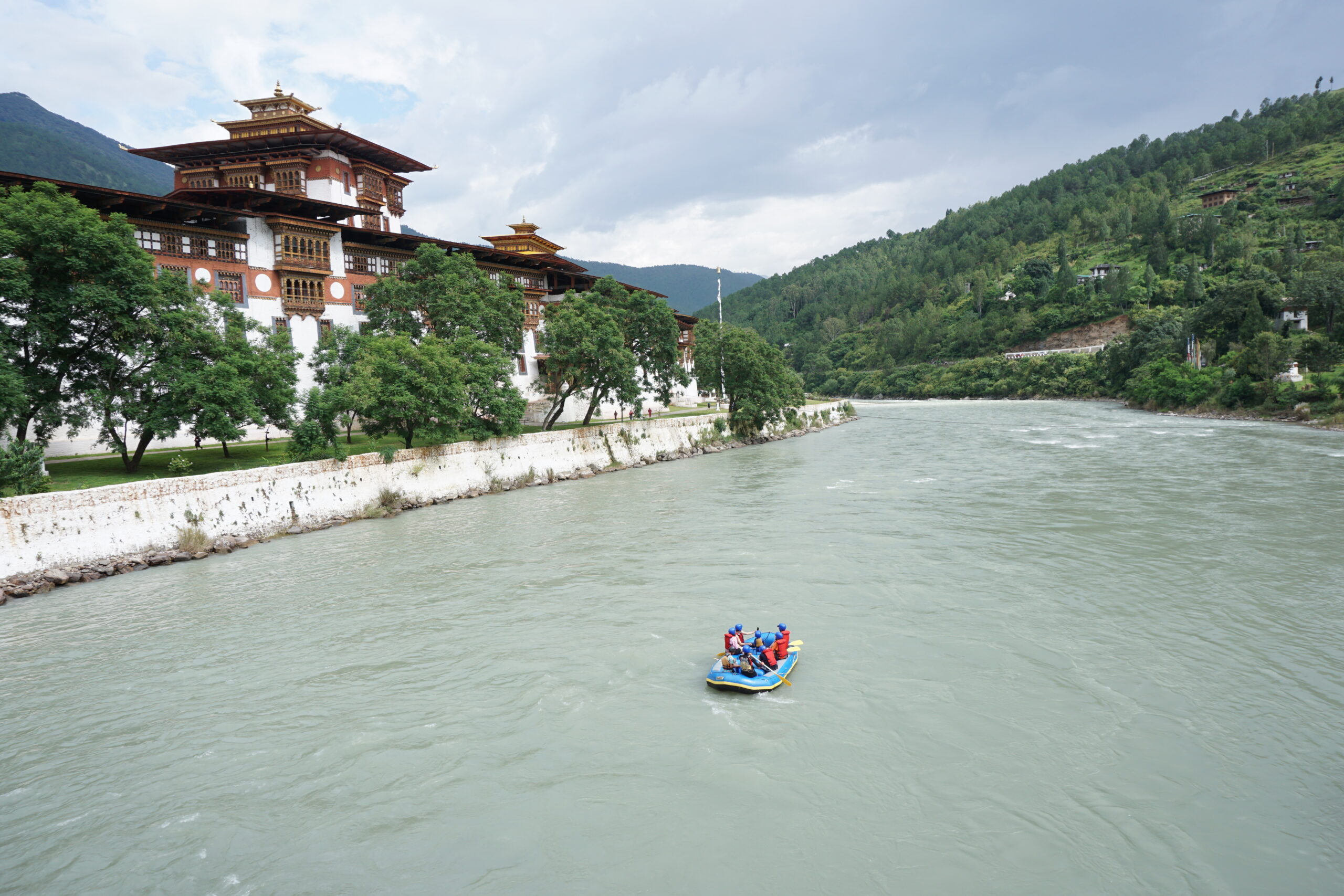
Venue: Rinpung Dzong, Paro Valley
End Date: 2 April 2026
Paro Tshechu Overview:
Paro Tsechu is one of the most popular festivals in Bhutan. Featuring dances performed by trained monks and laymen in amazing masks and costumes, Tsechus (festivals) is one of the best ways to experience the ancient living culture of Bhutan.
A Tsechu is a Buddhist festival in honor of Guru Rimpoche, the saint who brought Buddhism to Bhutan. A highlight of the Paro Tsechu is the unfurling of the silk Thangka – so large it covers the face of an entire building and is considered one of the most sacred blessings in the whole of Bhutan.
The ‘Thangka, known in Bhutan as a ‘Thongdrel’ is a religious picture scroll and is only exhibited for a few hours at daybreak on the final day of the festival enabling the people to obtain its blessing.
Experience the Vibrant Mask Dances at Paro Tshechu Festival
Nestled within the historic Paro dzong’s courtyard, a mesmerizing procession of dancers adorned in vivid costumes captivates viewers. Securing a prime viewing spot, visitors witness a series of ritual dances with intriguing titles like “Dance of the Lords of Cremation Grounds,” “Dance of the Terrifying Deities,” and “Dance of the Noblemen and the Ladies.” These dances, steeped in tradition, showcase the unaltered artistry of colorful outfits, headdresses, and masks over centuries. Central to these performances are depictions of Guru Rinpoche’s various forms, illustrating his journey to introduce Buddhism in the region. The dances featuring his transformation into wrathful figures to conquer evil forces are especially impactful. Each element carried by the dancers, be it a drum symbolizing triumph over evil, a sword representing wisdom, or hand bells awakening beings from ignorance, holds profound meaning.
Atsaras: The Festival’s Humorous Heart
Integral to the Tshechu’s charm are the atsaras, a duo of whimsical clowns infusing humor and energy into the festival. These jesters, donning bright attire with a distinctive red wooden mask featuring a hawkish nose and a mischievous grin, topped with a phallus, entertain the audience with their exaggerated dance moves and humorous interactions. Representing the ancient Acharyas from India, their outlandish appearance serves as a reminder of life’s unpredictable nature and a humorous portrayal of the path to enlightenment. Beyond their role as entertainers, atsaras are often skilled in dance or well-versed in the festival’s rituals, assisting dancers, explaining the significance of masks to onlookers, and managing crowds. Their presence adds a unique layer of joy and education to the festival experience.
-
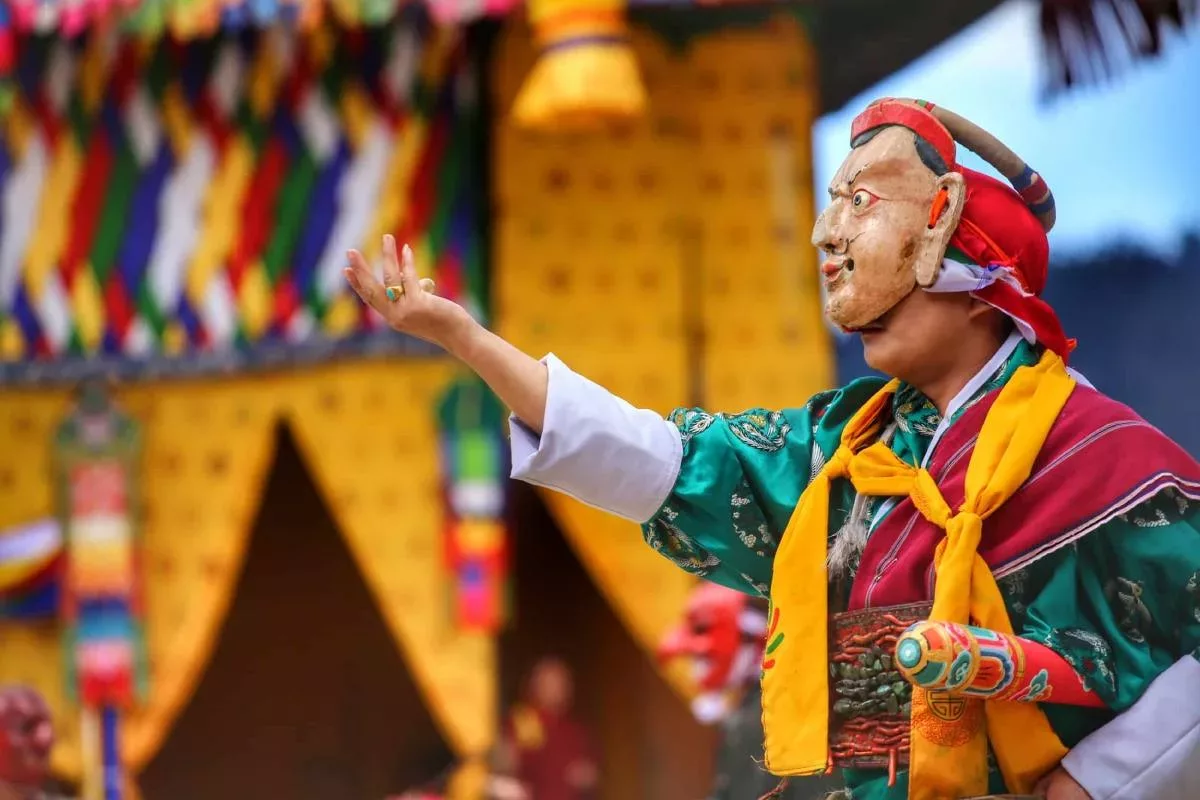
Luxury Bhutanese masked dancer
The flight to Paro is one of the most spectacular mountain flights in the world, with a constantly changing panorama of some of the highest mountains on earth. Our representative will meet you at Paro airport exit doors following customs formalities. After lunch enjoys afternoon sightseeing around Paro, including a visit to the Ta Dzong Museum housing many religious relics, works of art, and handicrafts offering a great orientation into Bhutan’s historical, cultural, and religious past.
Next, drive to, 7th Century Kyichu Lhakhang, one of the 108 temples constructed by the Tibetan king Songtsen Gampo. Kyichu is built in a manner similar to the Jokhang in Lhasa. Inside there is a great golden image of Buddha Sakyamuni. Before dinner at the hotel, there will be an orientation on Bhutanese etiquette by your guide.
Overnight at your hotel in Paro.
Places and attractions:
- Rinpung Dzong
- Drukgyel Dzong
- Taktshang
- Kyichu Lhakhang
- Kila Gompa
- Dungtse Lhakhang
- Tachog Lhakhang
- Dzongdrakha
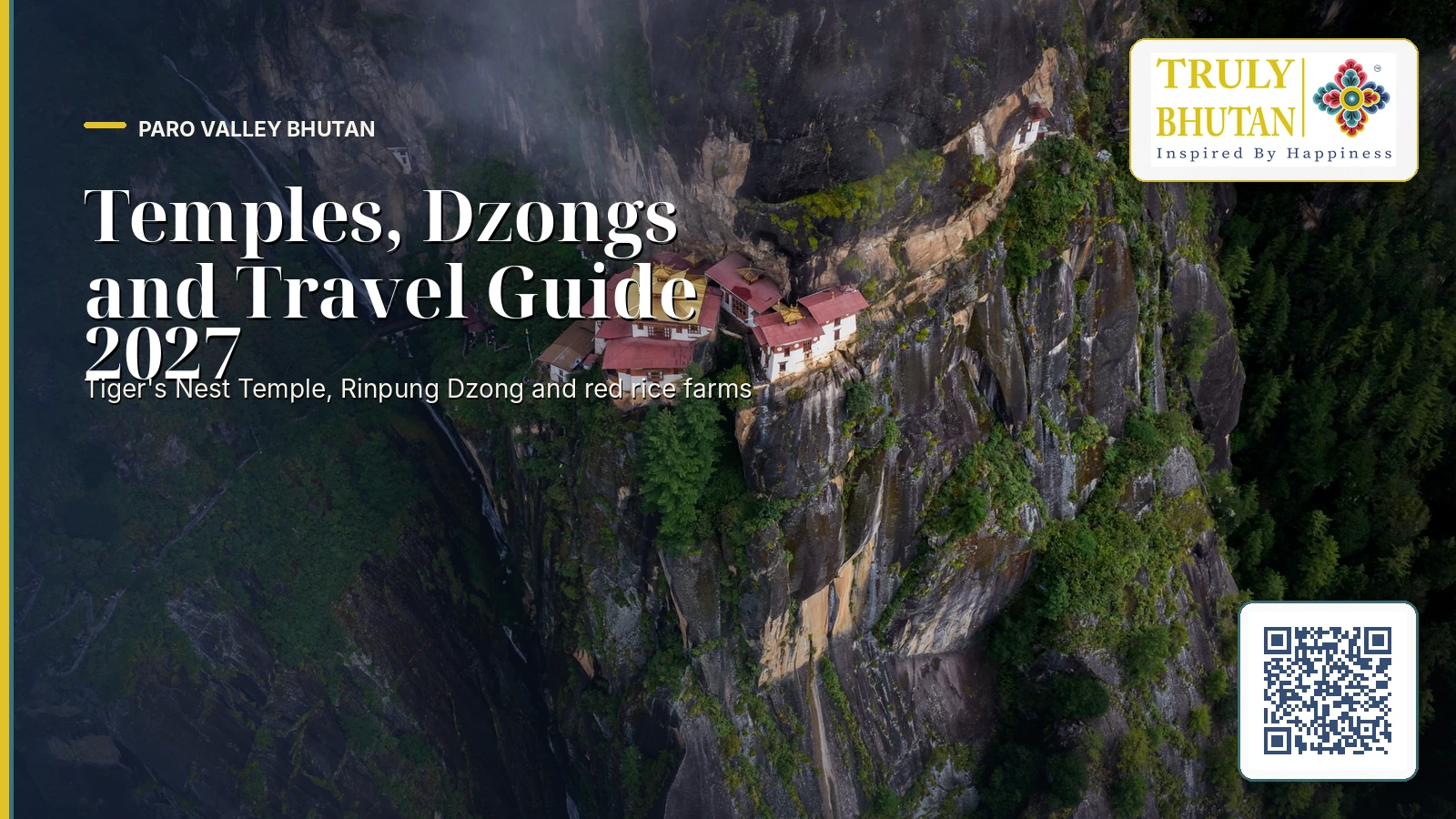
After breakfast hike to Taktsang Monastery. The trail is broad and the walk of approximately 1.5 to 2 hours uphill takes you high above the Paro valley. The view of Taktsang Monastery built on a sheer cliff face 900 meters above the valley floor is a spectacular sight. The great Guru Rimpoche is said to have flown here on the back of a tigress when he brought the teachings of the Buddhist Dharma to Bhutan in the 8th Century. Nearby there is a teahouse where you can stop for lunch.
In the afternoon drive to the ruins of the 17th Century Drukgyel Dzong, a historic monument built by the Zhabdrung to commemorate his victory against invading Tibetans in 1644. In fine weather, the towering peak of the sacred Mount Jomolhari (7314m) appears as a stunning backdrop. On the return drive to Paro, visit 7th Century Kyichu Lhakhang, one of the 108 temples constructed by the Tibetan king Songtsen Gampo. Kyichu is built in a manner similar to the Jokhang in Lhasa.
Overnight at your hotel in Paro.
Places and attractions:
- Rinpung Dzong
- Drukgyel Dzong
- Taktshang
- Kyichu Lhakhang
- Kila Gompa
- Dungtse Lhakhang
- Tachog Lhakhang
- Dzongdrakha
Wake up very early at 2.30 am and drive to Paro Dzong to witness the Thongdrel ceremony where a large religious painting of Guru Rinpoche made of cloth is unfurled on the side of the Dzong.
This event signifies the final day of the annual festival. After some time spent resting back at the hotel, Drive to the capital, Thimphu (1.5 hours) following the Pachu River. You can stop on the way to take in the magnificent Tachog Lhakhang, the hereditary place of worship for Bhutan’s iron bridge builder.
Overnight at your hotel in Thimphu.
Places and attractions:
- Tashichho Dzong
- Semthoka Dzong
- Dochu La Pass
- Memorial Chorten
- Changangkha Lhakhang
- Zangdopelri
- The Tallest Buddha Image
- Tango And Cheri Monasteries
- The Handicrafts Emporium
- Traditional Medicine
- Zorig Chusum Institute
- National Library
- Weekend Market
- Botanical Garden
- Thadrak Goemba
- Tashigang Goemba
- Chizhing Samtencholing Lhakhang
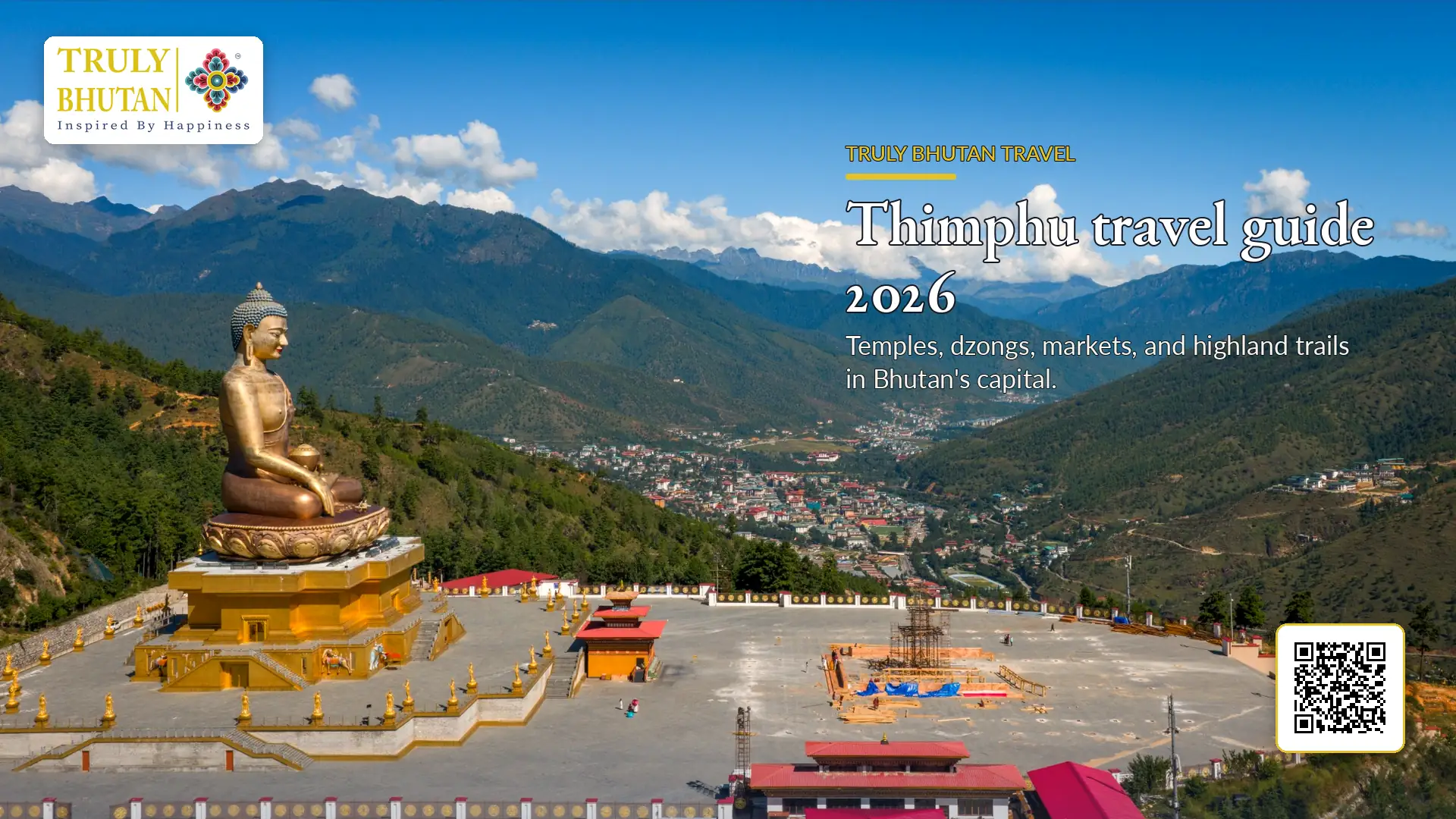
Begin your day with a short drive to Keunselphodrang, a popular vantage point, with the biggest Buddha statues in the world. This site offers a panoramic view of the capital below and also has several walking trails, which range from leisurely to moderate. Then visit the National Memorial Chorten, built in the memory of the Third King and for world peace. Continue to the picturesque 12th-century Changangkha Temple and Nunnery at Zulikha.
Afterward, visit the weekend vegetable market. Located below the main town, near the Wangchhu River, the Thimphu weekend market is by far the largest domestic market for the farmers in Bhutan. Visit the Folk Heritage Museum featuring an exhibition of items and artifacts of Bhutanese villages and rural households. After visiting the museum we will walk to School for Arts & Crafts; which is located close to the museum. This is one of the interesting schools where young boys & girls learn 13 different skills of arts & crafts in Bhutan.
Overnight at your hotel in Thimphu.
Places and attractions:
- Tashichho Dzong
- Semthoka Dzong
- Dochu La Pass
- Memorial Chorten
- Changangkha Lhakhang
- Zangdopelri
- The Tallest Buddha Image
- Tango And Cheri Monasteries
- The Handicrafts Emporium
- Traditional Medicine
- Zorig Chusum Institute
- National Library
- Weekend Market
- Botanical Garden
- Thadrak Goemba
- Tashigang Goemba
- Chizhing Samtencholing Lhakhang
Drive from Thimphu to Phobjikha (5-6 hrs) over the Dochu-La pass (3,100m), which is marked by 108 little Chortens and prayer flags. In clear weather, we can enjoy the view of almost all snow-covered mountains including the highest mountain Gangkar Puensum (7740m). We will take a short walk to stretch our legs to Chimi Lhakhang temple.
After lunch at Chimi Lhakhang café, continue our drive crossing over Punatsangchu River at Wangdiphodrang via old town. In Phobjikha we will visit Gangtey monastery before we check into our hotel.
Overnight at your hotel in Gangtey/Phobjikha.
Places and attractions:
- Dargay Goemba
- Gangtey Gompa
- Temple Of Sha Radap
- Gaselo & Nahee Village
- Adha And Rukha Village
- Shaa Region Of Wangdiphodrang
- Bhey Langdrag Nye
The three to four-hour Shasi La hike shortens your driving time towards Wangdue by about one hour. The trail is the migration trail for the Gangteps to the lower valleys in the fall. This beautiful hike starts from Gangtey monastery and continues through Tokha village and slowly upwards through Rhododendron forest. It continues across an open meadow and bush bamboo towards the Shasi La Chorten (100 vertical meters/330 feet from the lodge).
From here, the trail continues downwards through stunning old-growth Rhododendron forest to Phama Hotel in Khelikha on the main Wangdue Phodrang road. From here, it takes one hour to drive back to Gangtey. Alternatively, you can follow the Shasi La Trail from the lodge up to the Shasi La Chorten and turn around and walk the same way back to Phobjikha Valley.
Time: Gangtey – Phama Hotel, Khelikha: 3 – 4 hours.
Please note that the descent from the Shasi La Chorten to Khelikha is very steep and can be hard on the knees.
Overnight at a hotel in Punakha/Wangduephodrang.
Places and attractions:
- Dargay Goemba
- Gangtey Gompa
- Temple Of Sha Radap
- Gaselo & Nahee Village
- Adha And Rukha Village
- Shaa Region Of Wangdiphodrang
- Bhey Langdrag Nye
Chorten Nebu Temple Trek: 6 miles, moderate with an elevation gain of 1,200 ft
The walk this morning begins on a quiet country road, before climbing steeply over a rough trail as you make your way through terraced fields of rice to the local Chorten Nebu Temple. After lunch, you continue descending through small villages. Although steep in places, the trail from Chorten Nebu towards the valley floor is wide and well defined, as local people visiting the temple, as well as children walking to and from school frequently use it.
Time permitting, we can visit Punakha Dzong, the “Palace of Great Happiness” built in 1637 by the Zhabdrung, the ‘Unifier of Bhutan’ as predicted by the great Guru Rimpoche (Padmasambhava). It is situated at the confluence of the Mo Chu and Pho Chu (Mother and Father Rivers) and is the winter headquarters of the Je Khenpo and hundreds of monks who move en masse from Thimphu to this warmer location.
The three-story main temple of the Punakha Dzong is a breathtaking example of traditional architecture with four intricately embossed entrance pillars crafted from cypress and decorated in gold and silver. It was here on 17th December 1907, that Bhutan’s first king was crowned.
Overnight at a hotel in Punakha/ Wangduephodrang.
Places and attractions:
- Dargay Goemba
- Gangtey Gompa
- Temple Of Sha Radap
- Gaselo & Nahee Village
- Adha And Rukha Village
- Shaa Region Of Wangdiphodrang
- Bhey Langdrag Nye
After leaving Punakha, en route to Paro you enjoy a walk through a forest with temperate vegetation. Arriving at the royal botanical garden, which is 8,800 feet above sea level, you will enjoy the Rhododendron festival performed by local people in and around Hongtsho and Thinleygang village. A short walk around the small lake, where you may spot a red panda, one of the rare animals in the Himalayas.
After enjoying a visit through the gardens we continue our drive to Paro. After settling into comfortable accommodations, there is time to relax before a dinner of local specialties in the hotel restaurant.
Overnight at a hotel in Paro.
Places and attractions:
- Rinpung Dzong
- Drukgyel Dzong
- Taktshang
- Kyichu Lhakhang
- Kila Gompa
- Dungtse Lhakhang
- Tachog Lhakhang
- Dzongdrakha
Breakfast in the hotel then drives to the airport for the flight to your onward destination.
Places and attractions:
- Rinpung Dzong
- Drukgyel Dzong
- Taktshang
- Kyichu Lhakhang
- Kila Gompa
- Dungtse Lhakhang
- Tachog Lhakhang
- Dzongdrakha
For economy class, your check-in luggage cannot exceed 20 kg, and for first class, it can be up to 30 kg. You can carry a few extra kilograms in your luggage, but you must pay for it.
No, there is no official limit on the number of visitors to Bhutan. However, the premium that visitors must pay as a daily tariff, as well as the requirement to use a tour operator, maintain exclusivity and limit arrivals.
This high-value, low-volume tourism policy seeks to discourage mass tourism and backpackers.
Our trips range in elevation from 7000 to 12,000 feet. Because most people are not used to the altitude, it is an important consideration for anyone planning to visit Bhutan.
The average elevation is approximately 7000 feet. Most of our itineraries include traveling up to 12,000 feet in elevation, with a maximum sleeping elevation of 10,000 feet. We take precautions to reduce the risk of altitude sickness, and we are happy to discuss this with our guests.
Bhutan is a tiny landlocked country located between India and China in the eastern Himalayas. Its terrain varies from subtropical plains and forests in the south to subalpine forests and snow-capped mountains in the north.
Bhutan is a Buddhist country that is widely regarded as the last stronghold of Mahayana Buddhism.
Visit any time of the year – you will not be disappointed. You will be blessed to experience Bhutan differently. For example, if you visit Bhutan in the spring this year, you can still visit in the winter the following year because winter has its specialties.
If you plan to visit during the regular season, there will be fewer visitors and you will have a more rewarding experience. We recommend June to July (summer) and December to March (winter/spring). Trekking requires you to travel during peak season months to find suitable conditions.
- Airport pick-up and drop-off by private vehicle.
- 3-star accommodation (4 & 5 stars may require an additional premium update).
- Bhutan visa fee – including all necessary processing
- Route Permit
- Three meals per day during your stay in Bhutan
- A licensed Bhutanese tour guide
- All land transportation by private vehicle
- Camping equipment and haulage for trekking tours
- Sightseeing as per itinerary
- Monuments entrance fees where applicable
- Drinking water
- All internal taxes and charges
- A sustainable development fee of $200. (This sustainable development fee goes towards free education, free healthcare, and poverty alleviation, along with the building of infrastructure.)
- Airfare & Travel Insurance
- Expenses of personal nature, Tips to guides and drivers
- Expenses occurred due to unavoidable events i.e. road wrecks, flight delays etc.
Bhutan Travel Info
Travel Essentials
- Travel/Medical Insurance: Ensure a worry-free journey with Bhutan's dedicated travel and medical insurance plans offered by the Royal Insurance Corporation of Bhutan. Visit RICB for more information.
- Banking: Modern banking facilities are available in urban areas of Bhutan, with banks like Bank of Bhutan Limited, Druk PNB, and Bhutan National Bank. ATMs are common in Thimphu and Phuentsholing, but scarce in rural areas. Complete your banking in major cities.
- Money Matters: Bhutan's currency is the Ngultrum (Nu), which is equivalent in value to the Indian Rupee. Foreign travelers should bring traveler’s cheques or cash, especially USD. Credit cards like Visa and American Express are accepted in most areas.
- Communication: Bhutan's telecommunications are well-developed with internet cafes, mobile phone coverage, and international roaming available in most towns.
- Electricity: Bhutan operates on 230 volts and 50 Hertz. Ensure your devices are compatible with the three types of plugs commonly used.
- Time Zone: Bhutan's time is six hours ahead of GMT.
Health, Safety, and Customs
- Health and Inoculations: Recommended vaccinations include tetanus, typhoid, and hepatitis A. Avoid untreated water and ice cubes; instead, opt for bottled water, which is readily available.
- Safety Precautions: Bhutan is generally safe, but avoid walking alone or staying out late, especially after 9 PM. Secure your belongings, particularly in the capital, Thimphu.
- Customs Regulations: Personal belongings, 1 liter of alcohol, 200 cigarettes, and professional equipment are exempt from customs duty. Importing restricted items, such as wildlife products, antiques, and drugs, is prohibited.
Accommodation, Food, and Shopping
- Accommodation: Bhutan offers a range of accommodations, from quality 3-star to luxury 5-star hotels in places like Thimphu, Paro, and Punakha. Travelers can also opt for camping when venturing beyond urban areas.
- Food: Bhutanese cuisine is rich and spicy, featuring dishes like ema datshi. International cuisine such as Indian, Continental, and Chinese is available in most restaurants, with both vegetarian and non-vegetarian options.
- Shopping: Bhutan offers unique handicrafts, including hand-woven textiles, wooden bowls (Dapas), silver statues, Thangkas, and local postage stamps. Note that the buying and selling of antiques is strictly prohibited.
Travel Kits and Clothing
- Clothing and Essentials: Bhutan's climate is diverse, so dress in layers and pack accordingly. Respectful clothing is required when visiting monasteries and religious sites, and hats should be removed in sacred areas.
- Travel Kits: Pack items like sunscreen, sunglasses, insect repellent, antihistamine cream, anti-diarrhea pills, a flashlight, warm clothes, and a hat. The diverse climate means temperatures range from 20-25°C in summer to below 15°C in winter.
Experiences and Activities
- Photography: Capture Bhutan's stunning landscapes, rural life, and architecture. Indoor photography in sacred sites requires special permission.
- Guides and Interpreters: Bhutan offers certified guides fluent in various languages, ensuring you get the best experience when visiting sacred sites and cultural landmarks.
- Festivals and Holidays: Each district in Bhutan celebrates its unique annual tshechu. Check local schedules to plan your visit around these vibrant festivals.
- Weights and Measures: Bhutan uses metric measurements for weight, with advanced electronic scales commonly found in major cities.


- Best Price Guaranteed
- Book Now, Pay Later
- Local Expertise
- Hand-Picked Hotels
- Value for money
- Quality Service
- Responsible Tourism
- Tailor-Made Holidays
- No Booking Fee
- 100% Visa Approval
- 24/7 Customer Service
- No Hidden Costs