Trip Summary
- Trip Grade: Easy
- Duration: 13 Days
- Activity: Destination Wedding & Cultural Tour
- Wedding Ceremony Day: Day 8, Bumthang
- Ceremony Venue: Traditional Bhutanese Farmhouse, Bumthang
- Optional Venues: COMO Uma Paro, Six Senses Bhutan, Amankora, Zhiwaling, Mo Chu riverbank, Punakha
- Route: Paro, Thimphu, Punakha, Trongsa, Bumthang, Tang Valley, Wangdue, Paro, Haa Valley
- Departure & Return: Paro
- Trip Cost From: $18,375 per person
- Last Updated: March 2026
Important Legal Note
The traditional Buddhist blessing ceremony arranged by Truly Bhutan Travel is a deeply meaningful spiritual and cultural experience. For two foreign nationals, this ceremony is not a legally recognised marriage under Bhutanese law. Couples wishing to hold a legal ceremony in Bhutan must satisfy the requirements of Bhutan’s Marriage Act and Royal Court of Justice processes. Truly Bhutan Travel recommends completing any civil marriage formalities in your home country before or after the Bhutan ceremony. The blessing ceremony stands fully on its own as a sacred, memorable, and profoundly personal event.
What Is the Wedding in Bhutan Tour?
A Ceremony Unlike Any Other
The 13-day Wedding in Bhutan Tour centres on a traditional Bhutanese Buddhist blessing ceremony arranged by Truly Bhutan Travel in Bumthang, Bhutan’s spiritual heartland. The ceremony is conducted by Buddhist monks and lamas, following the traditional Thrisor wedding rite. This begins with the purification and cleansing of the couple’s minds and protection from negative forces before the main ceremony. Monks burn incense, make offerings to local deities, and chant mantras throughout. The couple exchanges white khadars as symbols of respect, unity, and blessing. Butter lamps are lit in honour of all Buddhas and deities. A high lama selects the auspicious ceremony date based on the birth years of both partners before any itinerary is confirmed. Truly Bhutan Travel, a government-licensed luxury operator based in Thimphu with over 17 years of direct Bhutan experience, is proud to offer full-service destination wedding planning with exclusive access to sacred venues rarely open to the public.
What the Ceremony Includes
The core ceremony covers monk and lama attendance, the Thrisor purification rite, khada exchange, silent prayer, offerings to Buddhas and deities, and a long-life blessing. Optional additions include the exchange of rings and cake cutting, the first dance, masked Cham dances performed by monks, a traditional archery match, a world peace prayer ceremony, and the offering of 1,000 butter lamps. Couples who wish to begin a family may request a special fertility blessing. The ceremony takes place primarily in a traditional Bhutanese farmhouse in Bumthang, with optional venue upgrades to COMO Uma Paro, Six Senses Bhutan, Amankora, Zhiwaling, or the Mo Chu riverbank in Punakha.
The Cultural Setting
Bhutan earned serious recognition as a luxury wedding destination when Hong Kong stars Tony Leung and Carina Lau chose the kingdom for their wedding on July 21, 2008. The country’s combination of unspoiled mountain landscape, living Buddhist culture, monastery-rich valleys, and strict conservation policy creates a setting no other destination in the world replicates. Paro’s Himalayan vistas, Thimphu’s ancient dzongs, Punakha’s river confluence, and Bumthang’s sacred farmhouse landscape form the backdrop for a ceremony and tour that stays with both partners for a lifetime.


Your Guides from Bhutan Holiday will receive you at the airport with Tashi Khadar and drive you the short distance to the hotel. After Tea, visit to the watch tower of Paro Dzong which now houses the National Museum. The museum is an important center for the preservation of Bhutanese artifacts, culture and history. Then, we continue to Rinpung Dzong (or Paro Dzong), which means “the fortress of the heap of jewels.” This complex houses the administrative and religious headquarters for the Paro district. A part of Bernardo Bertolucci’s movie, “Little Buddha,” was filmed inside this Dzong. From the Dzong, we will enjoy a short and easy walk to the Pachu River and cross to the other side over a traditional cantilever (wooden covered) bridge after lunch Drive to Drukgyel Dzong, a ruined fortress that is 16 km away from Paro Town. Although in ruins, this Dzong is of great historical importance. It was here that the Bhutanese finally defeated the invading Tibetans and drove them back. From here, the peak of Jumolhari ‘Mountain of the Goddess’ can be seen on a clear day (Alt. 7,329 m /24,029 ft.). And on the way back visit Kichu Lhakhang is the oldest and the most sacred shrine of Bhutan built in 8th century by the Tibetan King Songtsen Gampo. In the evening take a leisurely stroll in Paro town.
After breakfast drive to Thimphu and visit the National Memorial Chorten (1974) built in honour of our late King Jigme Dorji Wangchuk, “The Father of Modern Bhutan”. Built in a typical Tibetan style, there are numerous religious paintings and the complex tantric statues reflecting both the peaceful and wrathful aspects of Buddhist deities. This Chorten is also a center of worship for the people living in Thimphu. Then visit to Dupthob Lhakhang one of the few surviving nunneries in Bhutan. Visit Changkha Monastery (This monastery was built in 15th century by the lama Phajo Drugom Zhigpo) where the newborn children of Thimphu valley are taken to receive 1st blessing from a High Lama. Drive to Mini Zoo where Takin, the national animal of Bhutan can be seen. This particular animal is found only in the Himalayan region and the head of this animal looks like that of a goat and body of a cow/yak and before sun set drive to Sangay gang view point (2685 meters) to have view of whole Thimphu valley and walk through hundreds of colorful prayer flags that dot the hill overlooking the Thimphu valley. Dinner and Overnight in Hotel at Thimphu.
After breakfast, visit the National Library, stocked with ancient Buddhist manuscripts, and the Painting School where traditional art is still kept alive through instructions in the art of painting Thankas (sacred Buddhist religious scrolls).We can visit in different class rooms, where different students follows a comprehensive course that starts with drawing and progresses through painting, wood and slate curving, and statue making. Visit Traditional Medicine Institute where medicines are prepared according to ancient practices. Visit Handicraft Emporium for shopping Bhutanese Various Arts and Textiles. After lunch visit we will hike to Tango Monastery. The trail Tango is a climb of 280 meters and it takes an hour to reach the monastery. Lama Gyalwa Lhanangpa founded the monastery in 12th century. The “Divine madman” built the present building in 15th century. This is one of the best places for meditation.
In the evening, visit to the Tashichho Dzong (Fortress of the Glorious Religion). In 1216 the lama Gyalwa Lhanangpa built Dohon (Blue Stone) Dzong on the hill above Thimphu Where Dechen Phodrang now stands. A few years later Lama Phajo Drugom Zhigpo, who brought the Drukpa Kagyu line age to Bhutan, took over Dohon Dzong. In 1641 the Zhabdrung (The one who unified the country) acquired the dzong from the descendants of lama Phajo and renamed it as Trashi Choe Dzong. He then arranged to house both monks and civil officials in the same Dzong. Present it is a seat of the national government and the Central Monastic Body, including the summer residence of the Je Khenpo (Chief Abbot of Bhutan). Dinner and overnight in Hotel.
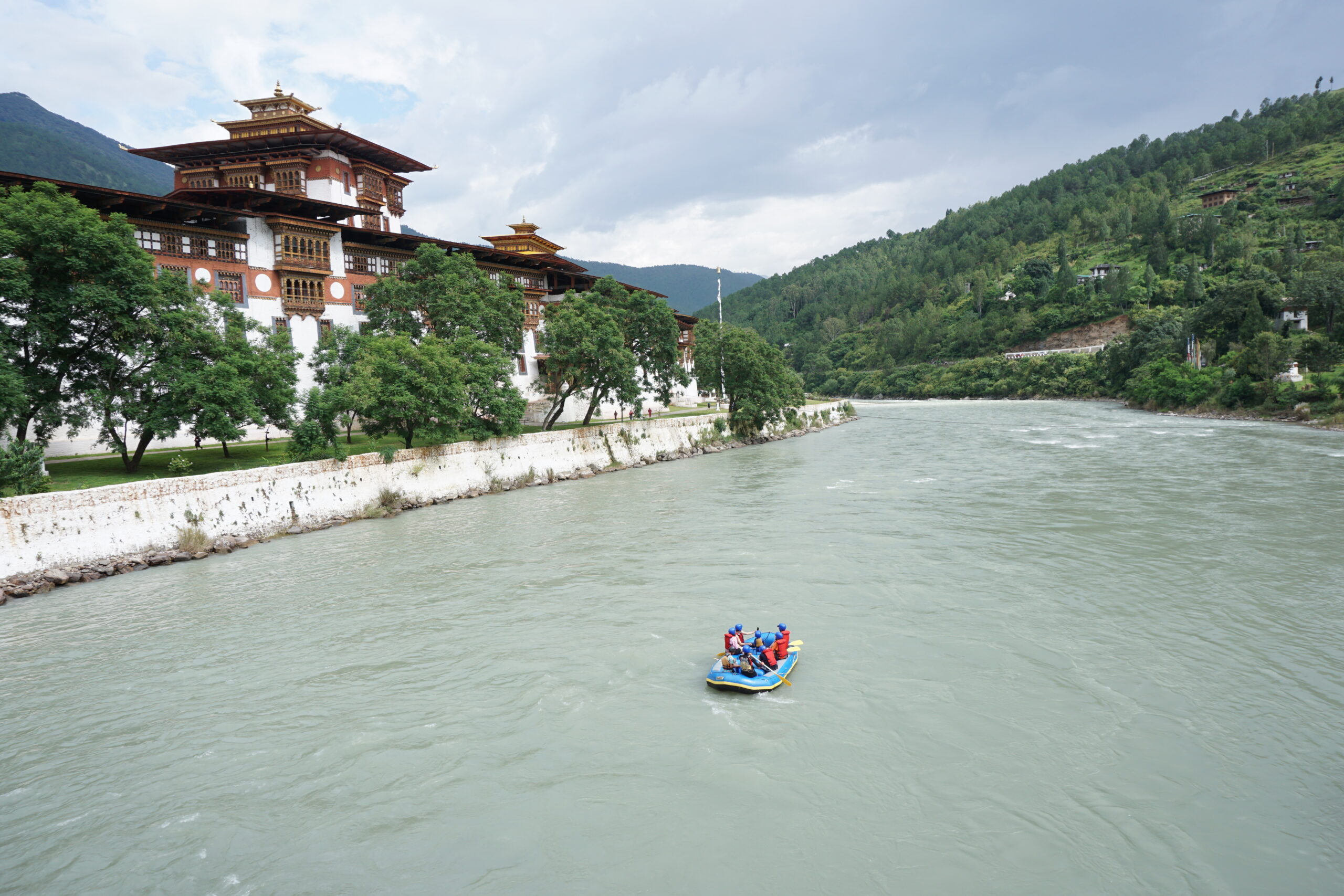
After early breakfast, drive to Punakha via Dochula Pass, where you can see 108 Bhutanese Stupas. If the weather is clear you can see all Himalayas Ranges with all snow covered. Further drive to Punakha and visit Punakha Dzong. The Dzong is situated between the two rivers and it is one of the biggest rivers in Bhutan. We have to walk through the suspension bridge to reach the Dzong. The Dzong was built in 1637 by Zhabdrung Ngawang Namgyal and is situated between Pho Chu (Male River) and Mo Chu (Female River). For many years until the time of the second king, it served as the seat of the Government. The construction of the Dzong was foretold by Guru Rimpoche, who predicted, “…a person named Namgyal will arrive at a hill that looks like an elephant”. There was a smaller building here called Dzong Chu (Small Dzong) that housed a statue of Buddha. It is said that Zhabdrung ordered the architect, Zowe balep, to sleep in front of the statue, while balep was sleeping; the Zhabdrung took him in his dreams to Zangdopelri and showed him the palace of Guru Rimpoche. From his vision, the architect conceived the design for the new Dzong, which in keeping with the tradition, was never committed to paper. The Dzong was named Druk Pungthang Dechen Phodrang (Palace of Great Happiness). The war materials captured during the battle with Tibetans are preserved here. Punakha is still the winter residence of Je-Khenpo and King Jigme Dorji Wangchuk convened the new national Assembly here in 1952. In the evening short hike to Chimi Lhakhang, Lama Drukpa Kuenley built this in 15th century. (This monk is popularly known as the Devine madman for his philosophy, “Salvation through sex”). He subdued the demons with his “Magical Thunder bolt”. The Temple is also known as “The Temple of Fertility”. Sterile women from far and wide come to this Temple to get blessed and an article about this temple also appeared in newspaper, The Washington Post some years back. Dinner and over night in Hotel at Punakha.
Early breakfast, drive to Wangdiphodrang and visit Wangdue Dzong was founded by Zhabdrung in 1639.It is situated on a hill with a commanding view of the valley. It is believe that protective deity, Yeshey Gonpo told Zhabdrung Rimpoche that if he builds a dzong on the ridge he would be able to bring the whole country under his power. Wangdue means to bring under one’s power. Continue your drive to Gangtey valley. It is one of the most beautiful glacial valleys of the Himalayas. Visit Gangtey Gompa from outside. Gyatso Pema Thinley, the grandson and mind reincarnation of Pema Lingpa founded the Temple in 1613, and Tenzin Legpai Dhendup, the second re-incarnation, built the temple. The present Abbot, Kunzang Pema Namgyal is the ninth re-incarnation. It is a Nyingmapa monastery and is affiliated to other Nyingmapa monasteries including Tamshing in Bumthang. Explore Phobjikha valley, famous for the Black Necked Cranes during winter. These cranes are very rare and endangered and highly protected by the Government. These cranes fly to Phobjikha valley that is their winter Habitat. Stop at Chendbji Chorten patterned on Swayambunath temple in Kathmandu. It was built in 18th century by Lama Shida, from Tibet, to cover the remains of an evil spirit that was subdued at this spot and drive to Trongsa. Dinner and Overnight in Hotel Yangkhil.
After breakfast visit Trongsa Dzong, the most impressive dzong in Bhutan, built in its present form in 1644 by Chogyal Minjur Tempa, the official who was sent by Zhabdrung to unify eastern Bhutan and enlarged at the end of the 17th century by Desi Tenzin Rabgay. Trongsa Dzong is the ancestral home of the present Royal Family and first two hereditary kings ruled Bhutan from this Dzong. Drive to Bumthang via Yutong la Pass and Kilakha Pass. Bumthang sightseeing includes: Bhutanese Carpet Factory, here they used Yak and Sheep wool and even pure silk to weave different carpets and the Bhutanese Textiles., after lunch visit Jakar Dzong, which literally means “The Castle of White Bird”. The current structure was built in 1667 and then visits Lamey Goemba, a large palace and monastery built in 18th century by Dasho Phuntsho Wangdi. Visit Jambay Lhakhang, built by King Songtsen Gampo of Tibet in the year 659 on the same day as Kichu Lhakhang in Paro. The temple was visited by Guru Rimpoche during his visit to Bumthang and was renovated by Sindhu Raja after Guru Rimpoche restored his life force. Under the temple is said to be a lake in which Guru Rimpoche hid several Terma. In October one of the most spectacular festival, “Jambay Lhakhang Drup” is staged here. visit Kurjey Lhakhang that is named after body print of Guru Rimpoche, built in 1652 by Minjur Tempa. Visit Tamshing Lhakhang (Temple of the good message), established in 1501 by Pema Lingpa and is the most important Nyingmapa temple in the kingdom. Visit Thangbi Temple, founded by Shamar Rimpoche in 1470, is located in the midst of buckwheat field. After a dispute the temple was taken over by Pema Lingpa from Shamar Rimpoche. It is 17 Kilometers drive north of Kurjey Temple on an unpaved road to Toktu Zampa. You start your walk from here by crossing a small suspension bride and walk 20 minutes past fields of buckwheat to the Thangbi Temple and overnight at Bumthang.
Drive to Ugyen Choling Palace built 17 the century by Deb Tsokey Dorji, a descendant of Buddhist Saint Dorje Lingpa. Ugyen Choling is a national treasure, privately owned by the same family for hundreds of years. Its remote location makes it one of the less frequently visited historical sites in Bhutan, hosting fewer than two hundred guests per year. The best part of the Palace is the quaint museum housing permanent exhibits on three floors in the main building and the Utse, the central tower. Traditional living quarters are recreated to capture the realistic ambiance of the ancient lifestyles and conditions of the households. Everyday kitchen and weaving utensils, war weapons–including petrified yak dung to make gunpowder–tools and farming implements are the main part of the exhibits. On the way back from Tang you can stop to see Shemjong Village and Mebar Tsho (Burning Lake).
We can organize traditional weddings in Bhutan- elaborate rituals in remote centuries-old palaces with monks and nearby villagers on attendance to more accessible places. A Bhutanese Wedding is much more than a simple exchange of vows and rings. It includes a number of religious rites performed by Buddhist monks and lamas. This represents the importance of the bond between a husband and wife.
Vow Renewal Blessing Ceremony
Renew your vows and get blessed for a lifetime of love and happiness from the Buddhist monks and lamas.
We can make arrangements for an elaborate vow renewal blessing ceremony including most elements of the wedding ceremony or a simpler arrangement can be made which may include the exchange of Khadar, silent prayer and Khaddar offering by the couple to all the Buddha’s, gods and deities, and a long and happy life blessing ceremony.
Best of both worlds
To have the best of both the worlds, the wedding and vow renewal blessing ceremonies can be customized to include western elements such as ring exchange and cake cutting ceremony, the first dance, the exchange of vows, The ceremony can also be made more grand by including spellbinding Bhutanese masked dances, an archery match, a special world peace prayer, or the offering of 1000 butter lamps. If the couple is interested in starting a family immediately, a special fertility blessing arrangement can also be included
Choosing an auspicious day
A traditional Bhutanese wedding ceremony begins with choosing of an auspicious day for the event. A high lama selects an “auspicious day” for the wedding based on the birth year of the bride and groom.
Reasons to choose a Bhutanese Wedding and Vow Renewal
Getting married or renewing your vow in a centuries-old tradition, in a land of breathtaking natural beauty, wearing unique hand-woven Gho and Kira, with red-robed Buddhist lamas and monks chanting prayers to invoke blessings from all gods and deities, will definitely turn your special day into a lifetime of treasured memories.
A Bhutanese wedding or vow renewal in combination with one of our trips can be a special (wedding) gift. Only a privileged few get to visit this magical kingdom. With a Bhutanese wedding and vow renewal, you receive special blessings of Buddhist monks and lamas in addition to the blessings from many ancient Buddhist monasteries and temples that are included in the combination trip you choose.
After early breakfast, drive to Wangdiphodrang via Trongsa and today it will be the long drive and stop at Chendebji Cafeteria for lunch. Enroute .we will stop in different places for the photography and have the view of different valleys. Dinner and Overnight in Hotel at Wangdiphodrang.
After breakfast, drive to Thimphu and visit Simtokha Dzong. It is the oldest Dzong in Bhutan. After lunch drive to Paro. Dinner and overnight in Hotel at Paro.
Start the day early for drive to Haa via Chele-la pass. 4 Km away at Bondey village the road to Haa diverts towards the right hand side and the climb up towards the Chele-la pass starts. After driving through blue pine & rhododendron forest for 45 km, reach Chele-la pass (3822 meters). From this point one can have a superb view of Mount. Chomolhari and Jichu Drakye. This is a very good place to walk around for few minutes enjoying the view. Drive on to Haa, descending all the way for another 22 km (under an hour’s drive), finally reaching Haa. The Haa Dzong is presently occupied by military, but the view from outside is stunning. After picnic lunch visit famous monasteries, Lhakhang Karpo (White Temple) and Lhakhang Nagpo (Black Temple) The central shrine in Lhakhang Nagpo is said to be almost identical to that of the Jowo temple in Lhasa. Legend has it that local deities assisted in the construction of Lhakhang Karpo. Local historians maintain the Black Temple and the White Temple were built at the same time as Kichu Lhakang in Paro .The two temples can be found near each other. The monk body is housed Lhakhang Karpo .The annual Haa Tshechu is held here. There are two houses near a sacred oak tree in Black Temple, Legend has it that a local deity once appeared as a winged creature, scaring the local people. The residents of the two houses gave offerings to the local deity. The local deity, now appeased, visited the upper house while neglecting the lower. The jealous owner of the lower house began an inter-house feud in which a man of the upper house was killed. Every year 11th lunar month a series of special mystical practices are performed in the upper house for a week. Drive back to Paro and overnight in Paro.
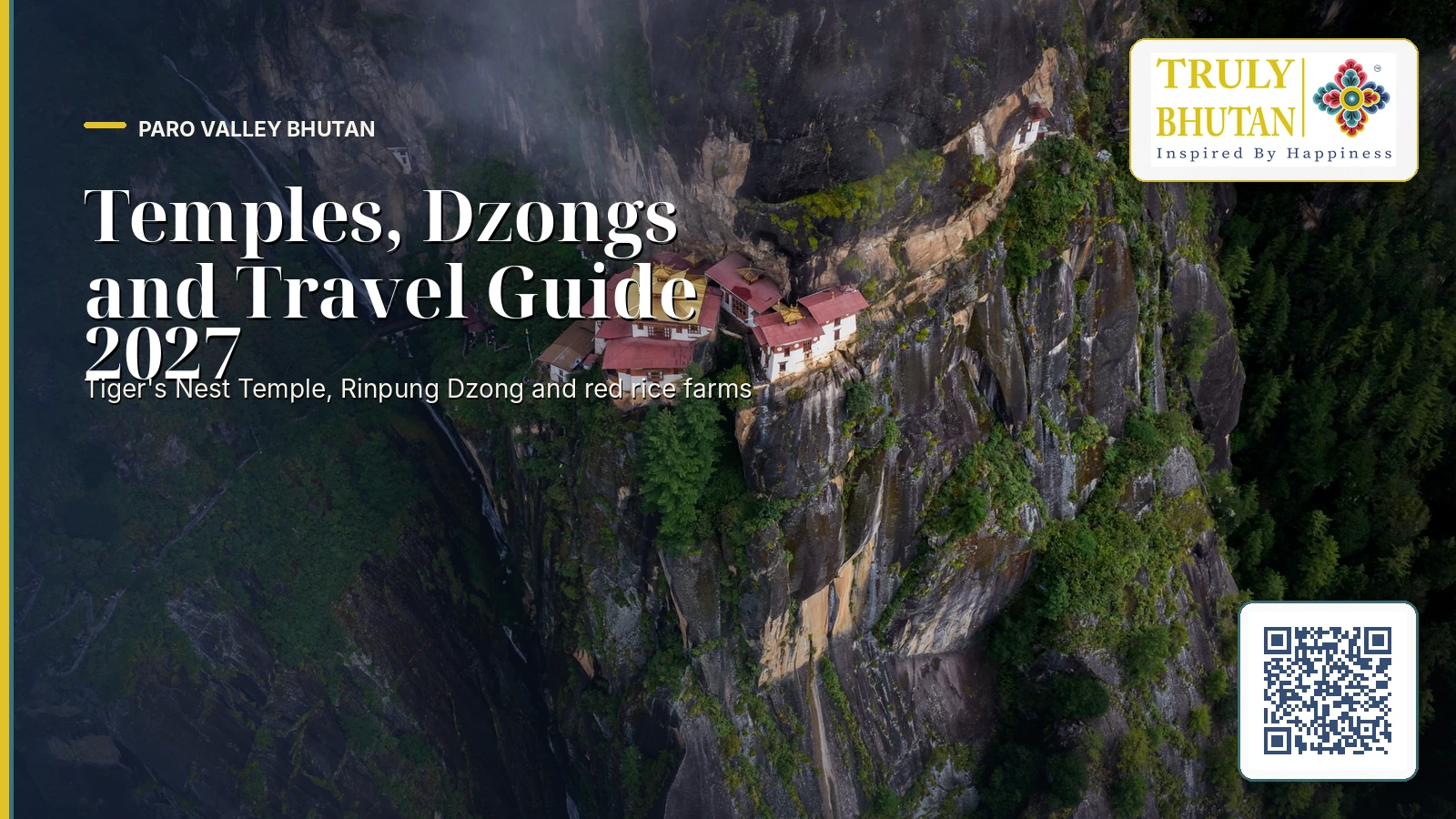
Day Hike or Mule ride to Tigers Nest Monastery. One of the most venerated places precariously perched on the side of a cliff 900m above the Paro valley floor. Guru Rinpoche arrived at spot on a back of tigress and meditated here in a cave and hence it is called ‘Tiger’s Nest’. This site has been recognized as the most spiritual of sites in Bhutan and many eminent saints have meditated in this area. Now all Bhutanese visit it at least once in their lifetime. From the road point the hike up to Taktshang, on a well-maintained path, is up hills takes around 2-3 hours at an average walking speed. On a sunny day please do remember to carry sunscreen, water, walking stick and a hat.
The Lunch and refreshments at the cafeteria that offers an imposing view of the cultural landmark. (The hike can be quite strenuous and a pony ride to the monastery can be arranged at additional cost). The late afternoon is free to relax and enjoy Paro.
After breakfast, bid farewell to your guide and be transferred to the airport for your onward destination
A traditional Bhutanese Buddhist blessing ceremony begins with the selection of an auspicious date by a high lama, based on the birth years of both partners. The Thrisor rite opens the ceremony with purification and protection prayers. Monks burn incense, make offerings to local deities, and chant mantras throughout the programme. The couple exchanges white khadars as symbols of respect and unity, makes offerings to all Buddhas and deities, and receives a long-life blessing from the attending lamas. Both partners wear traditional Bhutanese dress for the full ceremony.
For two foreign nationals, the traditional Buddhist blessing ceremony arranged by Truly Bhutan Travel is a deeply meaningful spiritual and cultural experience and is not a legally recognised marriage under Bhutanese law. Couples wishing to hold a legal ceremony in Bhutan must fulfil the requirements of Bhutan’s Marriage Act and Royal Court of Justice processes, which involve specific documentation and an annual interview process. Truly Bhutan Travel recommends completing civil marriage formalities in your home country before or after the Bhutan ceremony. The blessing ceremony stands fully and completely on its own as a sacred, personal, and profoundly memorable event.
Truly Bhutan Travel arranges a full range of optional ceremony additions on request. These include the exchange of rings and a cake cutting ceremony, the first dance, masked Cham dances performed by monks, a traditional Bhutanese archery match, a world peace prayer ceremony, the offering of 1,000 butter lamps to the Buddhas and deities, and a special fertility blessing for couples wishing to begin a family. The ceremony can also be extended to include spellbinding entertainment for guests and a traditional feast served in the farmhouse setting.
The primary ceremony venue is a traditional Bhutanese farmhouse in Bumthang valley, set in Bhutan’s spiritual heartland with nearby villagers, monks, and lamas in attendance. Alternative venue options include COMO Uma Paro, Six Senses Bhutan, Amankora, Zhiwaling luxury resort, and the Mo Chu riverbank in Punakha for an outdoor riverside ceremony. Truly Bhutan Travel holds exclusive access to sacred and spectacular venues rarely open to the public. Your preferred venue is confirmed during the planning process before departure.
A traditional Bhutanese wedding ceremony must take place on an auspicious date confirmed by a high lama. The lama selects the ceremony date based on the Bhutanese astrological calendar and the birth years of both partners. This is done before the itinerary is finalised and before flights are booked. Truly Bhutan Travel manages the lama consultation process on your behalf as part of the full wedding planning service. The auspicious date selection is a non-negotiable element of a traditional Bhutanese ceremony and ensures the couple begins their journey together under the most favourable spiritual conditions.
Hong Kong stars Tony Leung and Carina Lau chose Bhutan for their wedding on July 21, 2008, drawn by the kingdom’s combination of total privacy, profound spiritual culture, and unspoiled Himalayan landscapes. Bhutan’s strict conservation policy and low visitor numbers meant the couple received a level of seclusion impossible in any other destination. The country’s Buddhist heritage gave the ceremony a spiritual depth no hotel or resort venue elsewhere in Asia replicates. Their choice placed Bhutan firmly on the map as a luxury destination wedding location for discerning couples worldwide.
- Airport pick-up and drop-off by private vehicle.
- 3-star accommodation (4 & 5 stars may require an additional premium update).
- Bhutan visa fee – including all necessary processing
- Route Permit
- Three meals per day during your stay in Bhutan
- A licensed Bhutanese tour guide
- All land transportation by private vehicle
- Camping equipment and haulage for trekking tours
- Sightseeing as per itinerary
- Monuments entrance fees where applicable
- Drinking water
- All internal taxes and charges
- A sustainable development fee of $200. (This sustainable development fee goes towards free education, free healthcare, and poverty alleviation, along with the building of infrastructure.)
- Airfare & Travel Insurance
- Expenses of personal nature, Tips to guides and drivers
- Expenses occurred due to unavoidable events i.e. road wrecks, flight delays etc.
Tour Overview
- Duration: 13 days
- Ceremony day: Day 8, Bumthang
- Primary ceremony venue: Traditional Bhutanese farmhouse, Bumthang
- Route: Paro, Thimphu, Punakha, Trongsa, Bumthang, Tang valley, Wangdue, Paro, Haa valley
- Difficulty: Easy
Planning Timeline
Book at least six months ahead to allow time for auspicious date selection by the high lama, ceremony logistics coordination, traditional dress arrangements, and optional addition planning. Peak spring and autumn wedding windows fill ahead of the season. Truly Bhutan Travel manages all wedding planning logistics from first contact through to ceremony day.
What to Bring
Smart casual clothing for all sightseeing days. Traditional Bhutanese dress for the ceremony day is provided by Truly Bhutan Travel as part of the package. Comfortable walking shoes for temple visits and the Tiger’s Nest hike. Layered clothing for the full altitude range from Punakha at 1,350m to Dochula Pass at 3,088m and Chele La at 3,822m. Truly Bhutan Travel sends a full recommended packing and preparation list on booking confirmation.
Permits
All Bhutan permits and visa processing are arranged by Truly Bhutan Travel as part of the package.
A Ceremony Rooted in Eight Centuries of Tradition
The traditional Bhutanese Buddhist blessing ceremony has its roots in the same religious rites monks have performed across the Himalayan kingdoms for centuries. The mantras chanted, the butter lamps lit, the offerings made, and the khadars exchanged carry weight and meaning accumulated across generations of Buddhist practice. No other destination wedding format in the world connects two people to a spiritual tradition of this depth.
Thirteen Days Across the Kingdom’s Most Iconic Valleys
The 13-day itinerary wraps the ceremony in the full breadth of what Bhutan offers. Tang valley’s Ugyenchholing Palace, Punakha Dzong at the river confluence, Bumthang’s ancient temple circuit, the rarely visited Haa valley via Chele La, and the Tiger’s Nest hike on the final full day build a complete journey around the ceremony. Every valley, every dzong, and every temple adds a new layer to the shared story both partners take home.
Secure Your Ceremony Date for 2026 or 2027
Truly Bhutan Travel arranges a strictly limited number of private wedding ceremonies each year. Auspicious date availability is confirmed by the high lama well ahead of the season. Contact Truly Bhutan Travel now to begin the planning process for your 2026 or 2027 ceremony.
Explore More Luxury Experiences with Truly Bhutan Travel
- For couples who want a shorter luxury Bhutan experience focused on romantic destinations, spa retreats, and premium accommodation, the Honeymoon in Bhutan Tour covers 11 days through Paro, Thimphu, Punakha, Bumthang, and Phobjikha with a Buddhist blessing ceremony on Day 2.
- For couples seeking the ultimate in luxury accommodation alongside their Bhutan journey, the Amankora Odyssey covers 11 days across all five Amankora lodges from $15,950 per person.
- For those who want to extend the post-wedding cultural journey into eastern Bhutan’s most remote valleys and textile traditions, A Tale of Kishuthara covers 18 days from $8,710 per person.
Bhutan Travel Info
Travel Essentials
- Travel/Medical Insurance: Ensure a worry-free journey with Bhutan's dedicated travel and medical insurance plans offered by the Royal Insurance Corporation of Bhutan. Visit RICB for more information.
- Banking: Modern banking facilities are available in urban areas of Bhutan, with banks like Bank of Bhutan Limited, Druk PNB, and Bhutan National Bank. ATMs are common in Thimphu and Phuentsholing, but scarce in rural areas. Complete your banking in major cities.
- Money Matters: Bhutan's currency is the Ngultrum (Nu), which is equivalent in value to the Indian Rupee. Foreign travelers should bring traveler’s cheques or cash, especially USD. Credit cards like Visa and American Express are accepted in most areas.
- Communication: Bhutan's telecommunications are well-developed with internet cafes, mobile phone coverage, and international roaming available in most towns.
- Electricity: Bhutan operates on 230 volts and 50 Hertz. Ensure your devices are compatible with the three types of plugs commonly used.
- Time Zone: Bhutan's time is six hours ahead of GMT.
Health, Safety, and Customs
- Health and Inoculations: Recommended vaccinations include tetanus, typhoid, and hepatitis A. Avoid untreated water and ice cubes; instead, opt for bottled water, which is readily available.
- Safety Precautions: Bhutan is generally safe, but avoid walking alone or staying out late, especially after 9 PM. Secure your belongings, particularly in the capital, Thimphu.
- Customs Regulations: Personal belongings, 1 liter of alcohol, 200 cigarettes, and professional equipment are exempt from customs duty. Importing restricted items, such as wildlife products, antiques, and drugs, is prohibited.
Accommodation, Food, and Shopping
- Accommodation: Bhutan offers a range of accommodations, from quality 3-star to luxury 5-star hotels in places like Thimphu, Paro, and Punakha. Travelers can also opt for camping when venturing beyond urban areas.
- Food: Bhutanese cuisine is rich and spicy, featuring dishes like ema datshi. International cuisine such as Indian, Continental, and Chinese is available in most restaurants, with both vegetarian and non-vegetarian options.
- Shopping: Bhutan offers unique handicrafts, including hand-woven textiles, wooden bowls (Dapas), silver statues, Thangkas, and local postage stamps. Note that the buying and selling of antiques is strictly prohibited.
Travel Kits and Clothing
- Clothing and Essentials: Bhutan's climate is diverse, so dress in layers and pack accordingly. Respectful clothing is required when visiting monasteries and religious sites, and hats should be removed in sacred areas.
- Travel Kits: Pack items like sunscreen, sunglasses, insect repellent, antihistamine cream, anti-diarrhea pills, a flashlight, warm clothes, and a hat. The diverse climate means temperatures range from 20-25°C in summer to below 15°C in winter.
Experiences and Activities
- Photography: Capture Bhutan's stunning landscapes, rural life, and architecture. Indoor photography in sacred sites requires special permission.
- Guides and Interpreters: Bhutan offers certified guides fluent in various languages, ensuring you get the best experience when visiting sacred sites and cultural landmarks.
- Festivals and Holidays: Each district in Bhutan celebrates its unique annual tshechu. Check local schedules to plan your visit around these vibrant festivals.
- Weights and Measures: Bhutan uses metric measurements for weight, with advanced electronic scales commonly found in major cities.


- Best Price Guaranteed
- Book Now, Pay Later
- Local Expertise
- Hand-Picked Hotels
- Value for money
- Quality Service
- Responsible Tourism
- Tailor-Made Holidays
- No Booking Fee
- 100% Visa Approval
- 24/7 Customer Service
- No Hidden Costs