Trip Summary
- Trip Grade: Easy to Moderate
- Duration: 12 Days, 11 Nights
- Trek Days: 3 Days
- Trek Start: Menchugang
- Trek End: Jakar Dzong, Bumthang
- Highest Trek Point: Kitiphu Ridge at 3,870m
- Key Pass: Drangela Pass at 3,600m
- Route: Thimphu, Phobjikha, Trongsa, Bumthang, Dhur Village, Kitiphu, Tharpaling, Punakha, Paro
- Start: Thimphu
- End: Paro
- Best Season: March to May & September to November
- Trip Cost From: $5,920 per person
- Last Updated: March 2026
What Is the Bumthang Owl Trek?
The Bumthang Owl Trek is a three-day moderate trekking route in central Bhutan starting from Menchugang and finishing at Jakar Dzong in Bumthang valley.
The trail passes through Dhur village, one of the largest and most culturally distinct villages in Bumthang, climbs through virgin temperate forest of spruce, hemlock, fir, birch, and rhododendron, crosses Drangela Pass at 3,600m, and descends past the ancient monasteries of Zambhalha, Chuedak, and Tharpaling before ending at Jakar Dzong via the Royal Heritage Trail, the historic route between Trongsa and Bumthang.
The trail takes its name from the owls heard throughout the night at the Schemata camp at 3,450m. Truly Bhutan Travel, a government-licensed luxury operator based in Thimphu with over 17 years of direct Bhutan experience, leads every departure with certified local guides who know Bumthang’s trails, villages, and monastic communities in full detail.
Dhur Village
Dhur village at 2,900m is the largest single village in Bumthang, holding approximately 75 households and around 800 residents. The community divides into three distinct groups: the Kheps, tax-paying farmers with cattle and cropland, the Brokpas, nomadic yak herders who move between valley and highland pastures seasonally, and a third group holding neither category.
The village speaks two dialects, Bumthang Kha and the nomadic Brokpa dialect. A traditional water-driven flourmill at the river below the village has been restored as a working heritage site after its intake channel was destroyed by flash flood. Visiting Dhur gives the most direct contact with Bumthang’s living pastoral and nomadic culture available on any trek in central Bhutan.
The Monasteries
The descent on Day 7 passes three significant monasteries in quick succession. Chuedak Monastery holds 100 statues of Avalokiteshvara in the eleven-headed Chuchizhey form, a collection found nowhere else in Bhutan. Tharpaling is a major Buddhist learning centre with deep historical roots in the Nyingma tradition. Zambhalha adds a third monastic community to the descent route.
The combination of forest trekking, mountain views, and concentrated monastic culture in a single day’s walk distinguishes the Bumthang Owl Trek from any other three-day route in Bhutan.
Best Season
March to May brings rhododendron bloom across the trek route, with peak colour in April and early May. The forest above Dhur village holds multiple rhododendron species at their best during this window.
September to November gives clear skies, dry trails, and excellent Himalayan views from Kitiphu ridge and Drangela Pass. Both seasons suit the full 12-day itinerary.


The flight into Paro on our national carrier, Druk Air, is a befitting introduction to the spectacular beauty of our country. In clear weather, magnificent views of the world’s highest peaks give way to the lush green Paro valley as you land. First gift from Bhutan will be the cool, clean fresh air as you step out of the plane. After clearing customs and visa control you will be brief by our guide and transferred to Thimphu, the capital city of Bhutan. The drive will take around 1 hour. Thimphu has a population of about 100,000. The town is made up of just three lines of shops and is the only capital in the world without traffic lights. In the evening, we will visit the Handicrafts Emporium, where all types of Bhutanese handicrafts are made and sold, overnight at Hotel.
In the morning, we will visit the folk Heritage Museum, which is dedicated to connecting people to the Bhutanese rural past though exhibition of items and artifacts used in rural households, Textile Museum, where the art of traditional weaving is still kept alive and preserved though exhibition and has a good collection of old textiles which are rich in it colors and designs. Also visit to Bhutanese Handmade Paper Factory. After lunch, depart for Punakha, where the road climbs steeply though a forest of pine and cedar, festooned with hanging lichen high up near Dochula pass (3050m). This pass often offers panoramic views of the Himalayan mountain ranges. After stopping for a tea and view, we descend along a series of hairpin bends to the fertile valley of Wangdue, one of the major towns and district headquarters of Western Bhutan where we make a short stop to view the Wangdue Phodrang Dzong dramatically located on the spur of a hill at the confluence of the Tsang Chu and Dang Chu rivers. From here a gradual climb takes you into the valley of Gangtey (Phobjikha). Gangtey lies towards the East of Punakha and Wangdue on the flanks of the Black Mountains. These is and old monastery of Gangtey Gompa dating back to the 17th century. A few kilometers past the Gompa on the valley floor are the fascinating valley of Phobjikha. The gentle sloping hillsides of Phobjikha are described as “the most beautiful valley in the Himalayas”. This is the winter home of black-necked cranes that migrate from arid plains in the north to pass winter in milder and lower climate, Overnight at hotel.
Today we start early for the fabulous drive to the central valleys of Bhutan. The drive to Bumthang via Trongsa is about 6 hours crossing over Pele La Pass (3300m) and Youtongla Pass (3400m). The Central Road, across the Black Mountains was completed 30years ago, and it bough about great changes to the people in central Bhutan. We then climb steadily passing through semi-tropical vegetation and then to Pelela Pass (3300m) with an alpine environment of rhododendrons and dwarf bamboo. This pass is traditionally considered the boundary between west and east Bhutan. If the weather is clear, the Himalayan range can be seen, particularly the peak of Jhomolhari (7314m) to the west. En route we cross Chendbji Chorten built many centuries ago to suppress a demon. After lunch, we go out to view the impressive Trongsa Dzong, ancestral home of the ruling dynasty. In olden days the Dzong commanded the passage between East and West Bhutan. We then drive to Bumthang valley (described as “one of the most beautiful spot in the Himalayas” across the Youtongla Pass (3400m), overnight at hotel.
This is one of the most spectacular valleys in Bhutan and also the heartland of Buddhism. The Guru and his lineage of Terton (treasure finders), have led to the sprouting of many temples in the valley. In the morning we visit Jambay Lhakhang (one of the oldest temples in Bhutan built in 7th century) and visit Kurjey Lhakhang (where the Guru Rinpoche subdued a local demon and left his body imprint on a rock). ). Hike to visit the Tamshing Monastery (one of the oldest monastic schools built by Terton Pema Lingpa) After lunch hike to Tangbi valley across the suspension bridge and visit the Tangbi Lhakhang built in the 14th century, on the way back visit Jakar Dzong, (seat of the district administration). Evening stroll in Chamkhar Town. Dinner and overnight at hotel.
Trek day 01. Start at Menchugang and visit the biggest village in Bumthang, called Dhur at an elevation of 2900 meters above sea level. The village consists of about 75 households with a recorded population of around 800 people. The single village has three types of inhabitants the Kheps (tax payers) having cattle and farmland; Brokpas (nomads) having Yaks and a third group having either. This village has two different dialects, the usual Bumthang Kha and the Broke (nomadic dialects). A walk above the village to get the overall view of the village is interesting. Climb down to the river where the traditional water-driven flourmill can be visited. This traditional water driven flourmill used to be a source of livelihood for the people of Dhur village. It has been abandoned after the intake channel was washed away by flashflood. The programmed has been rehabilitated as it symbolizes an authentic Bhutanese tradition. Continue the trek uphill through the blue pine forest and reach the camp at Schemata (3450m) in hemlock and juniper forest. The hauling of owls through the night is quite common, hence the name the Owl Trek.
Trek day 02. Trekking through the virgin forest of huge temperate trees like spruce, hemlock, fir, birch and many species of rhododendron makes you breathe the real wilderness of Bhutan. Bamboos are the mains under growth of this wild forest. During the months of April and May, the rhododendrons are in full bloom. In about two hours, you will arrive at the Drangela Pass (3600m). Ascending the Kitiphu ridge brings you to an altitude of 3870m for the night camp. If weather favors you, have a wonderful view of the valley and the panoramic snow caped Himalayan Mountains. The highest mountain of Bhutan Gangkar puensum (7541m) stands right in front of you when you are on the peak of Kitiphu (4000m).
Trek day 03. The magnificent sunrise in the morning is a new experience in Bhutan. Climb down to the monasteries of Zambhalha, Chuedak and Tharpaling that brings you to the religious life of monk hood, the historical Buddhist learning center. Chuedak monastery has 100 Avaloketeshvara in the form of Chuchizhey (eleven heads) that you will see nowhere else in the country. Afternoon, walk along the ridge of Kikila and finally follow the traditional trek route between Trongsa and Bumthang (the Royal Heritage Trail). The best view of Jakar Dzong will end your three-day trek with many interesting and unforgettable memories. In Jakar your car will be waiting to drive you to hotel in Bumthang. Dinner and overnight in hotel.
The drive to Punakha via Wangdue takes about 7hours over the Pelela pass and Youtongla pass. Lunch served at Chendbji Chorten. Dinner and overnight at hotel.
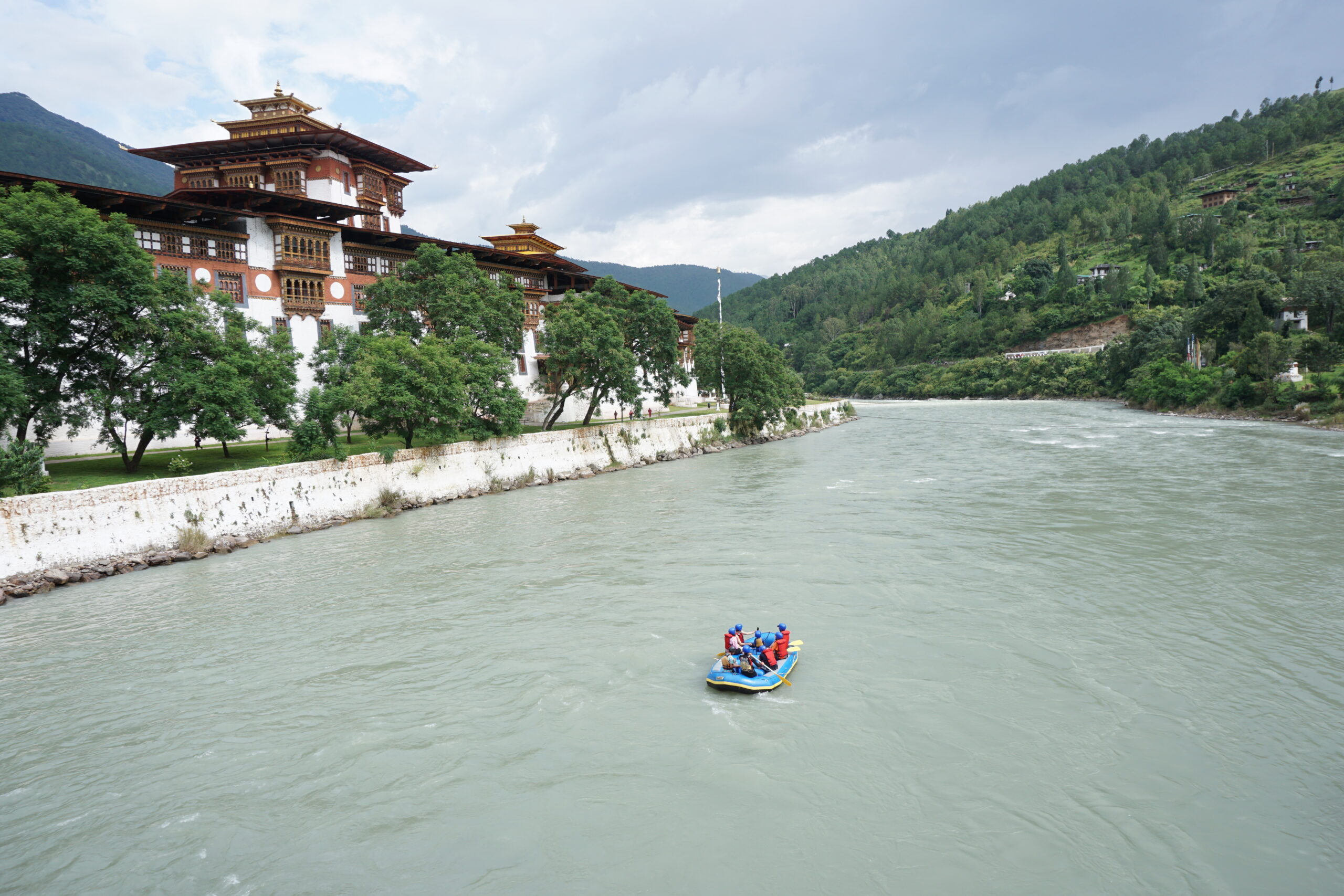
After breakfast, we drive to visit Punakha Dzong, winter seat of the Je Khenpo and ancient capital of Bhutan, remarkably located between the rivers of the Mo (Female) Chu and Pho (Male) Chu. The Dzong is open to visitors only in summer when the Je Khenpo and the Monk Body are in Thimphu. After visiting Punakha Dzong drive to Thimphu over the Dochula Pass. Check in at hotel in Thimphu. After lunch visit National Memorial Chorten, built in honor of our late King Jigme Dorji Wangchuk; visit the Zulikha Nunnery, visit the National Library stocked with ancient manuscripts and collection of books and pay a visit to BBS tower to view Thimphu city and Takin Zoo (National Animal of Bhutan). Evening drive to Paro. Dinner and overnight at hotel.
Drive to Drukgyel Dzong (a ruined fortress – 16 km away from Paro town). The Dzong, although in ruins, holds great historical significance. It was from this fortress that the Bhutanese repelled many Tibetan invasions. The name means the victorious Bhutanese. This spot offers a magnificent vista of Mount Chomolhari, “Mountain of Goddess” (7329 m). Visit a typical Bhutanese farmhouse on the way back. A short distance south of the road is Kyichu Lhakhang, one of the oldest temples in Bhutan, built in 7th century. This temple is said to have been built in 659 by King Songtsen Gampo of Tibet. It holds down the left foot of an ogress whose body is so large that it covers Bhutan and most of eastern Tibet. Also visit Rinpung Dzong. Built in 1646 by Zhabdrung Ngawang Namgyal, the first temporal ruler of Bhutan, it is now houses of the Paro monastic body and the office of the governor and Thrimpon (Judge) of Paro district. It is the venue of the Paro Tsehchu festival held once every year. Then visit Ta Dzong an ancient watchtower. This Dzong was converted into the National Museum in 1968. The museum boasts antique Thangkha, textiles, weapons and armor, household objects and rich assortment of natural and historic artifacts. Evening stroll through the main town of Paro. Dinner and overnight at hotel.
Morning drive till Satsam Chorten to hike up to the Taktsang monastery (Tiger’s nest). The hike up to the cafeteria will take around one and half hour. At the viewpoint enjoy the stunning view of the monastery, where Guru Padmasambhava landed on the back of a tigress in the 8th century. After lunch at the café walk back to the road point where your car will pick you up and then drive to your hotel. Evening, do some last minute shopping. Dinner and overnight at hotel.
In the morning our representatives from Bhutan Holiday will escort you to Paro International Airport and bid Good-bye and pleasant flight back home.
The Bumthang Owl Trek is a three-day moderate trekking route in central Bhutan running from Menchugang through Dhur village, over Drangela Pass at 3,600m, to the ancient monasteries of Tharpaling and Chuedak before finishing at Jakar Dzong. The trek takes its name from the owls heard calling through the night at the first camp at Schemata at 3,450m in the hemlock and juniper forest above Dhur village. The nocturnal calling of owls in this dense temperate forest is a consistent feature of the first camp night throughout the trekking season.
Dhur village at 2,900m is the largest single village in Bumthang, holding approximately 75 households and around 800 residents. Unlike most Bhutanese villages, Dhur holds three distinct community types within one settlement: Kheps, traditional farming households with cropland and cattle, Brokpas, nomadic yak herders who move between valley and highland pastures, and a third group combining elements of both. The village speaks two separate dialects. A traditional water-driven flourmill at the river below the village has been restored as a working heritage site. No other village on any Bhutan trekking route holds this combination of nomadic and settled culture within a single community.
The descent on Day 3 of the trek passes three monasteries. Zambhalha Monastery sits in the upper forest zone on the descent from Kitiphu ridge. Chuedak Monastery holds 100 statues of Avalokiteshvara in the eleven-headed Chuchizhey form, a collection found nowhere else in Bhutan. Tharpaling is a major historical Buddhist learning centre with deep Nyingma lineage connections and an active monastic community. After Tharpaling, the trail joins the Royal Heritage Trail between Trongsa and Bumthang and follows the Kikila ridge to Jakar Dzong, giving the best elevated view of the White Bird Dzong at the end of the three days.
The night camp sits on Kitiphu ridge at 3,870m. The Kitiphu peak itself reaches 4,000m and is a short optional extension above the camp. On clear days from the Kitiphu area, Gangkhar Puensum at 7,497m, the highest peak in Bhutan and the highest unclimbed mountain in the world, is visible directly to the north. The panoramic Himalayan views from this ridge combine with the sunrise experience the following morning to make the Kitiphu camp one of the most rewarding high points on any central Bhutan trekking route.
The trek is graded easy to moderate. The three days on trail cover gradual forest ascents, a single significant pass at Drangela at 3,600m, and a long ridge descent on Day 3. Daily walking takes four to six hours at a comfortable pace. Good general fitness and comfortable trekking boots are sufficient. The highest sleeping altitude is the Kitiphu ridge camp at 3,870m, which some trekkers find cool at night. A sleeping bag rated to minus 10 degrees Celsius is recommended. No prior trekking experience is required for physically fit participants.
The temperate forest between Dhur village and Kitiphu ridge holds Himalayan Monal pheasant, which is regularly sighted on the approaches to Kitiphu in the morning and evening. Multiple rhododendron species bloom across the full altitude range of the trek from April through May. The Kitiphu area holds bird species typical of Bhutan’s central highland forests including various laughingthrush species, nuthatches, and high-altitude warblers. The forest camp at Schemata provides the owl encounters the trek is named for.
- Airport pick-up and drop-off by private vehicle.
- 3-star accommodation (4 & 5 stars may require an additional premium update).
- Bhutan visa fee – including all necessary processing
- Route Permit
- Three meals per day during your stay in Bhutan
- A licensed Bhutanese tour guide
- All land transportation by private vehicle
- Camping equipment and haulage for trekking tours
- Sightseeing as per itinerary
- Monuments entrance fees where applicable
- Drinking water
- All internal taxes and charges
- A sustainable development fee of $200. (This sustainable development fee goes towards free education, free healthcare, and poverty alleviation, along with the building of infrastructure.)
- Airfare & Travel Insurance
- Expenses of personal nature, Tips to guides and drivers
- Expenses occurred due to unavoidable events i.e. road wrecks, flight delays etc.
Tour Overview
- Duration: 12 days, 11 nights
- Trek days: 3 days, Days 5 to 7
- Trek start: Menchugang
- Trek end: Jakar Dzong, Bumthang
- Highest point: Kitiphu ridge at 3,870m
- Key pass: Drangela Pass at 3,600m
- Full route: Thimphu, Phobjikha, Trongsa, Bumthang, Dhur, Kitiphu, Tharpaling, Punakha, Paro
- Difficulty: Easy to moderate
Best Months
March to May for rhododendron bloom throughout the forest trail and warm trekking conditions. September to November for clear Himalayan views from Kitiphu ridge and Drangela Pass, dry trails, and crisp camp nights. Both windows suit the full 12-day itinerary.
What to Bring
Trekking boots with ankle support, a sleeping bag rated to minus 10 degrees Celsius for the Kitiphu ridge camp at 3,870m, layered clothing for temperatures from warm Bumthang valley days to cold ridge nights, waterproof jacket, sunscreen, sunglasses, and a small day pack for the trekking days. Truly Bhutan Travel provides tents, sleeping mats, camp meals, and all group trekking equipment. A full gear list is sent on booking confirmation.
Permits
All Bhutan permits and visa processing are arranged by Truly Bhutan Travel as part of the package.
Three Trek Days With Three Completely Different Characters
Day 5 is a cultural day on trail. Dhur village, the flourmill, and the climb through blue pine into hemlock and juniper forest give a complete picture of Bumthang’s living pastoral heritage. Day 6 is an environmental day. The virgin temperate forest, the rhododendron bloom in season, the Drangela Pass crossing, and the arrival at the Kitiphu ridge camp with Gangkhar Puensum on the horizon give everything that defines central Bhutan trekking. Day 7 is a spiritual day. Three monasteries, the Royal Heritage Trail, and the final view of Jakar Dzong from above bring the trek to an end through the richest concentration of monastic culture on any three-day route in Bhutan.
A Complete Central Bhutan Journey
The nine non-trekking days of this itinerary cover the full arc of western and central Bhutan. Phobjikha’s crane valley, Trongsa’s royal dzong, Bumthang’s temple circuit, Punakha Dzong at the river confluence, and the Tiger’s Nest hike in Paro build a complete cultural and natural picture around the three core trek days. The itinerary starts in Thimphu and ends in Paro, giving a clean linear route without backtracking on the main driving sections.
Secure Your Place for 2026 & 2027
Spring and autumn 2026 & 2027 departures are open now. Truly Bhutan Travel accepts a limited number of guests on this exclusive central Bhutan trekking itinerary. Peak season slots fill ahead of the season. Confirm your place before your preferred travel window closes.
Explore More Luxury Treks and Cultural Tours with Truly Bhutan Travel
- For trekkers who want a longer and more immersive Bumthang valley trek combining sacred temples and alpine forest, the Bumthang Cultural Trek covers 11 days through Tang valley, Ugyenchholing Palace, and Mebar Tso from $5,515 per person.
- For those who want to combine a central Bhutan trekking visit with the Jambay Lhakhang Drup fire ceremony festival in October, the Jambay Lhakhang Drup Festival Tour covers 13 days from $5,310 per person.
- For trekkers who want the full western Bhutan alpine trekking experience with high passes and Himalayan base camp access, the Jomolhari Trek covers 13 days from $5,730 per person.
- Browse all luxury treks and cultural itineraries at trulybhutan.com/itinerary
Bhutan Travel Info
Travel Essentials
- Travel/Medical Insurance: Ensure a worry-free journey with Bhutan's dedicated travel and medical insurance plans offered by the Royal Insurance Corporation of Bhutan. Visit RICB for more information.
- Banking: Modern banking facilities are available in urban areas of Bhutan, with banks like Bank of Bhutan Limited, Druk PNB, and Bhutan National Bank. ATMs are common in Thimphu and Phuentsholing, but scarce in rural areas. Complete your banking in major cities.
- Money Matters: Bhutan's currency is the Ngultrum (Nu), which is equivalent in value to the Indian Rupee. Foreign travelers should bring traveler’s cheques or cash, especially USD. Credit cards like Visa and American Express are accepted in most areas.
- Communication: Bhutan's telecommunications are well-developed with internet cafes, mobile phone coverage, and international roaming available in most towns.
- Electricity: Bhutan operates on 230 volts and 50 Hertz. Ensure your devices are compatible with the three types of plugs commonly used.
- Time Zone: Bhutan's time is six hours ahead of GMT.
Health, Safety, and Customs
- Health and Inoculations: Recommended vaccinations include tetanus, typhoid, and hepatitis A. Avoid untreated water and ice cubes; instead, opt for bottled water, which is readily available.
- Safety Precautions: Bhutan is generally safe, but avoid walking alone or staying out late, especially after 9 PM. Secure your belongings, particularly in the capital, Thimphu.
- Customs Regulations: Personal belongings, 1 liter of alcohol, 200 cigarettes, and professional equipment are exempt from customs duty. Importing restricted items, such as wildlife products, antiques, and drugs, is prohibited.
Accommodation, Food, and Shopping
- Accommodation: Bhutan offers a range of accommodations, from quality 3-star to luxury 5-star hotels in places like Thimphu, Paro, and Punakha. Travelers can also opt for camping when venturing beyond urban areas.
- Food: Bhutanese cuisine is rich and spicy, featuring dishes like ema datshi. International cuisine such as Indian, Continental, and Chinese is available in most restaurants, with both vegetarian and non-vegetarian options.
- Shopping: Bhutan offers unique handicrafts, including hand-woven textiles, wooden bowls (Dapas), silver statues, Thangkas, and local postage stamps. Note that the buying and selling of antiques is strictly prohibited.
Travel Kits and Clothing
- Clothing and Essentials: Bhutan's climate is diverse, so dress in layers and pack accordingly. Respectful clothing is required when visiting monasteries and religious sites, and hats should be removed in sacred areas.
- Travel Kits: Pack items like sunscreen, sunglasses, insect repellent, antihistamine cream, anti-diarrhea pills, a flashlight, warm clothes, and a hat. The diverse climate means temperatures range from 20-25°C in summer to below 15°C in winter.
Experiences and Activities
- Photography: Capture Bhutan's stunning landscapes, rural life, and architecture. Indoor photography in sacred sites requires special permission.
- Guides and Interpreters: Bhutan offers certified guides fluent in various languages, ensuring you get the best experience when visiting sacred sites and cultural landmarks.
- Festivals and Holidays: Each district in Bhutan celebrates its unique annual tshechu. Check local schedules to plan your visit around these vibrant festivals.
- Weights and Measures: Bhutan uses metric measurements for weight, with advanced electronic scales commonly found in major cities.


- Best Price Guaranteed
- Book Now, Pay Later
- Local Expertise
- Hand-Picked Hotels
- Value for money
- Quality Service
- Responsible Tourism
- Tailor-Made Holidays
- No Booking Fee
- 100% Visa Approval
- 24/7 Customer Service
- No Hidden Costs