BHUTAN ‘The enchanted kingdom where happiness is more than a dream is a small Himalayan landlocked country situated in the eastern slopes of the Himalayan range with China in the north and Indian states of Bengal and Assam in the south, Sikkim in the west and Arunachal Pradesh in the east. It is the world’s youngest democratic country offered to the citizens of Bhutan by the 4th King with the vision of “GROSS NATIONAL HAPPINESS ” as the country’s progress and growth are measured through a happiness index rather than monetary.
Bhutan is known to the world as rough and mountainous terrain with the most diverse flora and fauna, natural landscape, architecture, wonderful biodiversity, and well preserved of its unique culture. It is divided into three physical zones “greater Himalayas in the north, the inner Himalayas in the centers, and the southern foothills in the south”.
Therefore Bhutan is the world’s top travel destination for fortunate travelers to explore the country’s hidden culture and unique living standard of life.
Flight to Bhutan is one of the most spectacular in the entire Himalayas. Whether flying along the Himalayan range from Kathmandu or over the foothills from Kolkata, each flight is a mesmerizing aeronautical feat and offers an exciting descent into the Kingdom.
On arrival at Paro airport, immigration and customs formalities and then received by our representative and transfer to the hotel.
The evening takes a stroll around the town’s main street.
Overnight at the hotel in Paro.
Places and attractions:
- Rinpung Dzong
- Drukgyel Dzong
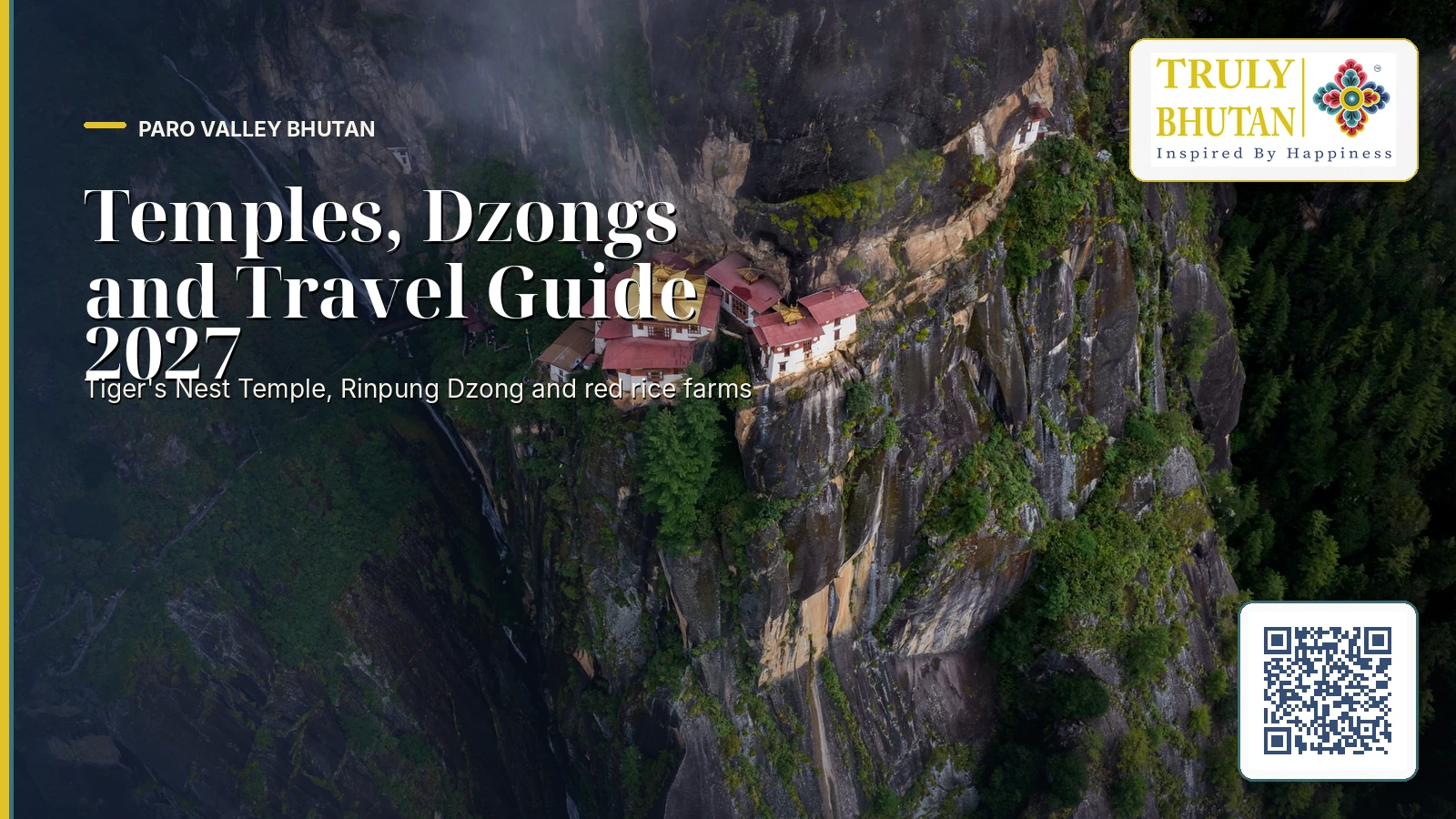
- Taktshang
- Kyichu Lhakhang
- Kila Gompa
- Dungtse Lhakhang
- Tachog Lhakhang
- Dzongdrakha
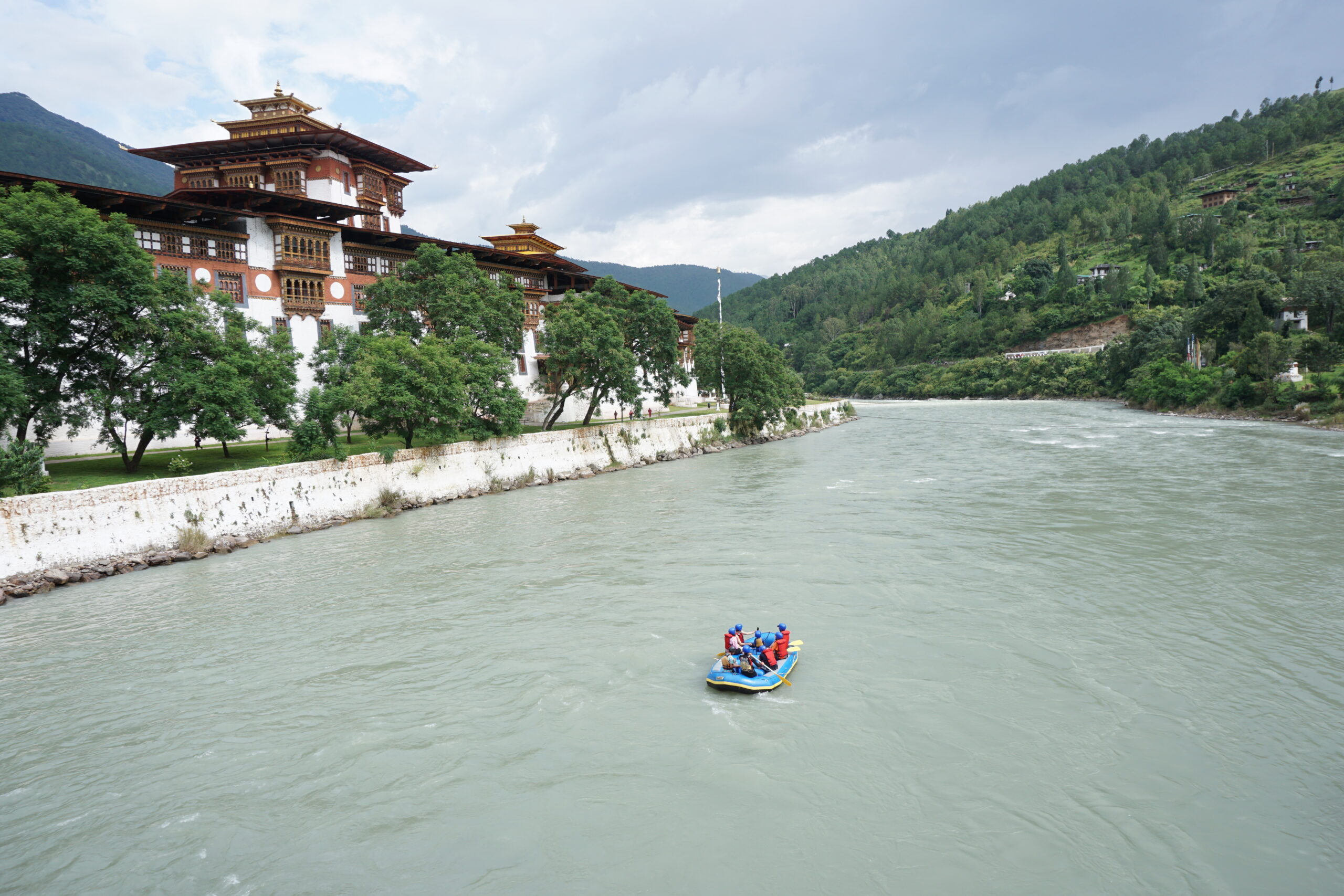
After breakfast, visit Ta Dzong (National Museum) and then walk down the trail to visit Rinpung Dzong which has a long and fascinating history.
Afternoon visit Drukgyel Dzong, the ruined fortress from where Bhutanese repelled several invasions by Tibetan armies. Then visit a traditional farmhouse which offers good insight into the lifestyle of local people.
In the evening, visit Kyichu Lhakhang, one of the oldest and most sacred shrines of the Kingdom.
Places and attractions:
- Rinpung Dzong
- Drukgyel Dzong
- Taktshang
- Kyichu Lhakhang
- Kila Gompa
- Dungtse Lhakhang
- Tachog Lhakhang
- Dzongdrakha
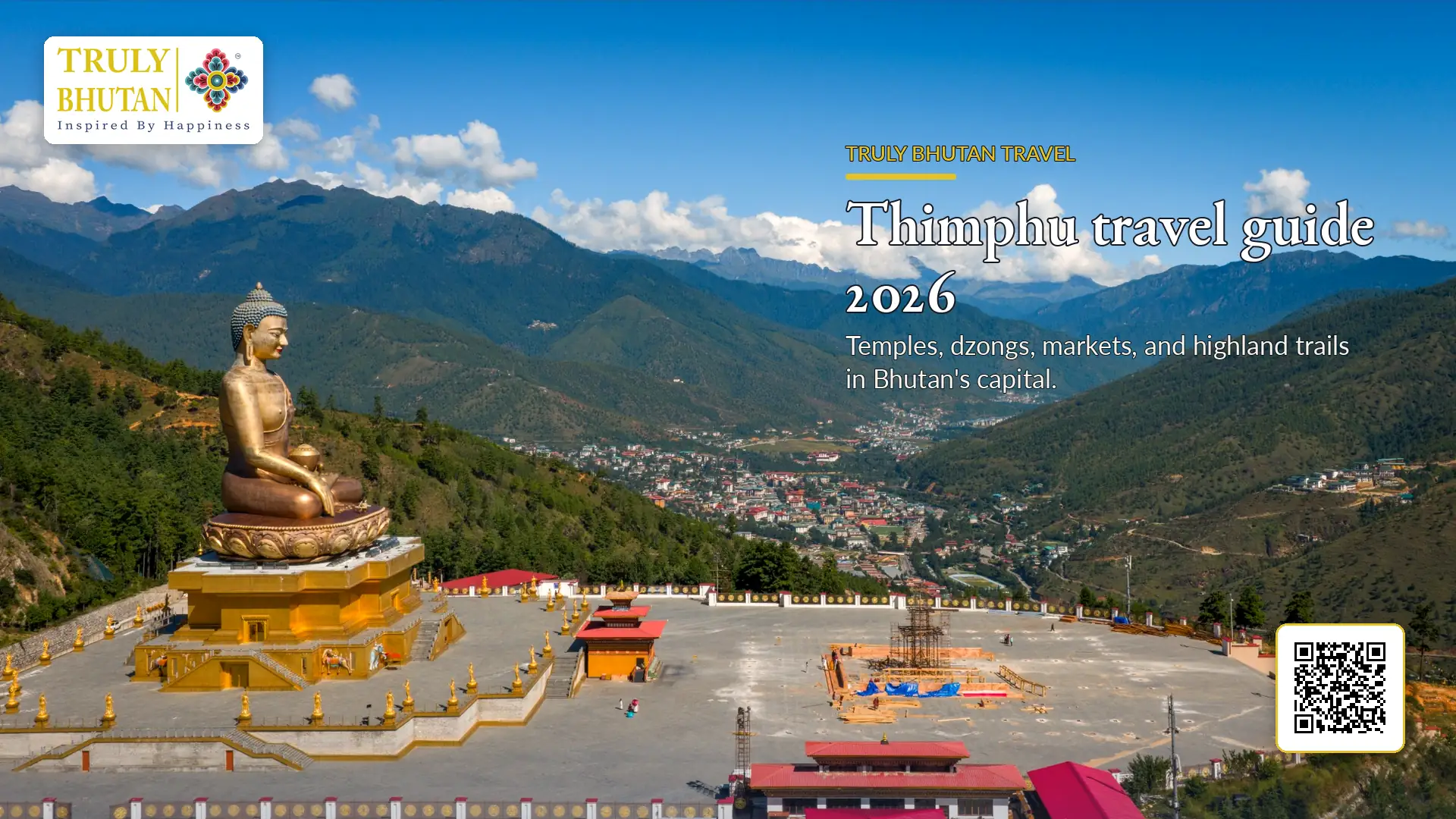
After breakfast proceeds to Thimphu, the modern capital town of Bhutan. En route stop at Chuzom (confluence) where the Paro river joins the Thimphu river. Nearby Thimphu, visit Simtokha Dzong, the oldest fortress of the Kingdom which now houses the School for Buddhist studies.
Afternoon in Thimphu, visit King’s Memorial Chorten and Trashichhodzong, a beautiful medieval fortress/monastery. Then, visit Handicrafts Emporium, and Textile and Folk Heritage Museum followed by visiting the local market.
Overnight at the hotel in Thimphu.
Places and attractions:
- Tashichho Dzong
- Semthoka Dzong
- Dochu La Pass
- Memorial Chorten
- Changangkha Lhakhang
- Zangdopelri
- The Tallest Buddha Image
- Tango And Cheri Monasteries
- The Handicrafts Emporium
- Traditional Medicine
- Zorig Chusum Institute
- National Library
- Weekend Market
- Botanical Garden
- Thadrak Goemba
- Tashigang Goemba
- Chizhing Samtencholing Lhakhang
In the Morning visit National Library, Painting School, and Traditional Medicine Institute in Thimphu.
After lunch, drive to Punakha, the old capital town of Bhutan. Stop en route at Dochula pass (3,050m) which heralds the most enchanting views of Bhutan.
On arrival, check-in in at the hotel. In the evening visit Punakha Dzong, the fortress of the 17th century, and later visit Khamsm Yulley Namgyal Chorten.
Overnight at the hotel in Punakha.
Places and attractions:
- Punakha Dzong
- Khamsum Yulley
- Talo Goenpa
- Nalanda Buddhist College
- Chorten Nyingpo Lhakhang
- Sangchen Dorji Lhuendrup
- Limukha Village
- Ritsha Village
After breakfast drive to Gangtey via Wangduephodrang. Visit majestic Wangdue Dzong and an interesting local market.
Further ahead pass through dense forests and oak, and rhododendron trees, reaching Gangtey (Phobjikha).
In the evening takes a walk around Gangtey village and visits Gangtey Gompa, the only Nyingmapa monastery in this region.
Overnight at Gangtey.
Places and attractions:
- Dargay Goemba
- Gangtey Gompa
- Temple Of Sha Radap
- Gaselo & Nahee Village
- Adha And Rukha Village
- Shaa Region Of Wangdiphodrang
- Bhey Langdrag Nye
Morning explores the Phobjikha valley which is famous for Black Necked Cranes. The cranes migrate here from the Central Asiatic plateau to escape its harsh winters.
After lunch drive to Trongsa crossing 3,300m high Pele la pass. Evening visit Trongsa market.
Overnight at the lodge in Trongsa.
Places and attractions:
- Trongsa Dzong
- Ta Dzong
- Thruepang Palace
- Kuenga Rabten Palace
- Chendebji Chorten
- Trongsa Tshechu
Morning visits Trongsa Dzong, the masterpiece of Bhutanese architecture, and see Ta Dzong, the watch tower, built to defend this Dzong and the surrounding region.
After lunch, proceed to Bumthang, the religious heartland of the nation. Evening at leisure.
Dinner and overnight at the lodge in Bumthang.
Places and attractions:
- Jakar Dzong
- Kurjey Lhakhang
- Jambay Lhakhang
- Ura Valley
- Red Panda Brewery
- Mebartsho
Bumthang is the general name given to the combination of four valleys – Chumey, Choekhor, Tang, and Ura with altitudes varying from 2,600m to 4,000m. It is home to many prominent Buddhist temples and monasteries.
Visit Tamshing Lhakhang, the treasure house of interesting religious Buddhist paintings. Then visit Jakar Dzong, the administrative center of the valley.
Afternoon visit Kurje Lhakhang, one of the most sacred places. Later visit Jambay Lhakhang, the ancient monastery dating from the introduction of Buddhism in the country.
Evening visit local shops. Overnight at the lodge in Bumthang.
Places and attractions:
- Jakar Dzong
- Kurjey Lhakhang
- Jambay Lhakhang
- Ura Valley
- Red Panda Brewery
- Mebartsho
The morning after visiting Bumthang market, drive to Wangdue. Lunch would be served en route at one of the famous restaurants in Trongsa town.
The evening takes a stroll around Wangdue town, visiting shops, and local markets and mingling with people.
Overnight at the hotel in Wangduephodrang.
Places and attractions:
- Dargay Goemba
- Gangtey Gompa
- Temple Of Sha Radap
- Gaselo & Nahee Village
- Adha And Rukha Village
- Shaa Region Of Wangdiphodrang
- Bhey Langdrag Nye
Morning excursion to Chimi Lhakhang, situated on a hillock in the center of the valley, is dedicated to Lama Drukpa Kuenley, who in the late 15th century used humor, songs, and outrageous behavior to dramatize his teachings and due to this also known as ‘ Divine Madman’. This temple is also known as the temple of fertility. It is widely believed that couples who do not have children and want one if they pray at this temple are usually blessed
with a child very soon.
It is about a 30-minute walk across the field from the road to the temple. The trail leads across rice fields to the tiny settlement of Pana, meaning ‘field’. It then follows a tiny stream downhill to Yoaka and across more fields before making a short climb to Chimi
Lhakhang.
In the afternoon drive to Paro.
Places and attractions:
- Rinpung Dzong
- Drukgyel Dzong
- Taktshang
- Kyichu Lhakhang
- Kila Gompa
- Dungtse Lhakhang
- Tachog Lhakhang
- Dzongdrakha
Start the day early to drive to Haa via Chele-la pass. 4 Km away at Bondey village the road to Haa diverts towards the right-hand side and the climb up towards the Chele-la pass starts. After driving through blue pine & rhododendron forest for 45 km, reach Chele-la pass ( 4200 meters).
From this point, one can have superb views of Mount. Chomolhari & Jichu Drakey. This is a very good place to walk around for a few minutes enjoying the view. Drive on to Haa, descending all the way for another 22 km (under an hour’s drive), finally reaching Haa. The Haa Dzong is presently occupied by the military, but the view from outside is stunning. After a picnic lunch visit the famous Monastery Lhakhang Karpo (White Temple) followed by a visit to Lhakhang Nagpo (Black Temple). The central shrine in Lhakhang Nagpo is said to have no difference from that of Lhasa JOWO in Tibet. The construction of the Lakhang Karpo is believed to have been assisted by the locality. As a result, the place came to be locally known as ‘Hay’ meaning’ surprise’ which later became ‘Haa’ due to the differences in interpretations and pronunciations of different people over time.
The three giant hills looming over the fringes of Haa valley were called ‘Me Rig Puen Sum’, especially after the incident of the Lhakhang Kdarpo construction. Today the three hills are popularly known as ‘Rig Sum Goenpa’ signifying three deities-Jambayang Chana Dorji and Chenrezig.
Later, other Buddhist saints like Guru Rinpoche and ‘Machi Labdorn’ came to the Jungney Drag in Haa and blessed the locality. The principal religion followed is Drukpa Kagyud. After the arrival of Shabdrung Ngawang Namgyel, the chief guardian deity of Haa became Ap Chundu. Later in the afternoon drive to Paro.
Overnight at the hotel in Paro.
Places and attractions:
- Wangchulo Dzong
- Chhundu Lhakhang
- Cheli La Pass
- Lhakhang Karpo
- Lhakhang Nagpo
- Tachu Goemba
After breakfast transfer to the airport for the flight abroad.
- Airport pick-up and drop-off by private vehicle.
- 3-star accommodation (4 & 5 stars may require an additional premium update).
- Bhutan visa fee – including all necessary processing
- Route Permit
- Three meals per day during your stay in Bhutan
- A licensed Bhutanese tour guide
- All land transportation by private vehicle
- Camping equipment and haulage for trekking tours
- Sightseeing as per itinerary
- Monuments entrance fees where applicable
- Drinking water
- All internal taxes and charges
- A sustainable development fee of $200. (This sustainable development fee goes towards free education, free healthcare, and poverty alleviation, along with the building of infrastructure.)
- Airfare & Travel Insurance
- Expenses of personal nature, Tips to guides and drivers
- Expenses occurred due to unavoidable events i.e. road wrecks, flight delays etc.
Bhutan Travel Info
Travel Essentials
- Travel/Medical Insurance: Ensure a worry-free journey with Bhutan's dedicated travel and medical insurance plans offered by the Royal Insurance Corporation of Bhutan. Visit RICB for more information.
- Banking: Modern banking facilities are available in urban areas of Bhutan, with banks like Bank of Bhutan Limited, Druk PNB, and Bhutan National Bank. ATMs are common in Thimphu and Phuentsholing, but scarce in rural areas. Complete your banking in major cities.
- Money Matters: Bhutan's currency is the Ngultrum (Nu), which is equivalent in value to the Indian Rupee. Foreign travelers should bring traveler’s cheques or cash, especially USD. Credit cards like Visa and American Express are accepted in most areas.
- Communication: Bhutan's telecommunications are well-developed with internet cafes, mobile phone coverage, and international roaming available in most towns.
- Electricity: Bhutan operates on 230 volts and 50 Hertz. Ensure your devices are compatible with the three types of plugs commonly used.
- Time Zone: Bhutan's time is six hours ahead of GMT.
Health, Safety, and Customs
- Health and Inoculations: Recommended vaccinations include tetanus, typhoid, and hepatitis A. Avoid untreated water and ice cubes; instead, opt for bottled water, which is readily available.
- Safety Precautions: Bhutan is generally safe, but avoid walking alone or staying out late, especially after 9 PM. Secure your belongings, particularly in the capital, Thimphu.
- Customs Regulations: Personal belongings, 1 liter of alcohol, 200 cigarettes, and professional equipment are exempt from customs duty. Importing restricted items, such as wildlife products, antiques, and drugs, is prohibited.
Accommodation, Food, and Shopping
- Accommodation: Bhutan offers a range of accommodations, from quality 3-star to luxury 5-star hotels in places like Thimphu, Paro, and Punakha. Travelers can also opt for camping when venturing beyond urban areas.
- Food: Bhutanese cuisine is rich and spicy, featuring dishes like ema datshi. International cuisine such as Indian, Continental, and Chinese is available in most restaurants, with both vegetarian and non-vegetarian options.
- Shopping: Bhutan offers unique handicrafts, including hand-woven textiles, wooden bowls (Dapas), silver statues, Thangkas, and local postage stamps. Note that the buying and selling of antiques is strictly prohibited.
Travel Kits and Clothing
- Clothing and Essentials: Bhutan's climate is diverse, so dress in layers and pack accordingly. Respectful clothing is required when visiting monasteries and religious sites, and hats should be removed in sacred areas.
- Travel Kits: Pack items like sunscreen, sunglasses, insect repellent, antihistamine cream, anti-diarrhea pills, a flashlight, warm clothes, and a hat. The diverse climate means temperatures range from 20-25°C in summer to below 15°C in winter.
Experiences and Activities
- Photography: Capture Bhutan's stunning landscapes, rural life, and architecture. Indoor photography in sacred sites requires special permission.
- Guides and Interpreters: Bhutan offers certified guides fluent in various languages, ensuring you get the best experience when visiting sacred sites and cultural landmarks.
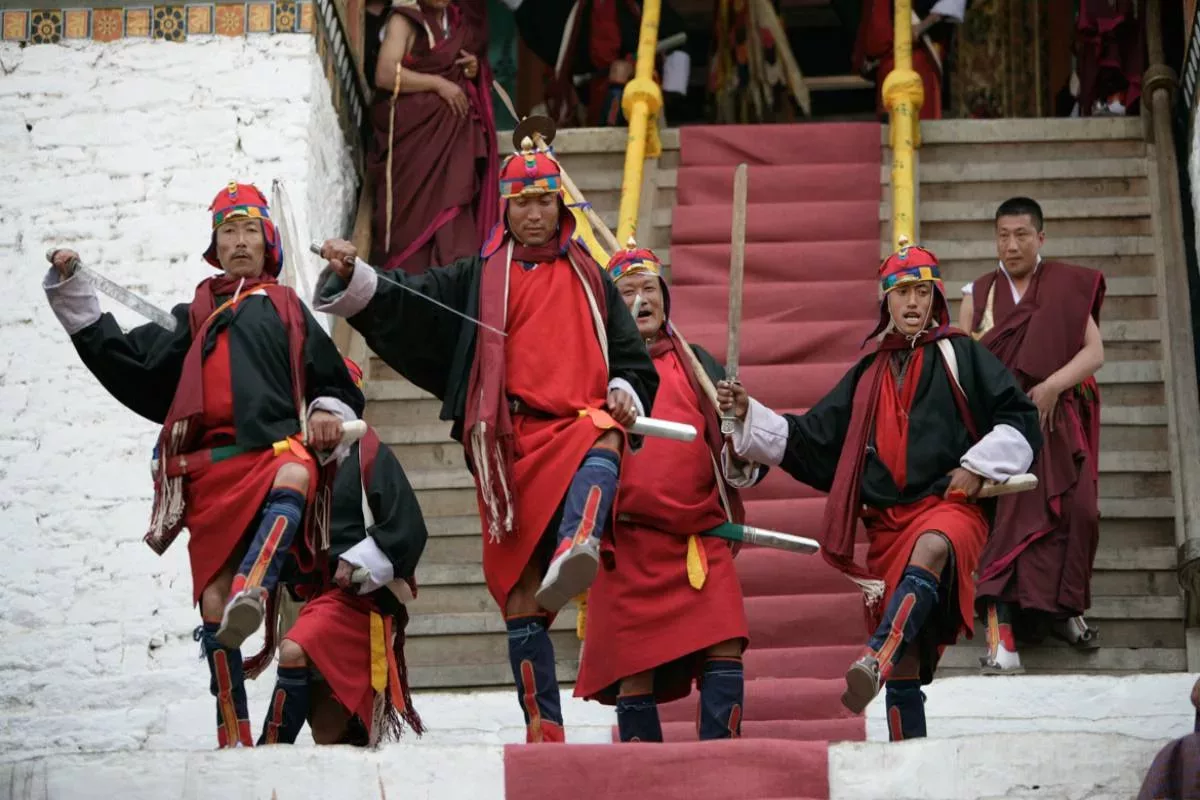
- Festivals and Holidays: Each district in Bhutan celebrates its unique annual tshechu. Check local schedules to plan your visit around these vibrant festivals.
- Weights and Measures: Bhutan uses metric measurements for weight, with advanced electronic scales commonly found in major cities.


- Best Price Guaranteed
- Book Now, Pay Later
- Local Expertise
- Hand-Picked Hotels
- Value for money
- Quality Service
- Responsible Tourism
- Tailor-Made Holidays
- No Booking Fee
- 100% Visa Approval
- 24/7 Customer Service
- No Hidden Costs