Trip Summary
- Festival Dates: April 13 to 14, 2026 & April 22 to 23, 2027
- Festival Venue: Lampelri Botanical Garden, Dochula Pass
- Rhododendron Species at Lampelri: 29 out of 46 species recorded in Bhutan
- Places Covered: Paro, Thimphu, Dochula, Punakha, Wangdue, Phobjikha, Haa
- Duration: 10 Days
- Activity: Festival Tour and Cultural Sightseeing
- Departure and Return: Paro
- Trip Cost From: $4,875 per person
- Last Updated: March 2026
What Is the Bhutan Rhododendron Festival Tour?
The 10-day Bhutan Rhododendron Festival Tour centres on Bhutan’s annual spring festival at Lampelri Botanical Garden, held each April at Dochula Pass approximately 35km east of Thimphu. Lampelri holds 29 of the 46 rhododendron species recorded across Bhutan, the highest concentration in any single location in the country. The two-day festival covers three main themes: ecological, cultural, and food. Activities include a guided rhododendron garden walk and exhibition, local cuisine, arts and crafts, traditional games, and cultural performances. Truly Bhutan Travel, a government-licensed luxury operator based in Thimphu with over 17 years of direct Bhutan experience, leads every departure with certified local guides.
Why April
April marks peak rhododendron season across Bhutan’s temperate and subalpine zones. Species bloom in sequence from the valley floors upward through April and into early May. At Dochula at 3,100m, the peak coincides precisely with the festival dates. The forest above the pass holds dense stands of Rhododendron arboreum, the national flower, alongside pink, white, and yellow species that fill the trail on the garden walk. No other month gives this combination of colour, mild temperatures, and clear mountain views from the pass.
Beyond the Festival
The itinerary pairs the festival with the full range of western Bhutan’s major cultural and natural sites. Day 2 covers the Tiger’s Nest hike, one of the most iconic walks in Asia. Days 3 and 4 cover Thimphu’s historic dzongs, temples, and cultural institutions. Day 6 adds Punakha Dzong at the river confluence and Chimi Lhakhang. Day 7 takes you into Phobjikha valley to visit Gangtey Gompa above the crane wetlands. Day 9 adds the rarely visited Haa valley via Chele La Pass at 4,200m, one of the most scenic high passes in western Bhutan.


The flight to Paro is one of the most spectacular flights amongst all the mountain flights. You can glimpse a spectacular view of Mount. Everest, Kanchenjunga, and other popular peaks in Bhutan such as Jhomolhari, Jichu Drake and Tsrim Khang. On arrival at the Paro International Airport, our guide will receive you and drive you through one of the most fascinating valleys of Bhutan to your hotel for overnight halt.
Afternoon, visit Drukgyel Dzong; a ruined fortress located about 14 km away from Paro town. It was built in 1649 by Zhabdrung Ngawang Namgyel to commemorate the victory of Bhutan over Tibetan invaders, led by the Mongolian warlord, Gushri Khan in 1644. Drukgyel Dzong captured the eyes of western visitors when it was featured on the cover of the National Geographic magazine in 1914. Above the ruined fortress, appears the towering peak of Mount Jomolhari, “mountain of goddess” which is about 7,315m high. The fortress served as an administrative center until 1951, when a fire caused by a butter lamp destroyed it. The ruins still attract lot of tourists for its rich history and glorious past.
Then visit Kyichu Lhakhang (Monastery), it is one of the two oldest monasteries built in the seventh century by King Songtsen Gampo of Tibet in Bhutan. It is considered one of the holiest places in Bhutan as it marks the advent of Buddhism in the country. Kyichu Monastery is located between Drukgyel Dzong and Paro town. Evening, take a leisurely walk around Paro town. Overnight halt in the hotel.
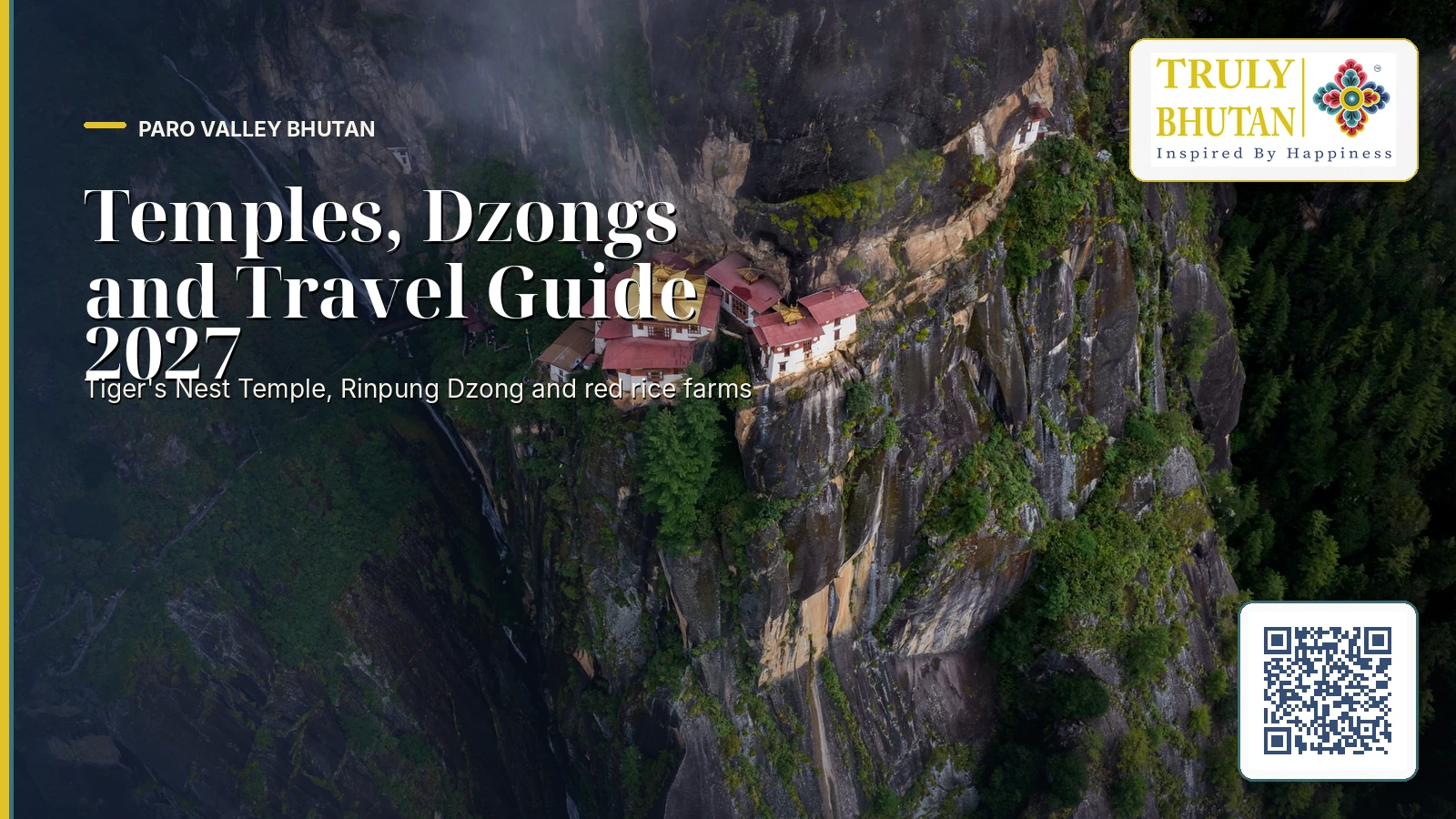
After breakfast, hike to Taktsang Temple Literally meaning ‘Tiger’s Nest’, because Guru Rinpoche (Precious Buddhist Saint) is said to have flown to the site of the monastery on the back of a tigress and then meditated in a cave for three months in the eighth century. It is precariously perched on the right side of a cliff, at 2950 meters above sea level and 900 meter above Paro valley. It is considered one of the holiest places of pilgrimage for the Buddhist world today
It is about 4-5hours walk up and down. Lunch at Taktsang cafeteria. Evening, take a leisurely walk around Paro town. Overnight halt in the hotel.
Morning, visit Ta Dzong (now National Museum); originally built as a watch tower of Paro Dzong in 1951 is now converted to the National Museum in 1968. It has a unique and varied collection of ancient paintings, textiles, weapons and armor, bronze statues, old household objects, exquisite postage stamps, jeweler and many other decorative arts.
Then visit Paro Dzong (Fortress); also known as Rinpung Dzong, which means ‘fortress of the heap of jewels’. It was built in 1646 by Zhabdrung Ngawang Namgyel and is one of Bhutan’s most impressive Dzongs in the country that depicts the finest examples of Bhutanese unusual architecture. It serves as the administrative center of the Paro district and also houses the state monastic community. The courtyard of the Dzong serves as a venue of Paro Tshechu (festival), held annually in spring.
After lunch, drive to Thimphu (about 1 hour 30 minutes drive). En route, visit Semtokha Dzong, first fortress built by Zhabdrung Ngawang Namgyel in 1627 among the series of fortresses built by him in 17th century in Bhutan. About 4 miles drive from Thimphu; this fortress is situated on a lofty ridge and now houses the educational institute for Buddhist studies. On arrival, transfer to hotel for overnight halt.
Morning, visit Memorial Chorten (Stupa), one of the most religious stupa visible in Thimphu. The religious paintings and complex tantric statues inside the monument reflect both peaceful and wrathful aspects of Buddhist deities. It was built in 1974 in memory of the Third King, Jigme Dorji Wangchuck, who is popularly considered as the Father of Modern Bhutan.
Then visit Changangkha Lhakhang (Monastery), which was built in 15th century by the high saint Phajo Drugom Zhigpo. It is a monastery of Compassionate Buddha Chenrizig. After that visit Zulikha Nunnery, to see nuns reciting prayers and then visit National Library where it houses a vast collection of ancient Buddhist manuscripts and texts including the imprinted and archaic text of Bhutanese history. The library also has research documents and printing blocks for prayer flags. You can visit Traditional Painting School, a center where children learn traditional drawing and painting, woodcarving, sculpture and other forms of traditional arts. On a visit, one can view the students at work. Then have a visit to Heritage Museum, the living farmhouse of the 19th century depicting the harmonious living style of the Bhutanese family with the domestic animals in the premises.
After lunch, visit Mini Zoo to see Bhutan’s national animal Takin and then drive farther up to Radio Tower to catch a spectacular glimpse of Thimphu valley. Take a gentle walk in the midst of colorful prayer flags that dot the beautiful landscapes to experience the breath of spirituality. Then visit Traditional Medicine Institute, where the rich herbal medicine found abundant in Bhutan are prepared and dispensed. The institute also researches the use of medicinal herbs and plants and operates a trial experiment on the premises. After that you can stop to visit Textile Museum and Handicrafts Emporium, where various products of Bhutanese arts and crafts are displayed and can be purchased as well.
After that, visit Trashichhoedzong, “fortress of glorious religion”. Zhabdrung Ngawang Namgyel initially erected the Dzong in 1641 and later the third king Jigme Dorji Wangchuk rebuilt its present form in 1965. It was built in traditional fashion, without using nails and architectural plans. It is also the home of the throne room of His Majesty the king of Bhutan, the summer residence of central monastic body and ministries and various government organizations. Overnight halt in the hotel.
After breakfast, drive to Punakha and Wangdue (about 2 hrs drive). En route, halt at Dochula pass (10500 feet) to see the spectacular view of snow capped eastern Himalayan Mountains.
En route attend full day Rhododendron Festival at Lampelri Botanical Garden. Lunch at Lampelri Botanical Park. Take a short hike through the Rhododendron Park. Evening, drive to Punakha. Overnight halt at hotel.
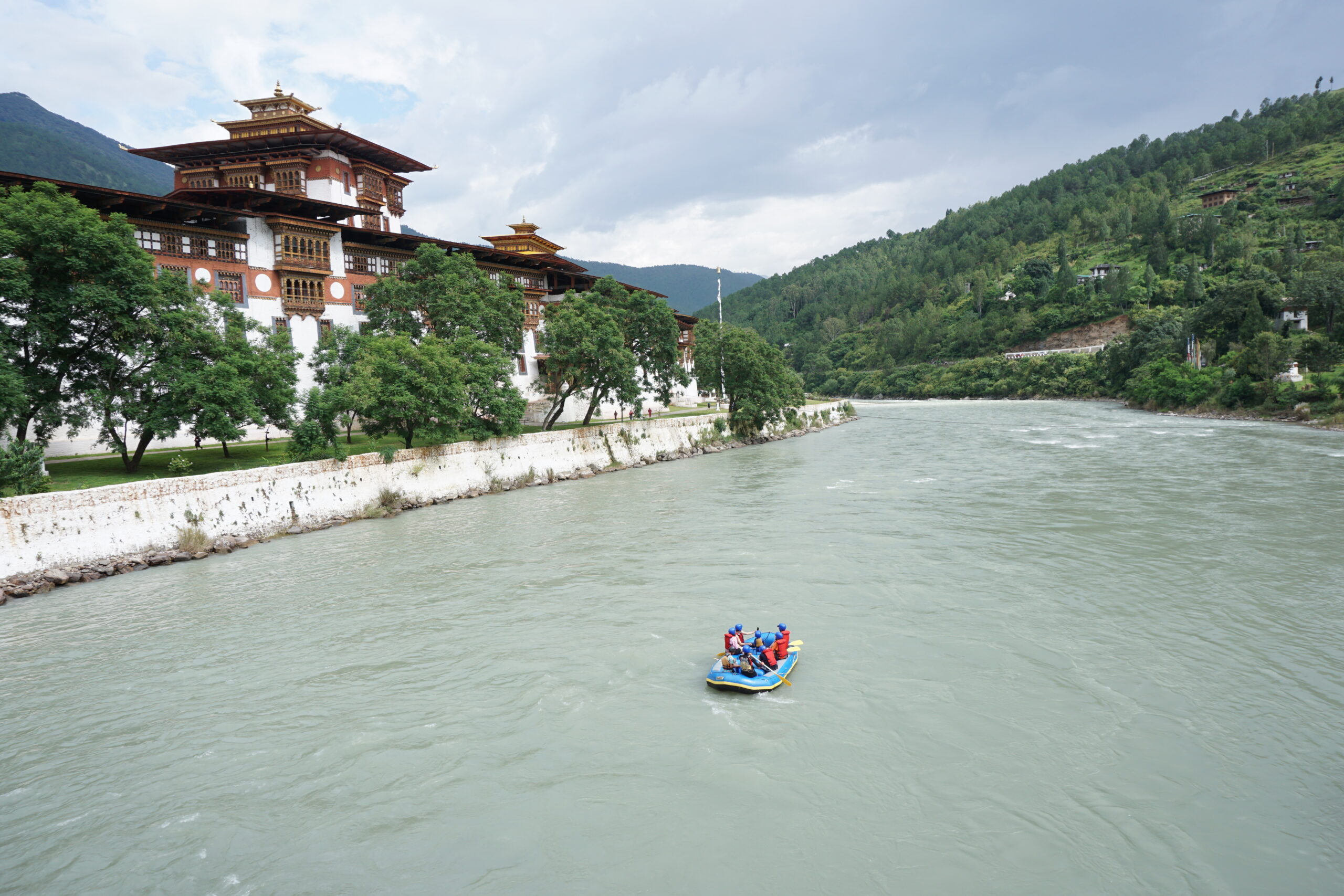
Morning, visit Khamsum Yulley Chorten (Stupa) built by Her Majesty the Queen Ashi Tshering Yangdon Wangchuk. It’s a short pleasant hike across the rice filed to the hilltop. Once you reach there, you can catch a stunning view of the beautiful villages in the valley. The stupa houses complex tantric statues and religious paintings depicting Bhutan’s rich culture and traditions, marvelous arts and crafts, history and Buddhist religion. Then visit Punakha Dzong (Fortress), it was built in 1637 by Zhabdrung Ngawang Namgyel to serve as the religious and administrative center of the region. It is located strategically between the confluence of Pho Chu (Male River) and Mo Chu (Female River). The Dzong was damaged by an earthquake, fire and flood a number of times and destroyed many historic documents. However, the Dzong has been fully restored to its original splendor by the present king and it serve as the religious and administrative center of the region.
After lunch, visit Chimi Lhakhang (Monastery), a revered temple popularly recognized as a pilgrimage site for childless couples to receive blessings. Situated on a hillock in the center of the valley, it is about 20 minute’s pleasant walk across the rice fields from the road. Ngawang Chogyel built the temple in the 15th century after the “Divine Madman” Lam Drukpa Kuenley built a small stupa on the site.
Overnight halt in the Hotel.
Morning, drive to Gangtey (about 3 to 4 hours drive). Upon arrival check into hotel. After lunch, visit Gangtey Gompa built on the ridge overlooking the beautiful wide valley of Phobjikha. Pema Thinley, the grand son of Terton Pema Lingpa, the popular Nyingmapa saint of Bhutan, founded it. The pristine green valley is also the winter residence of rare and endangered black-necked cranes that migrate from Tibet to Bhutan in late autumn in a group of 200 to 300. Evening, take a leisurely walk across the beautiful Phobjikha valley. Evening, take a leisurely walk across the beautiful Phobjikha valley.
Overnight halt in the hotel.
Morning, drive to Paro (about 6 to 7 hours drive). En route visit Wangdue Town. Upon arrival, check into hotel for overnight halt. Evening, stroll through town.
Overnight halt in the hotel.
Morning drive to Haa (about 2 hours 30 mins drive). Until recently, this place was restricted for the tourists. The Haa valley is one of the most beautiful and fascinating valleys in Bhutan. When you drive from Paro to Haa via Chelela pass (4200 meter above sea level) and if the weather is clear, you will have a spectacular glimpse of Haa valley. Also you can catch a magnificent view of Jhomolhari, “mountain of goddess” which is about 7,315m high (the second highest peak in Bhutan) and Jichu Drake that is about 6,794m high. En-route, you will get immense opportunities to take photographs. After arriving in the beautiful valley, visit Lhakhang Karpo (White Temple) and Lhakhang Nagpo (Black Temple). Each temple has its rich religious interpretation and is definitely worth visiting. Then visit Haa Town.
After lunch, drive back to Paro taking different route to see the people and beautiful houses in the scattered villages en route.
Upon arrival transfer to the hotel for overnight halt.
Breakfast in the hotel, then drive to the airport for flight to your onward des
The Bhutan Rhododendron Festival is an annual two-day spring event held each April at Lampelri Botanical Garden near Dochula Pass, approximately 35km from Thimphu. The festival celebrates Bhutan’s exceptional rhododendron diversity and covers three main themes: ecological, cultural, and food. Lampelri holds 29 of the 46 rhododendron species recorded in Bhutan, the highest concentration in any single botanical site in the country. Festival activities include a guided garden walk, rhododendron exhibition, local cuisine, arts and crafts, traditional games, and cultural performances. The 2026 festival runs on April 13 and 14. The 2027 festival runs on April 22 and 23.
Bhutan holds 46 recorded rhododendron species across its altitude range from subtropical foothills to alpine zones above 4,000m. Lampelri Botanical Garden at Dochula at 3,100m contains 29 of these 46 species in a single site, making it the most concentrated rhododendron botanical collection in the country. The species at Lampelri range from large tree forms of Rhododendron arboreum, Bhutan’s national flower, through mid-size shrub species to low alpine ground-cover forms. April marks the peak bloom period at this altitude.
Beyond the two-day festival at Lampelri, the itinerary covers the Tiger’s Nest hike in Paro, Ta Dzong National Museum and Rinpung Dzong in Paro, Simtokha Dzong on the Thimphu road, a full day of Thimphu’s major cultural institutions, Khamsum Yulley Chorten and Punakha Dzong, Chimi Lhakhang, Gangtey Gompa and Phobjikha valley, Wangdue town on the return drive, and a full day in the rarely visited Haa valley via Chele La Pass at 4,200m. The tour covers five districts across 10 days.
The festival falls on fixed April dates confirmed by the Tourism Council of Bhutan each year. The 2026 festival runs on April 13 and 14. April is one of the two best months to visit Bhutan overall. Spring from March to May gives warm days, clear mountain views, active birdlife, and rhododendron bloom from the valley floors up through the alpine zones. The Tiger’s Nest trail, Haa valley drive, and Chele La Pass are all at their most visually rewarding in April.
Haa is the smallest and most isolated district in western Bhutan. The valley was closed to foreign tourists until 2002 and receives far fewer visitors than Paro, Thimphu, or Punakha. The drive from Paro via Chele La Pass at 4,200m gives direct views of Jomolhari and Jichu Drake on clear days. The valley holds Lhakhang Karpo and Lhakhang Nagpo, two of the oldest temples in western Bhutan with strong roots in the country’s earliest Buddhist history. The return route from Haa passes through traditional villages on the valley floor that see almost no tourist traffic.
The tour is graded easy for most of the itinerary. The one physically demanding section is the Tiger’s Nest hike on Day 2, which involves approximately 900m of ascent over four to five hours return. The hike is manageable for most travellers at a steady pace. All other daily activities are light walks of under one hour. The Chele La Pass drive reaches 4,200m and some visitors feel mild altitude effects at this elevation, though the stop is brief and you do not sleep at altitude at any point on the tour.
- Airport pick-up and drop-off by private vehicle.
- 3-star accommodation (4 & 5 stars may require an additional premium update).
- Bhutan visa fee – including all necessary processing
- Route Permit
- Three meals per day during your stay in Bhutan
- A licensed Bhutanese tour guide
- All land transportation by private vehicle
- Camping equipment and haulage for trekking tours
- Sightseeing as per itinerary
- Monuments entrance fees where applicable
- Drinking water
- All internal taxes and charges
- A sustainable development fee of $200. (This sustainable development fee goes towards free education, free healthcare, and poverty alleviation, along with the building of infrastructure.)
- Airfare & Travel Insurance
- Expenses of personal nature, Tips to guides and drivers
- Expenses occurred due to unavoidable events i.e. road wrecks, flight delays etc.
Tour Overview
- Duration: 10 days
- Festival dates: April 13 to 14, 2026 and April 22 to 23, 2027
- Festival venue: Lampelri Botanical Garden, Dochula Pass, 3,100m
- Rhododendron species at Lampelri: 29 of 46 total species in Bhutan
- Places covered: Paro, Thimphu, Dochula, Punakha, Wangdue, Phobjikha, Haa
- Highest point: Chele La Pass at 4,200m on Day 9
- Difficulty: Easy
Best Months
April is the primary travel window for this tour. The festival runs on fixed April dates and rhododendron bloom at Dochula peaks in the same window. The full tour also runs well in the April to May period outside festival dates for travellers who want the botanical experience without the festival crowds.
What to Bring
Layered clothing for temperatures ranging from warm valley days at 1,350m in Punakha to cold alpine conditions at Chele La Pass at 4,200m. A light waterproof jacket, sunscreen, sunglasses, and comfortable walking shoes for daily sightseeing. Sturdy hiking boots for the Tiger’s Nest hike. Truly Bhutan Travel sends a full recommended packing list on booking confirmation.
Permits
All Bhutan permits and visa processing are arranged by Truly Bhutan Travel as part of the package.
Bhutan in Full Spring Colour
April in Bhutan is the season most photographers and naturalists target. The rhododendron bloom reaches its peak at altitude, the mountain views are at their clearest before the pre-monsoon haze builds, and the Tiger’s Nest trail through pine and rhododendron forest is at its most vivid. The Rhododendron Festival at Lampelri adds a structured celebration of Bhutan’s botanical heritage to what is already the most colourful time of year in the country.
Five Districts in Ten Days
This itinerary covers more geographic range than most 10-day Bhutan tours. Paro, Thimphu, Punakha, Phobjikha, and Haa each hold a completely different character and a different altitude range. Haa valley in particular rewards the detour. The drive over Chele La at 4,200m with Jomolhari in full view and the descent into one of Bhutan’s last undiscovered valleys is one of the finest half-day drives in western Bhutan.
Secure Your Place for April 2026 & 2027
The Rhododendron Festival runs on April 13 and 14, 2026 only. Truly Bhutan Travel accepts a limited number of guests on this exclusive festival departure. Spring 2026 & 2027 slots are open now. Confirm your place before this window closes.
Explore More Festival and Cultural Tours with Truly Bhutan Travel
- For travellers who want to combine a spring Bhutan visit with Bhutan’s most celebrated religious festival, the Paro Festival Tour runs each spring across 9 days from $3,738 per person, covering Paro Tshechu and western Bhutan’s major cultural sites.
- For those who want to extend their Bhutan festival experience with a longer multi-destination journey, the Nimalung Festival Tour covers 14 days across central and western Bhutan from $5,852 per person, with the Nimalung Tshechu in Bumthang at its centre.
- For travellers who want a complete western Bhutan cultural and festival circuit combining Punakha Drubchen, Paro Tshechu, and the spring season in full, the Journey Across Bhutan covers 15 days from $7,438 per person.
- Browse all luxury festival tours and cultural itineraries at trulybhutan.com/itinerary
Bhutan Travel Info
Travel Essentials
- Travel/Medical Insurance: Ensure a worry-free journey with Bhutan's dedicated travel and medical insurance plans offered by the Royal Insurance Corporation of Bhutan. Visit RICB for more information.
- Banking: Modern banking facilities are available in urban areas of Bhutan, with banks like Bank of Bhutan Limited, Druk PNB, and Bhutan National Bank. ATMs are common in Thimphu and Phuentsholing, but scarce in rural areas. Complete your banking in major cities.
- Money Matters: Bhutan's currency is the Ngultrum (Nu), which is equivalent in value to the Indian Rupee. Foreign travelers should bring traveler’s cheques or cash, especially USD. Credit cards like Visa and American Express are accepted in most areas.
- Communication: Bhutan's telecommunications are well-developed with internet cafes, mobile phone coverage, and international roaming available in most towns.
- Electricity: Bhutan operates on 230 volts and 50 Hertz. Ensure your devices are compatible with the three types of plugs commonly used.
- Time Zone: Bhutan's time is six hours ahead of GMT.
Health, Safety, and Customs
- Health and Inoculations: Recommended vaccinations include tetanus, typhoid, and hepatitis A. Avoid untreated water and ice cubes; instead, opt for bottled water, which is readily available.
- Safety Precautions: Bhutan is generally safe, but avoid walking alone or staying out late, especially after 9 PM. Secure your belongings, particularly in the capital, Thimphu.
- Customs Regulations: Personal belongings, 1 liter of alcohol, 200 cigarettes, and professional equipment are exempt from customs duty. Importing restricted items, such as wildlife products, antiques, and drugs, is prohibited.
Accommodation, Food, and Shopping
- Accommodation: Bhutan offers a range of accommodations, from quality 3-star to luxury 5-star hotels in places like Thimphu, Paro, and Punakha. Travelers can also opt for camping when venturing beyond urban areas.
- Food: Bhutanese cuisine is rich and spicy, featuring dishes like ema datshi. International cuisine such as Indian, Continental, and Chinese is available in most restaurants, with both vegetarian and non-vegetarian options.
- Shopping: Bhutan offers unique handicrafts, including hand-woven textiles, wooden bowls (Dapas), silver statues, Thangkas, and local postage stamps. Note that the buying and selling of antiques is strictly prohibited.
Travel Kits and Clothing
- Clothing and Essentials: Bhutan's climate is diverse, so dress in layers and pack accordingly. Respectful clothing is required when visiting monasteries and religious sites, and hats should be removed in sacred areas.
- Travel Kits: Pack items like sunscreen, sunglasses, insect repellent, antihistamine cream, anti-diarrhea pills, a flashlight, warm clothes, and a hat. The diverse climate means temperatures range from 20-25°C in summer to below 15°C in winter.
Experiences and Activities
- Photography: Capture Bhutan's stunning landscapes, rural life, and architecture. Indoor photography in sacred sites requires special permission.
- Guides and Interpreters: Bhutan offers certified guides fluent in various languages, ensuring you get the best experience when visiting sacred sites and cultural landmarks.
- Festivals and Holidays: Each district in Bhutan celebrates its unique annual tshechu. Check local schedules to plan your visit around these vibrant festivals.
- Weights and Measures: Bhutan uses metric measurements for weight, with advanced electronic scales commonly found in major cities.


- Best Price Guaranteed
- Book Now, Pay Later
- Local Expertise
- Hand-Picked Hotels
- Value for money
- Quality Service
- Responsible Tourism
- Tailor-Made Holidays
- No Booking Fee
- 100% Visa Approval
- 24/7 Customer Service
- No Hidden Costs